Adoniran Barbosa
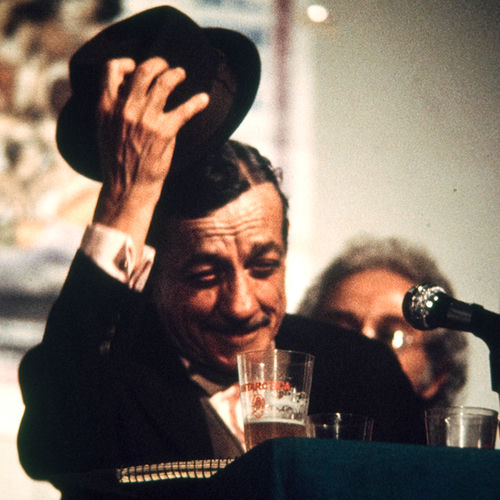
Adoniran Barbosa: The Voice of São Paulo's Samba
Adoniran Barbosa was a Brazilian singer, composer, humorist, and actor who became a foundational figure in the development of urban samba. Hailing from the city of São Paulo, his greatest achievement was crafting a timeless musical portrait of the city's working-class life and immigrant neighborhoods, with his song "Trem das Onze" becoming one of the most recorded and beloved samba anthems in Brazilian history.
Early career
Born João Rubinato in 1910 in Valinhos, São Paulo state, he adopted the stage name Adoniran Barbosa in the 1930s. His early career was a struggle, filled with odd jobs and performances in radio contests before he found his niche as a radio actor and composer, using a thick São Paulo accent and comedic persona that would define his later musical work.
His first major composition, "Saudosa Maloca," was recorded by the vocal group Demônios da Garoa in 1951 and became an instant classic. The song's melancholic tale of friends evicted from their shanty home established his signature style of blending social commentary with humor and deep samba rhythm.
Breakthrough
Adoniran Barbosa's definitive breakthrough came in 1964 with the release of "Trem das Onze." Recorded by Demônios da Garoa, the song was a massive national hit, perfectly capturing the daily life and romantic dilemmas of a suburban commuter. While exact sales certifications from that era are scarce, the song's cultural impact is immeasurable, cementing his status as a national treasure.
His work was primarily associated with the RGE record label during his peak years, and he released a series of influential albums including Adoniran Barbosa (1973) and Adoniran Barbosa (1975), which collected his classic compositions.
Key tracks
Saudosa Maloca — This 1951 song is a cornerstone of his career, a poignant samba that gave voice to the urban poor and established his narrative style.
Trem das Onze — His most famous composition, this 1964 hit is a masterclass in storytelling within a samba structure and remains a cultural touchstone.
Joga a Chave — A quintessential example of his humorous, dialogue-driven sambas depicting the bohemian life and misunderstandings of São Paulo's bars and tenements.
Tiro ao Álvaro — Co-written with Osvaldo Molles, this passionate samba de breque showcases his skill with wordplay and rapid-fire vocal interruptions.
As Mariposas — A beautifully melancholic samba-canção that demonstrates the depth and range of Adoniran Barbosa's songwriting beyond comedy.
Throughout the 1970s and until his death in 1982, Adoniran Barbosa remained a revered figure, his music continually rediscovered by new generations. He collaborated with major artists like Elis Regina, who recorded definitive versions of his songs, ensuring his legacy in the MPB (Música Popular Brasileira) canon.
Fans of Adoniran Barbosa's authentic, narrative-driven samba should also explore the work of Noel Rosa, who similarly chronicled Rio de Janeiro's urban life a generation earlier. The vocal style and humor of Demônios da Garoa is inseparable from Barbosa's sound, as they were his primary interpreters. For more classic samba with a strong storytelling element, listen to Cartola, whose poetic compositions share a deep emotional resonance. The urban samba tradition is also carried on by artists like Zeca Pagodinho, who blends classic rhythms with contemporary flair.
Adoniran Barbosa's music holds a permanent place on Brazilian radio, featured prominently on stations dedicated to classic MPB, traditional samba, and cultural programming. His songs are staples on both major FM broadcasters and independent community stations that celebrate Brazil's rich musical heritage.
The timeless samba of Ad