
Alban Berg: The Lyrical Voice of Second Viennese School Modernism
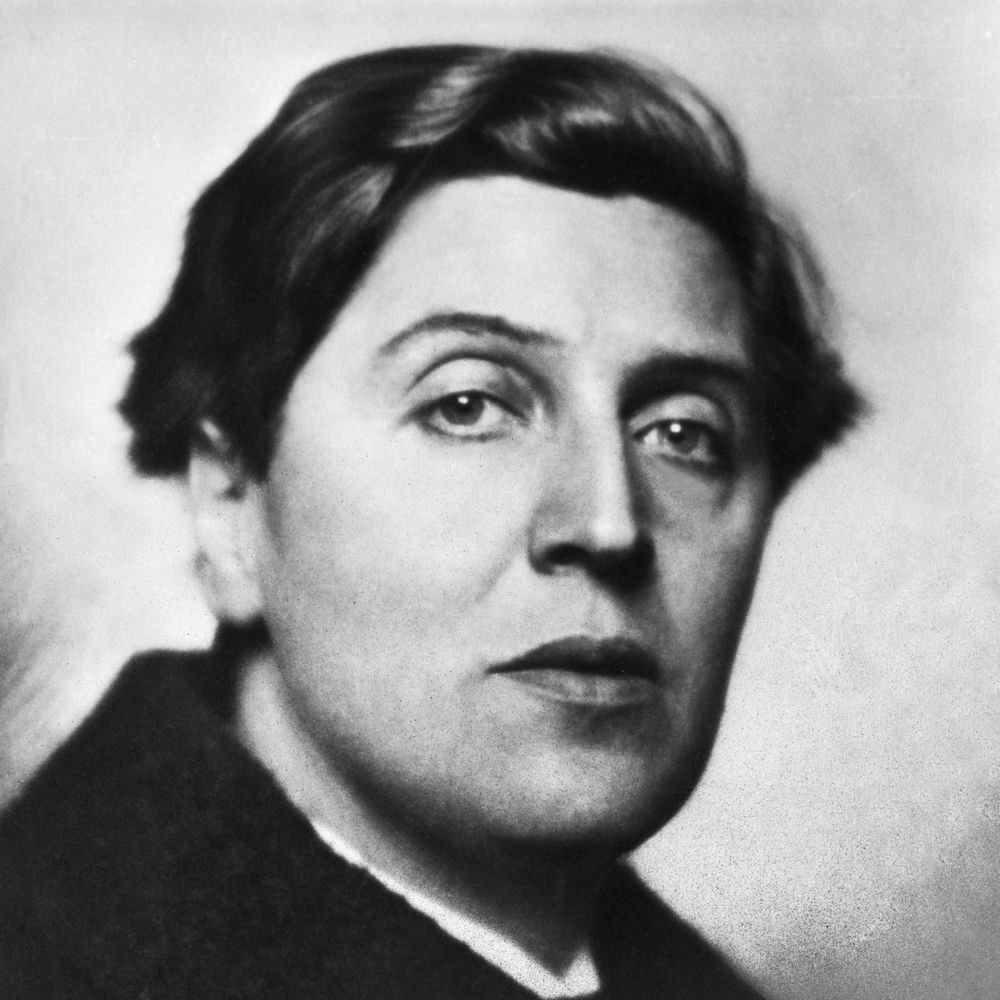
Alban Berg was an Austrian composer who, alongside his teacher Arnold Schoenberg and colleague Anton Webern, formed the revolutionary core of the Second Viennese School. Hailing from Vienna, his major achievement was creating deeply expressive, large-scale works like the opera Wozzeck, which successfully translated the complex twelve-tone technique into a powerful and accessible dramatic language.
Early career
Born in Vienna in 1885, Alban Berg's musical journey began with self-taught composition before he became a pupil of Arnold Schoenberg in 1904. His early works, like the Piano Sonata, Op. 1 (1908), showed a progression from late-Romantic tonality toward the atonal explorations that defined his teacher's circle, establishing his foundational voice within this avant-garde movement.
Breakthrough
Berg's international breakthrough arrived with the 1925 Berlin premiere of his first opera, Wozzeck, Op. 7, a work he composed between 1914 and 1922. Despite its challenging, atonal score, the opera achieved remarkable success, receiving over 150 performances across Europe in the subsequent five years and cementing his reputation as a master of modern musical drama.
Key tracks
Wozzeck, Op. 7 — This opera remains Berg's most famous work, a harrowing and revolutionary adaptation of Georg Büchner's play that brought unprecedented emotional depth to atonal composition.
Violin Concerto — Written in 1935 and dedicated "To the memory of an angel," this concerto is a profound elegy that seamlessly blends twelve-tone rows with tonal references, including a Bach chorale.
Lyric Suite — Composed for string quartet between 1925 and 1926, this intense, six-movement work is a landmark of chamber music that employs a complex twelve-tone structure to convey a secret program of personal passion.
Chamber Concerto — This 1925 work for piano, violin, and 13 wind instruments is a pivotal piece dedicated to Schoenberg, showcasing Berg's intricate formal designs and contrapuntal mastery within the atonal framework.
Berg's later major work, the opera Lulu, remained unfinished at his death in 1935, though its completed portions were performed. The opera's full three-act version, realized using Berg's sketches, premiered decades later in 1979, further solidifying his legacy. His music, published by Universal Edition, continues to be studied and performed globally, representing a crucial bridge between expressionist angst and lyrical formalism in 20th-century classical music.
For listeners exploring the terrain of early 20th-century modernism, similar artists include Arnold Schoenberg, the teacher who developed the twelve-tone system. Anton Webern pursued a more fragmented and pointillistic style within the same compositional discipline. Moving beyond the Vienna circle, Gustav Mahler represents the late-Romantic grandeur from which Berg's generation emerged, while Kurt Weill offers a different, more popular-infused German modernist voice from the same era.
RADIO ROTATION
The music of Alban Berg holds a permanent place in the programming of classical music stations and dedicated modern music streams. His works are featured on stations focusing on 20th-century repertoire, opera broadcasts, and public radio networks that champion the evolution of the classical genre, ensuring his complex soundscapes reach curious audiences.
You can explore the emotionally charged and historically pivotal works of Alban Berg through the classical and modern composition stations featured on our website. Listeners can discover his influential operas and instrumental masterpieces on radio stations available on onairium.com.