
Albéric Magnard: The Defiant Voice of French Symphonic Music
Albéric Magnard was a French composer of the late Romantic era, known for his powerful symphonies and operas. Hailing from Paris, his major achievement was the creation of a compact but intense body of work, including four symphonies and three operas, that earned him the posthumous title "the French Bruckner."
Early career
Born in Paris in 1865, Magnard came from a wealthy background but chose a path in music against his father's wishes. He studied at the Conservatoire de Paris under notable teachers like Jules Massenet and later Vincent d'Indy, co-founding the Société Musicale Indépendante to promote new music.
His early works, like the Symphony No. 1 in C minor, Op. 4 published around 1890, showed a strong Germanic influence. These initial publications were often self-financed, reflecting his artistic independence and distance from the mainstream Parisian musical establishment.
Breakthrough
Magnard's artistic breakthrough came with his Symphony No. 3 in B-flat minor, Op. 11, completed in 1896. While not a commercial chart success in the modern sense, this work solidified his reputation for serious, structurally complex, and emotionally profound orchestral writing within French musical circles.
His opera Guercœur, composed between 1897 and 1901, is considered his magnum opus, though its premiere was tragically delayed. The score's philosophical depth and musical ambition marked the peak of his creative powers, even as it remained largely unperformed in his lifetime.
Key tracks
Hymne à la Justice, Op. 14 — This orchestral work is a stirring testament to his republican ideals and his powerful, contrapuntal orchestral style.
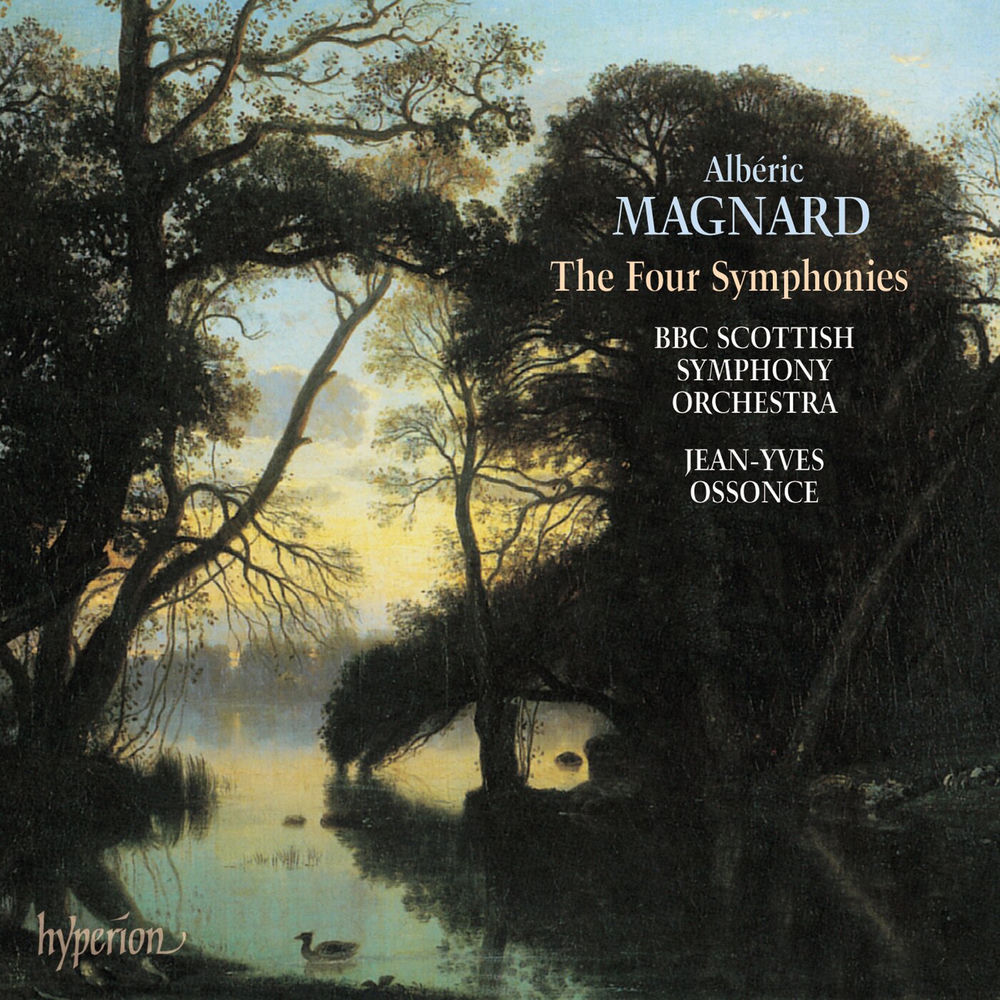
Symphony No. 3 in B-flat minor, Op. 11 — This symphony represents his mature voice, blending French clarity with Wagnerian grandeur and earning critical respect.
Symphony No. 4 in C-sharp minor, Op. 21 — His final symphony is a concentrated, dramatic masterpiece, often cited as the pinnacle of his orchestral output.
Guercœur (Act I: Prélude) — The prelude to his great opera showcases his mature harmonic language and tragic, monumental vision.
His later career continued on a path of uncompromising integrity, with works like the Symphony No. 4 and the opera Bérénice. Magnard's life ended tragically in 1914 when he defended his estate from German soldiers and died in the ensuing fire, which also destroyed several of his unpublished manuscripts.
Posthumously, his friend and fellow composer Guy Ropartz reconstructed the orchestration of Guercœur from surviving piano scores, allowing for its first full performance in 1931. Today, his complete published catalogue, though small, is highly regarded for its intellectual rigor and emotional power within the French symphonic genre.
For listeners exploring Magnard's sound world, similar artists from France include César Franck for cyclical forms and harmonic depth, Vincent d'Indy for shared pedagogical lineage and structural ambition, and Ernest Chausson for a similar blend of Wagnerian influence and French sensibility. The later composer Albert Roussel also followed a path of independent, serious symphonic composition in France.
Albéric Magnard's music holds a firm place in the rotation of classical music stations, particularly those dedicated to national repertoire or late-Romantic symphonies. His works are featured on specialist FM broadcasts and online classical music streams that explore the depth of early 20th-century composition.
You can discover the powerful symphonic music of Albéric Magnard on the classical radio stations featured here. Listen to his major works performed in full on the dedicated channels available through onairium.com.