Alexander Glasunow
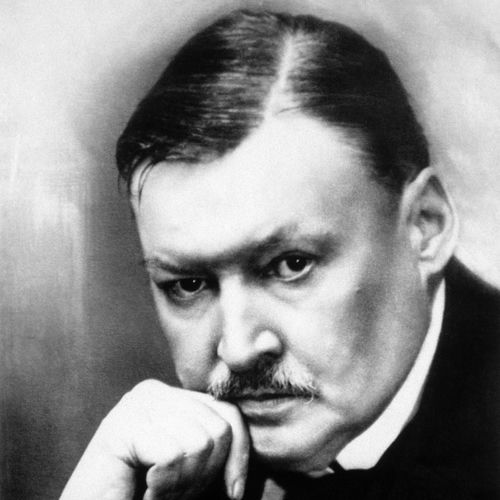
Alexander Glasunow: The Russian Romantic Composer
Alexander Glasunow was a pivotal Russian composer and conductor whose work bridged the Romantic and early modern eras. Hailing from Saint Petersburg, his prolific output, including celebrated symphonies, ballets, and the monumental Violin Concerto, secured his legacy as a master of orchestral color and a central figure in late 19th-century music.
Early career
Born in Saint Petersburg in 1865, Alexander Glasunow displayed prodigious musical talent from a young age. He became a pupil and protégé of Nikolai Rimsky-Korsakov at the Saint Petersburg Conservatory, and his First Symphony, composed at just 16, was premiered to great acclaim in 1882 under the baton of Mily Balakirev, instantly marking him as a major new voice.
Breakthrough
Glasunow's international breakthrough solidified in the 1890s following the successful premiere of his ballet Raymonda in 1898. His reputation as a leading symphonic composer was cemented by works like his Fifth Symphony and, later, his wildly popular Violin Concerto in A minor, Op. 82, which became a staple of the repertoire for virtuosos.
Key tracks
The Seasons, Op. 67 — This ballet showcases Glasunow's gift for lush, programmatic orchestration and remains one of his most frequently performed works.
Violin Concerto in A minor, Op. 82 — A cornerstone of the violin repertoire, it is celebrated for its seamless structure and lyrical, technically demanding solo part.
Symphony No. 5 in B-flat major, Op. 55 — Often considered his symphonic masterpiece, it exemplifies his confident, optimistic style and masterful command of classical form.
Raymonda, Op. 57 — The complete ballet score is a high point of Russian Imperial ballet music, filled with grand waltzes and characterful national dances.
Saxophone Concerto in E-flat major, Op. 109 — A later work that highlights his skill in writing for unconventional solo instruments within a Romantic framework.
Glasunow's later career was defined by his influential role as a teacher and administrator, serving as director of the Saint Petersburg Conservatory from 1905 until 1928. His own compositions, while rooted in Romanticism, began to incorporate more modern harmonic touches, though he remained a tonal traditionalist compared to some of his contemporaries.
He collaborated closely with his mentor Rimsky-Korsakov and completed Alexander Borodin's opera Prince Igor, notably orchestrating the famous "Polovtsian Dances." Despite the political upheavals in Russia, Glasunow continued to compose and conduct until he left the Soviet Union in 1928, eventually settling in Paris.
Nikolai Rimsky-Korsakov Shared a masterful approach to orchestration and was Glasunow's direct teacher and collaborator.Pyotr Ilyich Tchaikovsky Like Glasunow, he successfully merged Russian musical themes with Western symphonic forms.
Sergei Rachmaninoff Both composers extended the Russian Romantic tradition into the 20th century with lush, melodic works.
Mily Balakirev As a leader of The Mighty Handful, he championed Glasunow's early work and shared a nationalistic musical foundation.
Alexander Glasunow's music maintains a strong presence on radio stations dedicated to classical masterpieces, particularly those focusing on Romantic-era repertoire and Russian composers. His symphonies and concertos are staples on public radio stations, classical FM channels, and specialized online streams that explore the breadth of orchestral music.
Listeners can explore the rich orchestral world of Alexander Glasunow on the classical radio stations featured on our website. Tune in via onairium.com to hear his timeless compositions regularly programmed alongside other giants of the Romantic genre.