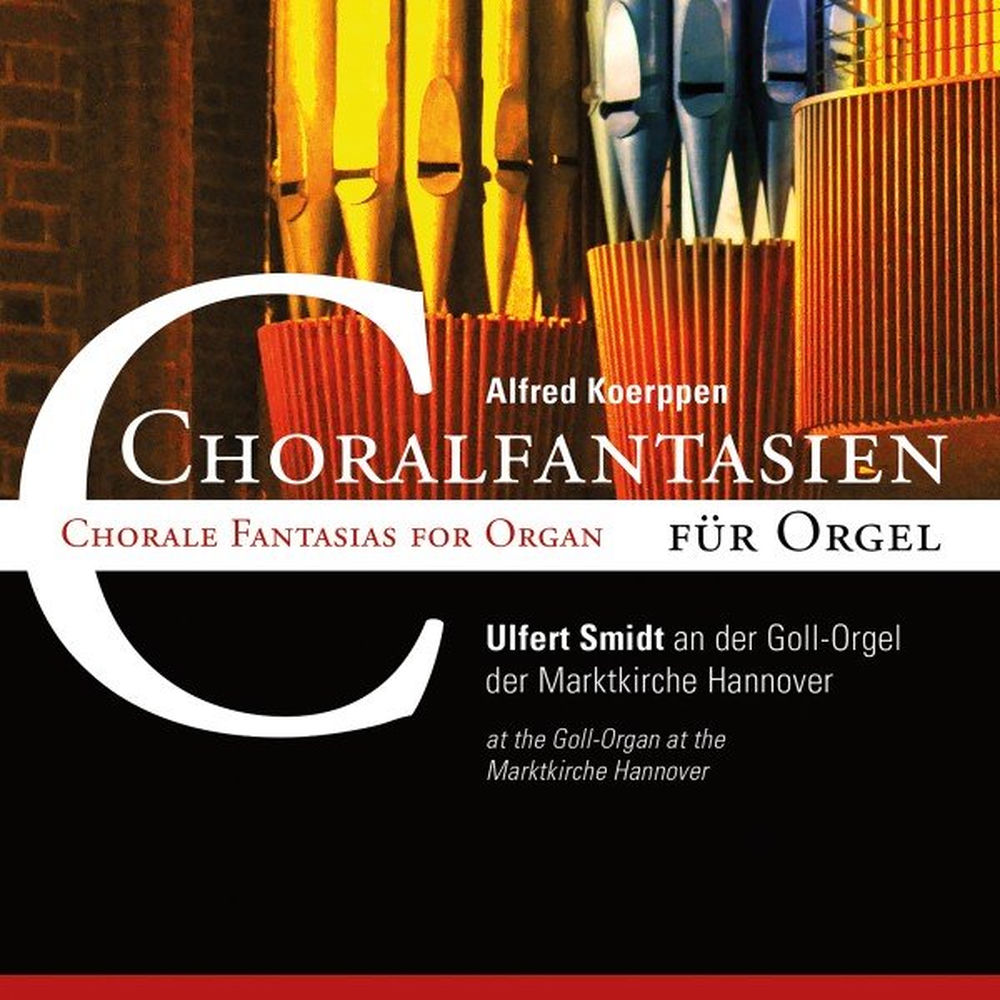

Alfred Koerppen: The German Choral and Orchestral Innovator
Alfred Koerppen was a prolific German composer and academic whose extensive body of work left a lasting mark on 20th-century classical and sacred music. Hailing from Germany, his major achievement lies in a vast catalog of over 300 compositions, including symphonies, operas, and influential sacred choral works performed internationally.
Early career
Born in 1926 in Wiesbaden, Alfred Koerppen's musical journey began early with piano and organ lessons. His formal studies, interrupted by World War II, resumed at the Staatliche Hochschule für Musik in Stuttgart under Johann Nepomuk David, laying a rigorous foundation in counterpoint and structure that defined his future style.
Breakthrough
Koerppen's professional breakthrough came in the 1950s as he established himself in academic and compositional circles. A key early success was his 1958 Concerto for Organ and Strings, which showcased his mastery of blending traditional forms with a modern harmonic language, gaining recognition within European church music and concert hall repertoires.
Key tracks
Missa Jazz — This 1966 work boldly fused traditional Latin mass texts with jazz elements, creating controversy and drawing significant attention to his innovative approach.
Die Geschichte von den Weihnachtsgeschenken — A popular children's Christmas cantata from 1971 that became a seasonal staple in German schools and churches.
Symphony No. 3 — Premiered in 1984, this large-scale orchestral work is considered a major statement of his mature symphonic style.
Te Deum — A powerful 1988 setting for choir, orchestra, and organ that exemplifies his grand sacred music compositions.
Following these key works, Alfred Koerppen's career was deeply intertwined with his long tenure as a professor of composition and theory at the Hochschule für Musik und Theater Hannover from 1962 to 1991. His influence extended through generations of students, while he continued composing ceaselessly across genres, from solo instrumental pieces to operas like Der Meister und Margarita. Koerppen remained creatively active well into his later years, receiving numerous performances and awards in Germany for his contributions to musical culture until his passing in 2022.
Listeners who appreciate the sacred and orchestral works of Helmut Barbe will find a similar depth in Koerppen's liturgical output. The choral innovations of Erhard Etzold share a kinship with Koerppen's approach. For those drawn to 20th-century German symphonic writing, the music of Günter Bialas offers a compelling parallel.
Alfred Koerppen's compositions are regularly featured in the rotations of classical music FM stations and dedicated sacred music radio streams online. His choral works are particularly prominent on public radio stations during holiday and liturgical programming, ensuring his music reaches a wide audience of classical enthusiasts.
The music of Alfred Koerppen, a cornerstone of modern German classical and sacred repertoire, can be heard on various radio stations featured on our website. Listeners can discover his symphonic and choral works by tuning into the classical and specialized music radio stations available on onairium.com.