Barry McGuire
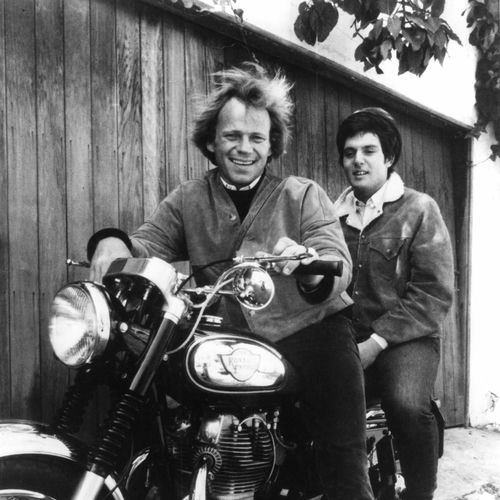
Barry McGuire: The Folk-Rock Voice of a Generation
Barry McGuire is an American folk-rock singer-songwriter best known for his powerful 1965 protest anthem "Eve of Destruction." Hailing from Oklahoma City, McGuire's raw vocal delivery and socially conscious lyrics captured the turbulent spirit of the 1960s, propelling the single to number one on the Billboard Hot 100 chart.
Early career
Born in 1935, Barry McGuire began his musical journey on the West Coast folk scene. His first major break came as a member of the popular folk group The New Christy Minstrels, with whom he recorded several albums in the early 1960s.
Seeking a more direct and personal musical path, McGuire left the group in 1965. He soon signed with Lou Adler's Dunhill Records, a label that was becoming a central hub for the burgeoning folk-rock movement.
Breakthrough
Barry McGuire's solo career exploded in late 1965 with the release of "Eve of Destruction." The song, written by P.F. Sloan, was a stark and urgent commentary on Cold War fears and social injustice.
Despite being banned by some radio stations for its controversial content, "Eve of Destruction" resonated powerfully with the public. It soared to the top of the Billboard Hot 100 in September 1965, becoming a defining protest song of the era.
Key tracks
Eve of Destruction — This number one protest anthem defined McGuire's career and became a generational touchstone for the 1960s.
Green, Green — Co-written by Barry McGuire and Randy Sparks, this became a major hit for The New Christy Minstrels, showcasing his early songwriting talent.
Child of Our Times — The title track from his 1965 debut album further cemented his reputation as a serious folk-rock voice addressing contemporary issues.
What's So Bad About Feeling Good? — A later-career track that reflected his ongoing engagement with spiritual and philosophical themes in his music.
Later career and spiritual shift
Following the massive success of "Eve of Destruction," McGuire continued to record for Dunhill, releasing albums like "This Precious Time." However, the intense pressure of the "protest singer" label and a personal spiritual search led him in a new direction.
In the early 1970s, after a profound conversion to Christianity, Barry McGuire shifted his focus to contemporary Christian music. He found significant success in this genre with the 1973 album "Seeds," which featured the popular song "Cosmic Cowboy."
His later decades have been marked by continued touring, often performing his classic hits alongside his gospel material. McGuire's story is one of two distinct, yet deeply felt, musical chapters rooted in conviction.
Artists with a similar blend of folk storytelling and rock energy include The Mamas & The Papas — McGuire's Dunhill labelmates who also blended folk harmonies with pop. The Byrds — Pioneers of the jangly folk-rock sound that defined the mid-1960s. Phil Ochs — A fellow politically charged folk singer who captured the era's activist spirit.
Barry McGuire's music maintains a steady presence on classic rock FM stations and dedicated 1960s nostalgia radio streams. His signature hit is a staple on playlists celebrating protest music and pivotal moments in rock history.
Listeners can explore the enduring legacy of Barry McGuire, from folk-rock anthems to spiritual ballads, through the classic rock and specialty genre stations featured on onairium.com.