Ben Webster
 United States
Listen Ben Webster on radio stations:

Ben Webster: The Soulful Voice of Jazz Tenor Saxophone
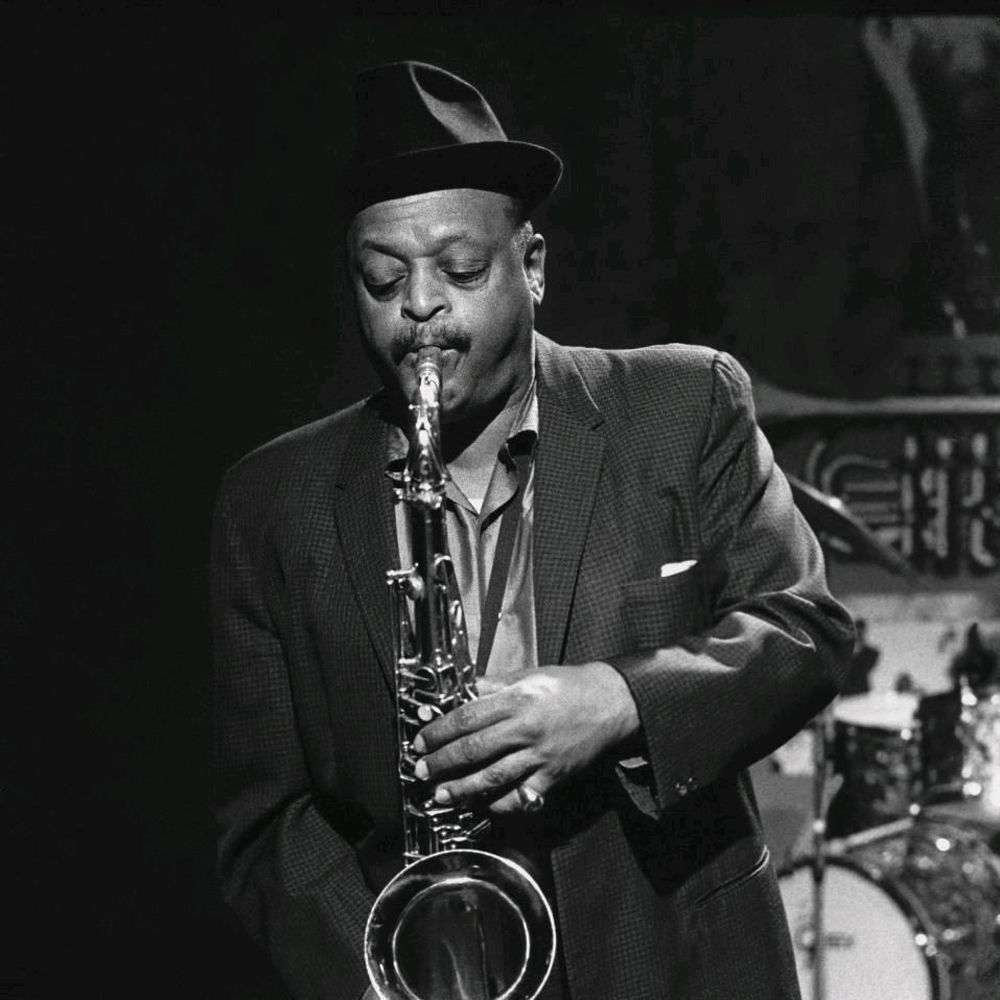
Ben Webster was an American jazz tenor saxophonist whose warm, breathy tone and emotive phrasing made him one of the most distinctive soloists of the swing and ballad traditions. Hailing from Kansas City, Missouri, his definitive work with the Duke Ellington Orchestra and his series of acclaimed albums for the Verve label cemented his status as a master of his instrument.
Early career
Born in 1909 in Kansas City, Ben Webster initially studied piano and violin before dedicating himself to the saxophone in his early twenties. His professional start came in the thriving territory bands of the Midwest, and by the mid-1930s he was playing and recording with notable figures like Bennie Moten, Cab Calloway, and Fletcher Henderson, honing a robust, swinging style.
Breakthrough
Webster's major breakthrough arrived in 1940 when he became a full-time member of Duke Ellington's legendary orchestra. His three-year tenure produced some of the band's most celebrated recordings, with Webster's saxophone featuring prominently as a melodic and solo voice. This period transformed him from a skilled sideman into a nationally recognized star of the jazz world.
Key tracks
Cottontail — This 1940 Ellington recording showcases Webster's fiery, driving improvisation on a blistering up-tempo tune, highlighting his powerful swing.
All Too Soon — A beautiful 1940 ballad performance with Ellington that fully reveals the lush, singing quality of Webster's tone, forecasting his future signature style.
King of the Tenors — The title track from his pivotal 1953 album on Norgran, a mid-tempo blues that perfectly balances his gruff power and tender lyricism.
My Romance — A standout from his classic 1964 album "See You at the Fair" on Impulse!, demonstrating his unparalleled ability to interpret a ballad with profound emotion.
Georgia on My Mind — A later-career standard, often performed live, where Webster's breathy, vocal-like inflections turned the song into a deeply personal statement.
After leaving Ellington, Webster led small groups and became a fixture on the vibrant 1950s jazz scene, recording for labels like Norgran and Clef. His series of albums for Verve Records in the 1950s and 60s, including "Soulville" and "Gerry Mulligan Meets Ben Webster," are considered essential entries in the jazz canon. He relocated to Europe in 1964, where he lived and performed extensively until his death in 1973, revered as an elder statesman of jazz.
For fans of Ben Webster's rich, narrative saxophone style, the music of Coleman Hawkins offers the foundational approach to the tenor sax in jazz. The smooth, melodic lines of Lester Young present a contrasting but equally influential swing-era sound. Later masters who carried the torch of expressive balladry include Stan Getz, known for his own lyrical cool style. The soulful phrasing of John Coltrane in his ballad work also echoes Webster's deep emotional commitment.
Ben Webster's enduring recordings remain a staple on jazz radio programming, from dedicated classic jazz FM stations to online streams focusing on the American songbook. His ballads are nightly features on stations that celebrate the golden age of jazz soloists.
The timeless music of Ben Webster, a cornerstone of jazz tenor saxophone, can be heard regularly on the radio stations featured here. Listeners can discover his vast catalog through the curated jazz programming available on onairium.com.