Benny Goodman and Orchestra
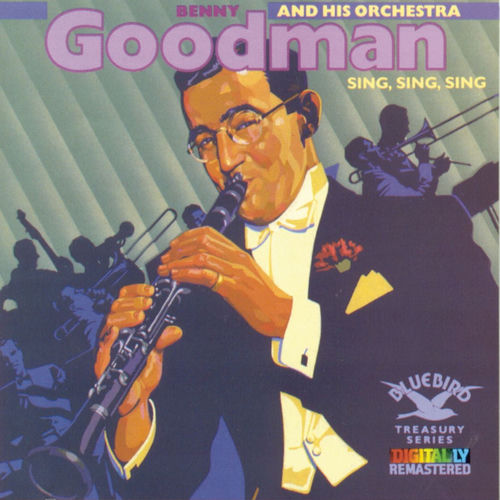
Benny Goodman and Orchestra: The King of Swing
Benny Goodman was an American clarinetist and bandleader who became a defining force in popular music. His orchestra's 1938 Carnegie Hall concert cemented jazz as a respected art form and his recordings achieved massive commercial success, topping charts and selling millions.
Early career
Born in Chicago in 1909, Benjamin David Goodman was a musical prodigy who began performing professionally as a teenager. He moved to New York City in the late 1920s, working as a sought-after session musician before forming his own big band in 1934.
This ensemble, initially struggling for a hit, landed a regular spot on the NBC radio program Let's Dance. The exposure was crucial, allowing the band to refine its powerful, rhythmic style that would soon ignite a national craze.
Breakthrough
The Benny Goodman Orchestra's breakthrough came in 1935 during a famously disastrous cross-country tour that culminated in a triumphant, riotous performance at the Palomar Ballroom in Los Angeles. The event, broadcast nationally, is often cited as the official beginning of the Swing Era.
Signed to RCA Victor's Bluebird label, Goodman scored his first major hit with King Porter Stomp, arranged by Fletcher Henderson. This success was followed by a string of chart-toppers that dominated jukeboxes and radio play for years.
Key tracks
Sing, Sing, Sing (With a Swing) — This 1937 recording, featuring Gene Krupa's iconic drumming, became the band's signature anthem and a centerpiece of the legendary Carnegie Hall concert.
King Porter Stomp — The Fletcher Henderson arrangement that propelled Goodman to national stardom, showcasing the band's precise, driving rhythm section.
Moonglow — A 1934 recording that featured the first commercially successful performance by the Benny Goodman Trio, his pioneering small group with Teddy Wilson and Gene Krupa.
One O'Clock Jump — A staple of the swing repertoire, this Count Basie number was a nightly feature for the Goodman band and a major crowd-pleaser.
And the Angels Sing — A 1939 number-one hit featuring trumpeter Ziggy Elman and vocalist Martha Tilton, blending swing with a klezmer-inspired trumpet solo.
Goodman's career was marked by significant integrations, most notably his hiring of pianist Teddy Wilson in 1935 and vibraphonist Lionel Hampton in 1936. These moves created the racially integrated Benny Goodman Trio and Quartet, landmark achievements in segregated America.
His orchestra remained a major attraction through the 1940s, even as the Swing Era waned. Goodman continued to perform and record classical repertoire and jazz standards with new groups for decades, earning the enduring title The King of Swing.
For fans of the classic big band sound, explore similar artists like Count Basie whose orchestra was renowned for its relaxed, propulsive swing. Discover Glenn Miller who led another immensely popular swing band with a smoother, reed-heavy sound. Listen to Artie Shaw a clarinetist rival and brilliant bandleader known for his complex musical arrangements. Check out Duke Ellington a peerless composer and bandleader whose sophisticated works expanded the vocabulary of jazz.
The timeless swing of Benny Goodman and Orchestra maintains a permanent rotation on classic jazz and big band radio stations. His recordings are staples on dedicated swing music channels and historical music programs that celebrate the golden age of American popular song.
You can hear the iconic sound of Benny Goodman and Orchestra on radio stations featured on our website. Discover his music and the era he defined by tuning into the classic jazz and swing stations available on onairium.com.