Bing Crosby
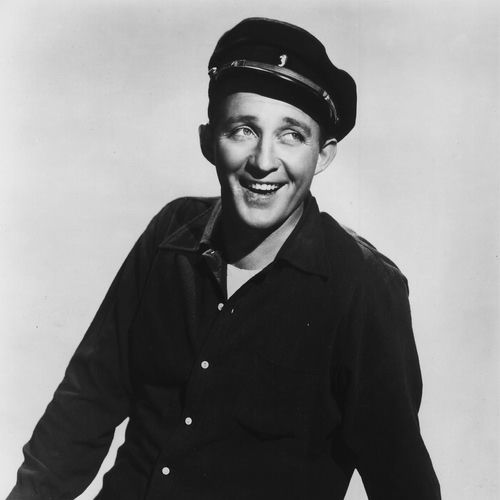
Bing Crosby: The Defining Voice of Traditional Pop
Bing Crosby was an American singer and actor whose warm, relaxed baritone dominated popular music for decades. His recording of "White Christmas" remains the best-selling single of all time, and he was a foundational star for both radio and the emerging record industry.
Early career
Born Harry Lillis Crosby in 1903 in Tacoma, Washington, his musical journey began with a passion for jazz. His first major break came in 1926 when he joined the Paul Whiteman Orchestra, the most popular dance band of the era, as part of the vocal trio The Rhythm Boys.
Crosby launched his solo career in 1931, signing with Brunswick Records. His early hits like "I Found a Million Dollar Baby (in a Five and Ten Cent Store)" showcased a revolutionary, intimate singing style perfectly suited for the new condenser microphone.
Breakthrough
Crosby's true national breakthrough arrived in 1932 with the release of "Brother, Can You Spare a Dime?" on Brunswick. The song's poignant social commentary, delivered with his empathetic phrasing, became an anthem of the Great Depression and cemented his status as more than just an entertainer.
His move to Decca Records in 1934 solidified his commercial dominance. Throughout the 1930s and 1940s, he scored an astonishing number of chart-topping hits, including "Pennies from Heaven" and "Sweet Leilani," which won the Academy Award for Best Original Song.
Key tracks
White Christmas — This 1942 Decca single is the best-selling global single ever, with estimated sales over 50 million copies.
Sweet Leilani — Crosby's 1937 hit won the Oscar for Best Original Song, highlighting his massive cross-media appeal.
Pennies from Heaven — The 1936 title track for his breakthrough film showcased his effortless blend of acting and singing.
Brother, Can You Spare a Dime? — This 1932 recording proved his depth as a vocal interpreter of serious material.
Silent Night — His 1935 rendition with the Jack Fulton Orchestra remains a definitive and widely broadcast holiday standard.
His success continued through new mediums, as he became a major box office draw in a series of "Road" pictures with Bob Hope and Dorothy Lamour. Crosby's influence extended to technology; he was an early investor in tape recording, which gave him superior editing power for his radio shows and records for Capitol.
Later career milestones include the 1954 single "In the Cool, Cool, Cool of the Evening," another Oscar winner, and a celebrated 1977 television duet of "The Little Drummer Boy" with David Bowie. Bing Crosby passed away in 1977, leaving behind a legacy of record sales exceeding 500 million units worldwide.
For fans of Crosby's smooth vocal style and classic American songbook, explore similar artists like Frank Sinatra who carried the crooner tradition into the swing era. Dean Martin embodied a similarly relaxed, effortless charm in his music and persona. The jazz-influenced pop of Nat King Cole offers another masterclass in intimate vocal delivery. Perry Como also mastered a laid-back, conversational singing style that dominated post-war pop radio.
Bing Crosby's catalog remains a staple on radio stations worldwide, particularly on formats dedicated to classic standards, holiday music, and the Great American Songbook. His voice is a permanent fixture on easy-listening FM stations and specialized online streams that celebrate the golden age of popular music.
The timeless music of Bing Crosby can be heard regularly on the traditional pop and classic standards radio stations featured on our website. Listeners can discover his vast catalog of hits by tuning into the curated stations available on onairium.com.