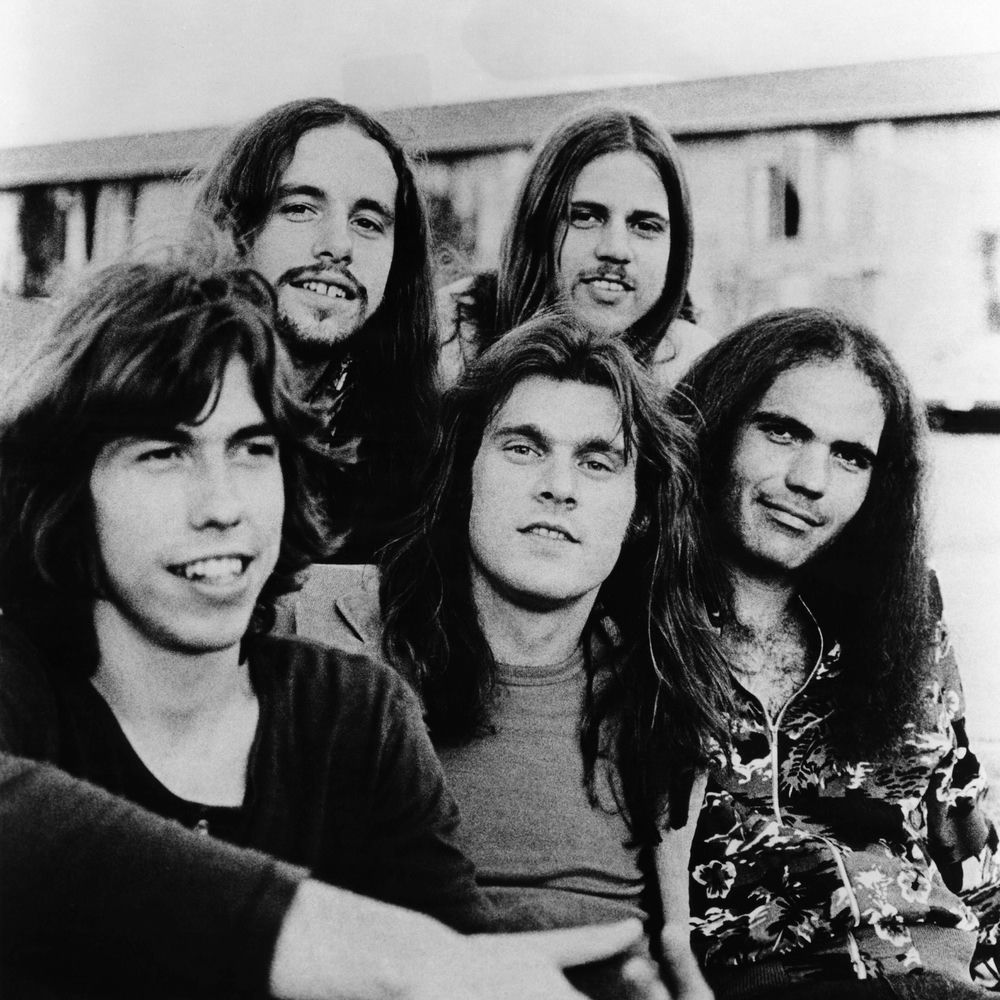
Bloodrock
Type: Group
 Mauritius
Mauritius
Listen on radio stations:
Bloodrock: The Pioneers of American Hard Rock
Bloodrock was an American rock band that carved a distinct niche in the early 1970s hard rock scene. Hailing from Fort Worth, Texas, the group is best known for their dark, heavy sound and their controversial 1971 hit single, "D.O.A.", which became a staple on album-oriented radio.
Early Career
The band formed in 1969 from the remnants of the group "The Naturals," which featured guitarist Lee Pickens and vocalist Jim Rutledge. They quickly developed a heavier, more aggressive style than many of their contemporaries, blending blues-rock foundations with progressive structures and a distinctly gritty, sometimes morbid, lyrical tone.
Breakthrough
Bloodrock's self-titled debut album in 1970 on Capitol Records established their signature sound, but it was their second album, Bloodrock 2, released later that same year, that propelled them to national attention. The album's eight-minute opening track, D.O.A., with its haunting siren intro and first-person narrative of a dying accident victim, became an unexpected radio hit, driving the album to No. 21 on the Billboard 200 chart.
Key Tracks
D.O.A. - This harrowing track defined the band's career, becoming a radio phenomenon and a controversial classic of early '70s rock for its stark subject matter.
Lucky in the Morning - A key track from their debut album, showcasing their ability to merge catchy, driving rock riffs with their characteristic weighty atmosphere.
Jessica - From the 1973 album Passage, this song highlights the band's shift towards more complex, progressive rock arrangements later in their career.
Following their initial success, Bloodrock released several more albums for Capitol, including Bloodrock 3 (1971) and U.S.A. (1972), which continued to explore dark, socially conscious themes within a hard rock framework. Internal tensions and changing musical tastes led to a significant lineup change after 1973's Passage, with a final album, Whirlwind Tongues, arriving in 1974 before the group disbanded.
Fans of Bloodrock's heavy, blues-infused style and dramatic songwriting may also appreciate the work of Grand Funk Railroad, who shared a similar blue-collar rock energy. The proto-metal drive of Blue Öyster Cult also offers a parallel in crafting dark, thematic rock anthems. For the progressive leanings found in later Bloodrock work, listeners might explore Uriah Heep and their blend of hard rock and complex compositions.
Bloodrock's music, particularly their classic early 1970s output, remains a fixture on classic rock and hard rock specialty radio programs. Their unique contribution to the era's sonic landscape continues to be celebrated by stations dedicated to guitar-driven rock history.
The music of Bloodrock can be heard on radio stations featured on our website, offering listeners a direct connection to their powerful and influential catalog of American hard rock.
Similar artists