Bobby Hutcherson
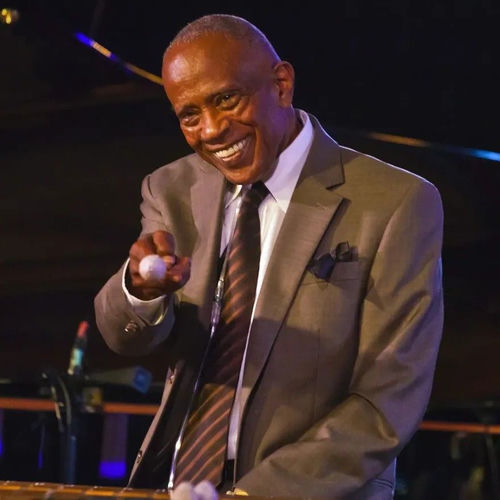
Bobby Hutcherson: The Vibraphone Virtuoso of Modern Jazz
Bobby Hutcherson was an American jazz vibraphonist and marimba player whose innovative techniques and compositional skill made him a central figure in the post-bop and avant-garde jazz movements. Hailing from Los Angeles, California, his prolific career spanned over five decades, yielding a landmark discography including the acclaimed 1965 Blue Note album "Dialogue," which cemented his status as a modern jazz pioneer.
Early career
Born in 1941 in Los Angeles, Hutcherson began his musical journey on piano before discovering the vibraphone in his late teens, inspired by the work of Milt Jackson. He quickly immersed himself in the West Coast jazz scene, moving to New York City in the early 1960s where his advanced harmonic sense and willingness to experiment caught the ear of emerging leaders like saxophonist Jackie McLean. This led to his first recording sessions for the legendary Blue Note label, beginning with McLean's 1963 album "One Step Beyond."
Breakthrough
Hutcherson's true breakthrough arrived with his own work as a leader for Blue Note Records, particularly the 1965 avant-garde masterpiece "Dialogue." The album, featuring a young Freddie Hubbard and Sam Rivers, was a critical success that showcased his ability to bridge complex, forward-thinking compositions with profound melodic beauty. This period established him not just as a formidable instrumentalist but as a significant composer and bandleader within the modern jazz vanguard.
Key tracks
Dialogue — The title track from his 1965 album is a seminal piece of avant-garde jazz, showcasing complex structures and collective improvisation.
Components — This funky, soulful original from the 1965 album "Components" became one of his most enduring and frequently sampled compositions.
Montara — The title track from his 1975 album epitomizes his foray into lush, Latin-tinged jazz-funk, achieving cult classic status.
Little B's Poem — A gentle, lyrical composition from the 1966 album "Happenings" that became a jazz standard, beloved for its melodic simplicity.
Rojo — From the 1970 album "San Francisco," this track highlights his mastery of the marimba within a soul-jazz context.
Throughout the 1970s, Hutcherson continued to evolve, recording a successful series of albums like "San Francisco" and "Montara" that blended jazz with funk, Latin, and soul influences, broadening his audience. He maintained a long and fruitful musical partnership with saxophonist Harold Land, co-leading a celebrated quintet, and later collaborated extensively with the Timeless All-Stars. Hutcherson remained a vital and respected elder statesman of jazz until his passing in 2016, leaving behind a profound influence on the instrument's role in modern music.
Fans of Bobby Hutcherson's inventive approach to the vibraphone and his journey through hard bop and beyond should also explore Milt Jackson for foundational bebop vibraphone mastery. The exploratory spirit of his mid-60s work aligns with Eric Dolphy, a key collaborator on albums like "Out to Lunch!" For his compositional depth and Blue Note legacy, listen to Wayne Shorter. The melodic clarity in his later work finds a parallel in Joe Pass, though on guitar, within the West Coast jazz idiom.
Bobby Hutcherson's catalog remains a staple on jazz radio stations across the spectrum, from public radio jazz programs to dedicated online jazz streams and classic jazz FM stations. His recordings, from the avant-garde to the accessible, are regularly featured in rotations that celebrate the evolution of modern jazz.
Listeners can discover the timeless music of Bobby Hutcherson and his essential contributions to the jazz genre on the curated radio stations available on onairium.com, where his vibrant sound continues to inspire new generations of fans.