Cachao
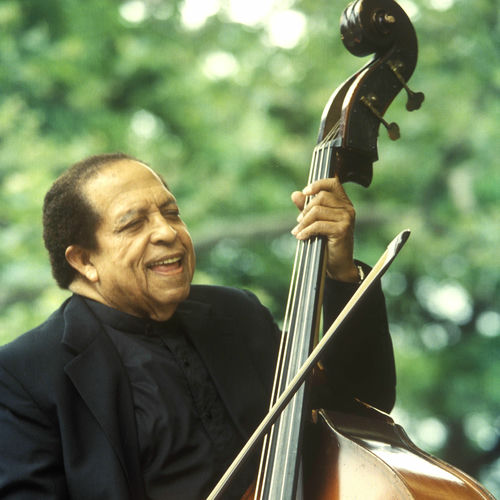
Cachao: The Cuban Mambo and Descarga Maestro
Israel "Cachao" López was a Cuban double bassist, composer, and bandleader who fundamentally reshaped Latin music. Hailing from Havana, his co-creation of the mambo rhythm and later pioneering of the spontaneous descarga jam session cemented his legacy as a foundational figure in Afro-Cuban jazz.
Early career
Born in 1918 into a musical family in Havana, Cachao was a child prodigy on the bass, playing in the Havana Philharmonic by age 13. His early career was spent within Cuba's vibrant dance orchestra scene, most notably as a member of the charanga group Arcaño y sus Maravillas, where he and his brother Orestes composed numerous danzóns.
Breakthrough
Cachao's first major breakthrough came in the late 1930s when he and his brother Orestes introduced a new, syncopated final section to the danzón, which they called "mambo." This rhythmic innovation, captured on 78 RPM recordings with Arcaño's orchestra, ignited a dance craze that would eventually sweep the globe. His second, career-redefining breakthrough occurred decades later in 1957 when he organized legendary late-night jam sessions, leading to the seminal album Descargas: Cuban Jam Sessions in Miniature for the Panart label.
Key tracks
Mambo — This 1938 recording with Arcaño y sus Maravillas is the foundational track that introduced the mambo rhythm to the world.
Descarga Cubana — The explosive opening track from the 1957 sessions that defined the spontaneous, improvisation-heavy descarga genre.
Chanchullo — A classic Cachao composition from the descarga era that later became the basis for Tito Puente's "Oye Como Va."
La Malanga — A fiery descarga showcase that highlights the driving, percussive force of Cachao's bass playing.
Ahora Sí — A later career highlight from his Grammy-winning 1994 album ¡Ahora Sí!, proving his enduring vitality.
After the Cuban Revolution, Cachao relocated first to Spain and then settled in New York in the early 1960s, where he continued to record and perform, though often in relative obscurity within the mainstream music industry. His career experienced a monumental revival in the 1990s, spearheaded by actor and fan Andy García, who produced the documentary and album Cachao: Como Su Ritmo No Hay Dos in 1993. This resurgence led to a major label deal with Epic, resulting in the Grammy-winning albums Master Sessions Volume 1 and ¡Ahora Sí!, which introduced his genius to a new generation.
Artists who share Cachao's deep roots in Cuban rhythm and improvisational brilliance include Arsenio Rodríguez, a fellow innovator who revolutionized the Cuban conjunto sound. The virtuosic piano of Rubén González shares the same timeless, dance-oriented elegance found in Cachao's work. For the modern evolution of the descarga, explore the work of Spanish Harlem Orchestra, which carries forward the big-band Latin jazz tradition. The bass-led grooves of Carlos del Puerto continue the rhythmic legacy pioneered by the master.
Cachao's influential catalog remains a staple on Latin jazz radio stations, tropical music FM channels, and online salsa streams. His timeless descargas and mambos are regularly featured in programming dedicated to classic Cuban son and dance music history.
Listeners can explore the monumental sounds of Cachao on radio stations featured across our network. Tune in to the stations available on onairium.com to hear the enduring rhythms of this Cuban music legend.