Carmen Miranda
Carmen Miranda: The Brazilian Bombshell of Samba and Hollywood
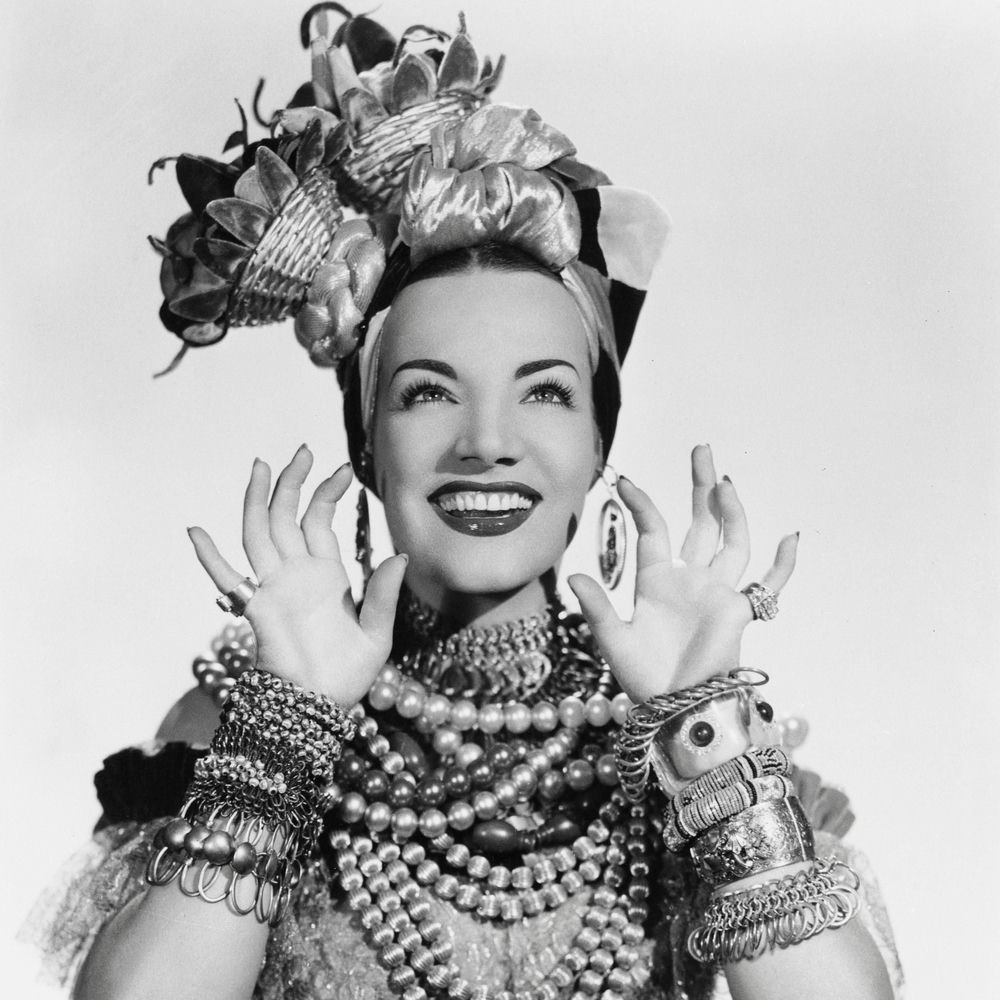
Carmen Miranda was a Portuguese-born Brazilian singer, dancer, and film star who became an international sensation in the 1940s. Her vibrant performances, characterized by elaborate fruit-laden headwear and a powerful voice, made her the highest-paid woman in the United States in 1945 and a defining figure in popularizing Brazilian samba and Latin music globally.
Early career
Born in Portugal in 1909, Maria do Carmo Miranda da Cunha moved to Rio de Janeiro as an infant. She began her career in the late 1920s, recording her first songs for RCA Victor in Brazil and quickly becoming a star on Brazilian radio. Her early recordings, like "Taí (Pra Você Gostar de Mim)" in 1930, were massive hits and established her as the "Queen of Samba."
Breakthrough
Carmen Miranda's international breakthrough came in 1939 after a legendary performance at The Casino da Urca in Rio captivated Broadway producer Lee Shubert. He brought her to New York, where her show "The Streets of Paris" was a smash hit. This led to a lucrative film contract with 20th Century Fox, launching her Hollywood career and making her a household name across North America.
Key tracks
"O Que É Que a Baiana Tem?" — This 1939 song introduced her iconic "baiana" costume and Afro-Brazilian rhythms to a worldwide audience, becoming her signature.
"South American Way" — Her show-stopping number from Broadway that cemented her stateside fame and became a charting record.
"Tico-Tico no Fubá" — Though not originally her song, Miranda's energetic 1947 recording with the Andrews Sisters for Decca became the definitive English-language version and a major hit.
"Mamãe Eu Quero" — A massive early hit in Brazil, this song showcased her vocal power and playful style, solidifying her domestic stardom.
"I Yi Yi Yi Yi (I Like You Very Much)" — This 1941 film song exemplifies her Hollywood era, blending English lyrics with infectious Latin beats.
Throughout the 1940s, Miranda starred in over a dozen Hollywood films, such as "Down Argentine Way" and "The Gang's All Here," often playing variations of her exotic, comedic persona. While her film roles sometimes relied on stereotypical depictions, her musical numbers were consistently energetic and technically brilliant, bringing authentic Brazilian composers like Ary Barroso to American audiences. She recorded extensively for Decca Records during this period, releasing numerous albums and singles that frequently charted.
By the early 1950s, Miranda sought to refresh her career, returning to live performances in clubs and on television. She made a celebrated return to Brazil and starred in her own television series. Her final film appearance was in "Scared Stiff" with Dean Martin and Jerry Lewis in 1953. Tragically, Carmen Miranda died of a heart attack in 1955 at the age of 46, leaving behind a vast legacy as Brazil's first major cultural export.
For listeners who enjoy the vibrant samba and theatrical style of Carmen Miranda, explore similar artists featured on our site. Elis Regina was another iconic Brazilian vocalist with immense power and emotional range. Antonio Carlos Jobim was the master composer behind the bossa nova wave that followed Miranda's era. Gal Costa carried the torch of dynamic Brazilian performance into the Tropicália movement. Desi Arnaz similarly brought Latin music and rhythms to mainstream American television in the same period.
The music of Carmen Miranda maintains a regular rotation on our dedicated Latin classics and vintage pop radio stations. Her timeless hits are featured on specialty shows focusing on Hollywood's golden age, world music pioneers, and the history of dance music, ensuring new generations discover her unique artistry.
You can hear the enduring songs of Carmen Miranda on the radio stations featured here on onairium.com. Tune in to our