CCR
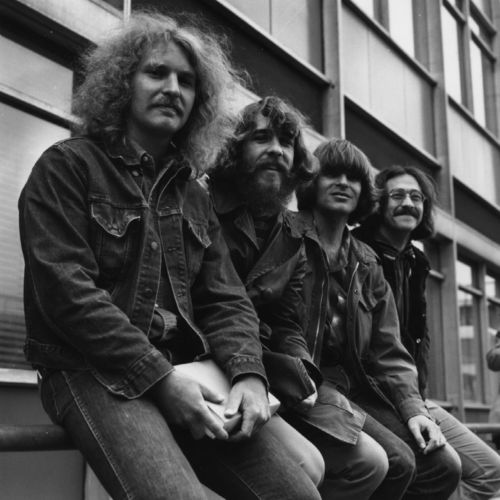
Creedence Clearwater Revival: The American Voice of Swamp Rock
Creedence Clearwater Revival, often abbreviated as CCR, was an American rock band that became one of the most successful and influential acts of the late 1960s and early 1970s. Hailing from El Cerrito, California, the band achieved massive commercial success, selling over 28 million albums in the United States alone and scoring a remarkable string of nine top 10 singles between 1969 and 1971.
Early career
The roots of Creedence Clearwater Revival trace back to 1959 when high school friends John Fogerty, Doug Clifford, and Stu Cook formed a band called The Blue Velvets. The trio, later joined by John's brother Tom Fogerty, honed their skills through relentless gigging and recorded early instrumentals under the name The Golliwogs for the Fantasy Records label starting in 1964. Their early sound was a raw blend of rock and roll and R&B, but it was not until they reclaimed creative control and changed their name in 1967 that their destiny shifted.
Breakthrough
The band's breakthrough arrived in 1968 with their self-titled debut album and a transformative cover of Dale Hawkins' "Suzie Q," which became a top 40 hit. Their true explosion into the mainstream, however, came the following year with the release of "Bayou Country" and its timeless single Proud Mary. The album reached number 7 on the Billboard 200 and was certified 2x Platinum, establishing CCR's signature swamp rock sound and launching an unprecedented period of productivity and chart dominance.
Key tracks
Proud Mary — This 1969 hit became the band's first million-selling single and remains one of the most covered songs in rock history, defining their bayou-inspired aesthetic.
Bad Moon Rising — A deceptively upbeat 1969 chart-topper that showcased John Fogerty's genius for pairing ominous lyrics with irresistibly catchy melodies.
Fortunate Son — A fierce political anthem from 1969's "Willy and the Poor Boys" that became a defining protest song of the Vietnam War era and a cultural touchstone.
Who'll Stop the Rain — This introspective track from 1970's "Cosmo's Factory" demonstrated the band's depth and Fogerty's songwriting maturity beyond hit singles.
Have You Ever Seen the Rain — Released in 1971 from the "Pendulum" album, this poignant song became a posthumous hit, reflecting the internal tensions within the band.
The band's peak was astonishingly prolific, releasing three top 10 albums in 1969 alone: "Bayou Country," "Green River," and "Willy and the Poor Boys." Their 1970 masterpiece "Cosmo's Factory" spent nine weeks at number one on the Billboard chart and was certified 4x Platinum, fueled by hits like Travelin' Band and Up Around the Bend. Despite their American roots imagery, CCR found massive international success, topping charts across Europe and becoming a global radio staple.
Internal strife, primarily centered around creative control and leadership, led to Tom Fogerty's departure in early 1971. The remaining trio released the album "Mardi Gras" in 1972, but with songwriting duties split, it failed to match their prior success. Creedence Clearwater Revival officially disbanded in October 1972, leaving behind a potent seven-album catalog. Their legacy was cemented by numerous Gold and Platinum certifications for their albums and singles, and their induction into the Rock and Roll Hall of Fame in 1993.
For fans of the raw, roots-driven sound of Creedence Clearwater Revival, several artists share a similar musical lineage. The Doors explored a similarly potent blend of blues, rock, and psychedelia during the same era. Lynyrd Skynyrd carried the Southern rock banner with guitar-driven anthems and storytelling. John Fogerty continued the CCR spirit through his successful solo career, revisiting the swamp rock genre.