

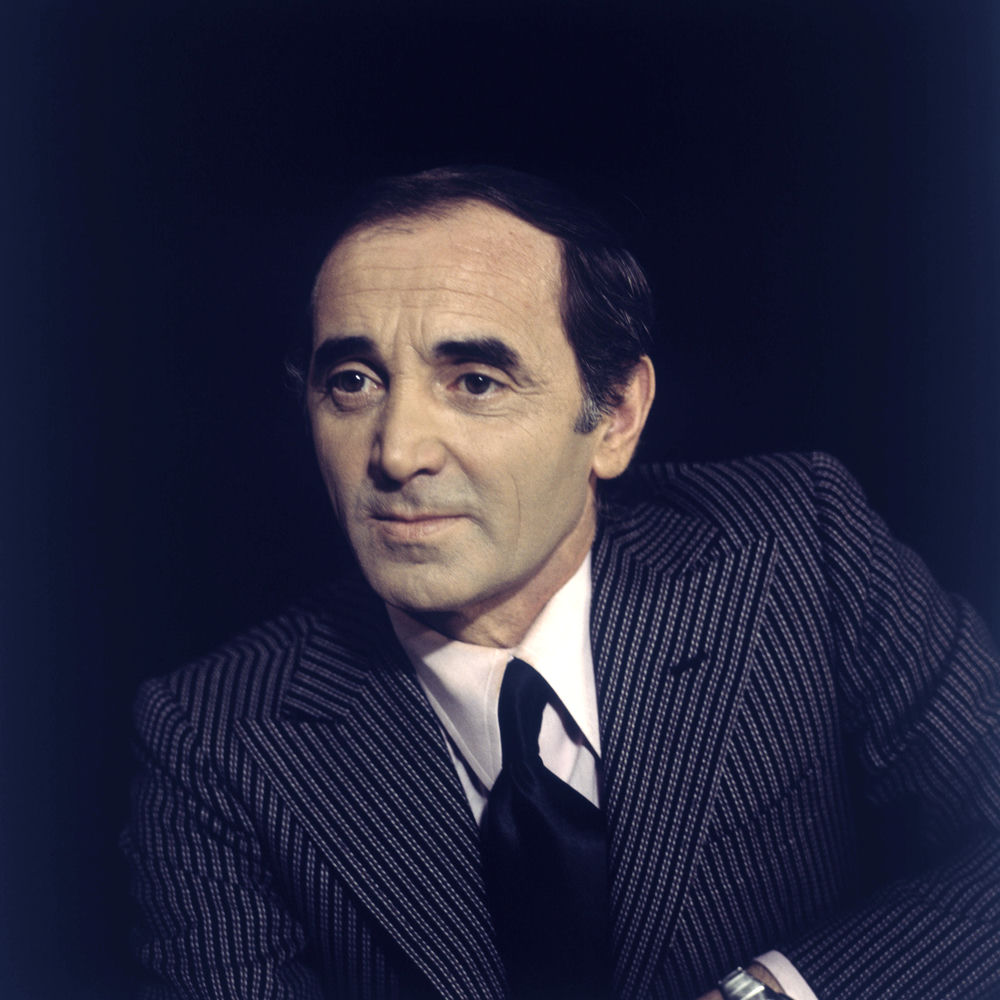
Charles Aznavour
Listen Charles Aznavour on radio stations:






Charles Aznavour: The Enduring Voice of French Chanson
Charles Aznavour was a French-Armenian singer, songwriter, and actor who became one of the most celebrated figures in French music history. His career, spanning over seven decades, saw him sell more than 180 million records worldwide, earning him the nickname "the French Frank Sinatra."
Early career
Born Shahnour Vaghinag Aznavourian in Paris in 1924 to Armenian immigrant parents, Aznavour began performing as a child. His early career was marked by struggle, performing in small clubs and theaters, and he found initial success as a songwriter for other artists like Édith Piaf before stepping into the spotlight himself.
Breakthrough
Aznavour's major breakthrough came in the late 1950s and early 1960s with a series of poignant, narrative-driven songs that connected deeply with audiences. His 1960 album Je m'voyais déjà established his unique style, and international fame followed with performances at New York's Carnegie Hall in 1963 and a growing catalog of hits released through labels like Barclay and EMI.
Key tracks
La Bohème - This nostalgic ballad about lost youth and Montmartre became one of his signature songs, beloved for its evocative storytelling.
She - Originally written in French as Tous les visages de l'amour, the English version became a massive international hit, topping charts across Europe.
Hier encore - A powerful reflection on aging and the passage of time, showcasing his skill at writing deeply personal and universal lyrics.
For Me Formidable - A lighter, upbeat love song that demonstrated his versatility and became a standard in his live performances.
Emmenez-moi - A yearning anthem about escape and dreams of travel that remains a classic of the French chanson genre.
His prolific output included over 1,200 songs sung in multiple languages, and he maintained a relentless touring schedule well into his later years. Aznavour also enjoyed a parallel career in film, appearing in over 80 movies including Shoot the Piano Player (1960) and The Tin Drum (1979).
Artists with a similar mastery of lyrical, narrative-driven French songcraft include Jacques Brel, whose intense poetic style shares Aznavour's emotional depth. Georges Brassens also crafted witty, literary chansons that defined a generation. The elegant pop of Serge Gainsbourg represents another innovative pillar of French music from the same era.
Charles Aznavour's music continues to be celebrated globally for its emotional honesty and masterful craftsmanship. His vast catalog ensures his voice remains a vital part of musical heritage.
