Chet Baker
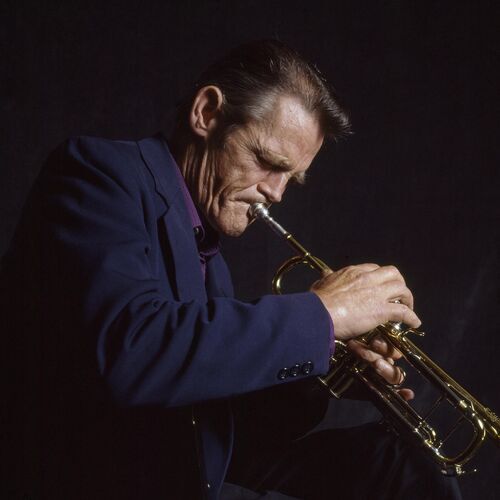
Chet Baker: The Definitive Voice of West Coast Jazz
Chet Baker was an American jazz trumpeter and vocalist who became a central figure in the cool jazz movement of the 1950s. Hailing from Yale, Oklahoma, his early fame was cemented by his work with the Gerry Mulligan Quartet and his solo album Chet Baker Sings, which brought him critical acclaim and commercial success.
Early career
Chet Baker was born in 1929 and developed his musical skills after joining the U.S. Army in 1946, where he played in the 298th Army Band. After his discharge, he immersed himself in the burgeoning Los Angeles jazz scene, playing in clubs and catching the ear of saxophonist Charlie Parker, with whom he performed briefly in 1952.
Breakthrough
Baker's breakthrough arrived in 1952 when he joined baritone saxophonist Gerry Mulligan's revolutionary pianoless quartet. Their recording of "My Funny Valentine" for the Pacific Jazz label became an instant classic, propelling Baker to stardom and defining the sound of West Coast cool jazz.
Key tracks
My Funny Valentine — This 1952 instrumental with the Gerry Mulligan Quartet became Baker's signature tune and a timeless jazz standard.
Let's Get Lost — The title track from his 1958 vocal album showcases his intimate, whisper-like singing style and romantic lyricism.
Time After Time — A standout from his 1954 vocal debut Chet Baker Sings, highlighting his vulnerable and influential vocal approach.
Almost Blue — His 1979 interpretation of this Elvis Costello song demonstrated his lasting relevance and emotional depth to a new generation.
The success of the Mulligan quartet launched his solo career on Pacific Jazz and later Riverside Records. His 1954 vocal album Chet Baker Sings was a daring move that divided purists but expanded his audience, with tracks like "My Buddy" and "I Fall in Love Too Easily" receiving significant airplay.
Baker's career was famously marred by severe heroin addiction, leading to legal troubles and periods of obscurity. A brutal 1968 assault, which damaged his teeth and embouchure, threatened his playing ability, but he staged a remarkable comeback in the 1970s, recording extensively in Europe for labels like SteepleChase.
His later work, including celebrated albums like She Was Too Good to Me (1974) and the poignant documentary soundtrack Let's Get Lost (1988), revealed a darker, more complex artist. Chet Baker died in Amsterdam in 1988, leaving behind a legacy defined by lyrical trumpet playing and a uniquely fragile vocal style.
For fans of Chet Baker's introspective cool jazz style, our station also features music from Gerry Mulligan His baritone saxophone was the perfect counterpoint to Baker's trumpet in their legendary quartet. Discover the smooth trumpet work of Miles Davis whose early cool period shares a similar atmospheric and melodic sensibility. The elegant piano jazz of Bill Evans offers a comparable harmonic sophistication and reflective mood. Explore the vocal intimacy of Julie London whose understated phrasing captures a similarly direct and personal feeling.
Chet Baker's catalog remains a staple on jazz-focused radio stations, from dedicated classic jazz FM channels to specialized online streams that celebrate the cool and West Coast genres. His recordings are frequently featured in curated programs highlighting trumpet masters and iconic vocalists of the 20th century.
Listeners can explore the haunting sound of Chet Baker on radio stations featured on onairium.com, where his timeless recordings continue to define the sound of cool jazz for audiences worldwide.