

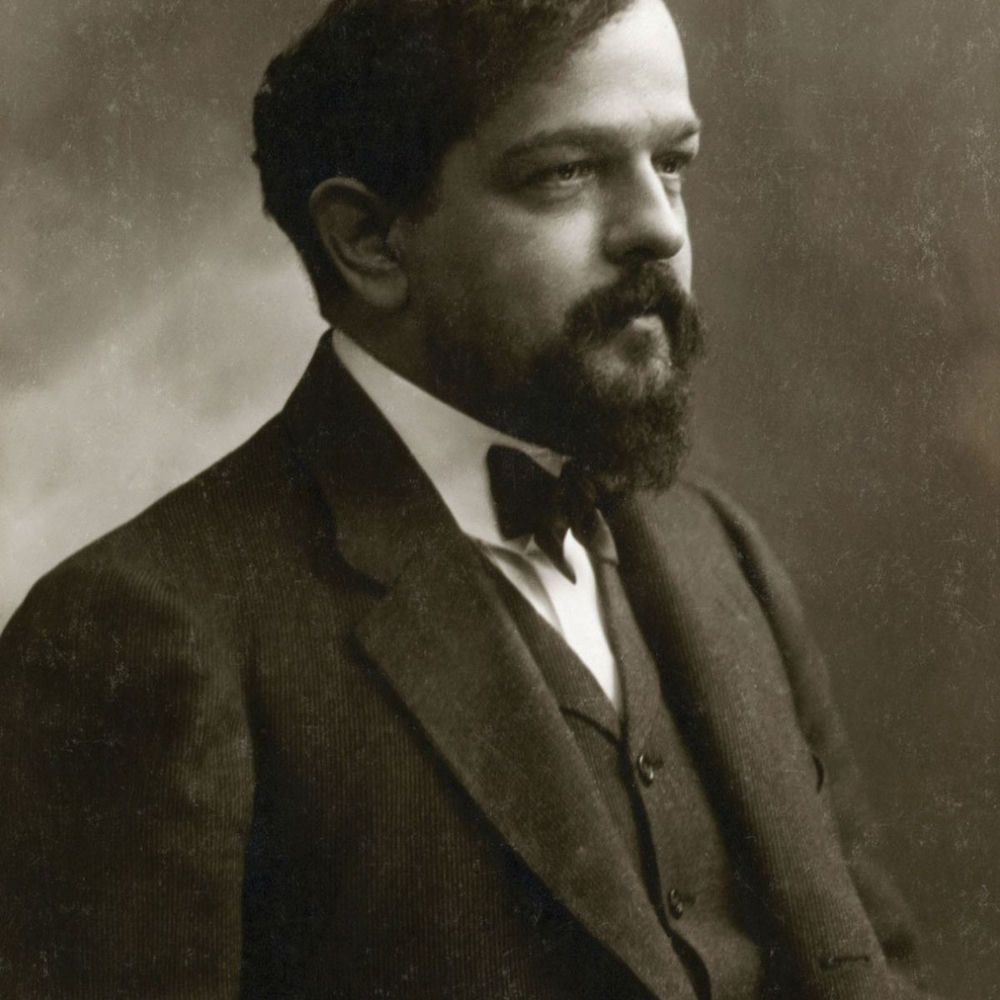
Claude Debussy
Listen Claude Debussy on radio stations:









Claude Debussy: The Pioneer of French Musical Impressionism
Claude Debussy was a French composer whose innovative harmonic language and evocative soundscapes fundamentally reshaped Western classical music at the turn of the 20th century. His work, often described as musical Impressionism, achieved lasting global recognition and remains a cornerstone of the modern piano and orchestral repertoire.
Early career
Born in Saint-Germain-en-Laye, France, in 1862, Achille-Claude Debussy entered the Paris Conservatoire at the age of ten, demonstrating early talent but also a rebellious streak against traditional Germanic compositional rules. His early major work, the cantata L'Enfant prodigue (1884), won the prestigious Prix de Rome, though his time at the Villa Medici in Rome proved creatively stifling for the young composer.
Breakthrough
Debussy's mature style crystallized in the 1890s, with the Prélude à l'après-midi d'un faune (1894) serving as a definitive breakthrough. This revolutionary orchestral work, inspired by Stéphane Mallarmé's poem, with its fluid rhythms and shimmering tonal colors, established his reputation. His only completed opera, Pelléas et Mélisande (1902), though initially controversial, cemented his status as a leading avant-garde figure in Paris.
Key tracks
Prélude à l'après-midi d'un faune - This symphonic poem is widely considered the beginning of modern music, breaking from traditional form and harmony.
Clair de Lune - The third movement of his Suite bergamasque for piano became one of the most famous and accessible pieces in the impressionist repertoire.
La Mer - His 1905 orchestral work is a masterful, three-symphonic sketch depicting the sea, showcasing his genius for evocative, non-narrative tone painting.
Pelléas et Mélisande - This opera rejected Wagnerian melodrama in favor of subtle, atmospheric declamation, profoundly influencing 20th-century opera.
Voiles - From his first book of Préludes for piano, this piece famously utilizes the whole-tone scale, creating a distinctive, ambiguous sonic atmosphere.
Throughout the early 1900s, Debussy produced a stream of masterworks, including his collections of Préludes and Études for piano, which expanded the instrument's technical and coloristic possibilities. His later works, composed while battling cancer, sometimes show a leaner, more abstract style, as heard in his Sonata for Cello and Piano (1915). Claude Debussy died in Paris in 1918, leaving a legacy that directly paved the way for modernist composers like Maurice Ravel and Igor Stravinsky.
Listeners who appreciate the atmospheric textures of Debussy's impressionist genre may also explore the works of Maurice Ravel, who shared a fascination with color and form but with a more precise, classical sensibility. The harmonic explorations of Erik Satie, another pivotal French figure, provided an early model of minimalist innovation. For a later extension of evocative orchestration, the music of Olivier Messiaen carries forward a uniquely French blend of color and spirituality.
The compositions of Claude Debussy are essential listening on classical music radio stations, frequently featured in programming dedicated to Romantic and early modern masters. His works anchor playlists that trace the evolution of orchestral and piano music, captivating audiences with their timeless, evocative power.
The music of Claude Debussy can be heard on the classical radio stations featured within our network, offering listeners a direct connection to his revolutionary soundworld.
