Coleman Hawkins
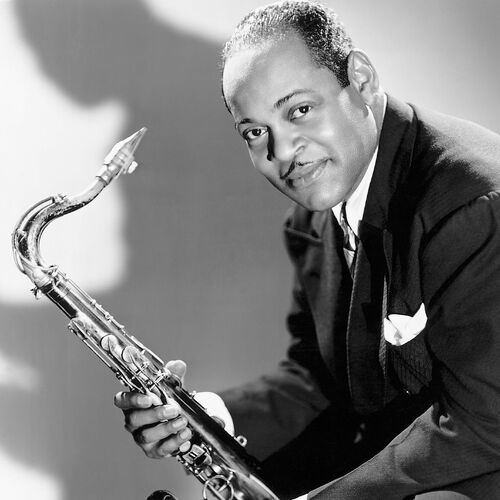
Coleman Hawkins: The Father of the Jazz Tenor Saxophone
Coleman Hawkins was an American jazz saxophonist who fundamentally defined the role of the tenor saxophone in jazz music. Hailing from Saint Joseph, Missouri, his 1939 recording of "Body and Soul" became a monumental hit and remains one of the most celebrated jazz performances of all time.
Early career
Born in 1904, Coleman Hawkins began his professional career in the early 1920s after moving to New York. He gained crucial early experience as a member of Fletcher Henderson's orchestra from 1923 to 1934, where his powerful sound began to distinguish him from other saxophonists of the era.
Breakthrough
Hawkins's true breakthrough arrived in 1939 following his return to the United States after a five-year residency in Europe. His seminal recording of the ballad "Body and Soul" for the Bluebird label, a subsidiary of RCA Victor, was a daring improvisational masterpiece that became an unexpected jukebox hit and solidified his legendary status.
Key tracks
Body and Soul — This 1939 recording is a landmark of jazz improvisation, built almost entirely on a revolutionary solo that strayed from the original melody.
Picasso — An important 1948 unaccompanied solo recording that showcased Hawkins's advanced harmonic conception and technical command.
The Man I Love — A prime example from his 1957 album "The Hawk Flies High" on the Riverside label, demonstrating his enduring vitality during the bebop era.
Bean and the Boys — A 1940s swing anthem that perfectly captures his robust, arpeggio-based style and influence on the swing era.
Following his breakthrough, Hawkins remained a dominant and adaptable force in jazz for decades. He recorded prolifically for labels like Verve, Impulse!, and Prestige, engaging with younger bebop musicians like Dizzy Gillespie and Thelonious Monk on seminal sessions. His 1960 album "At Ease with Coleman Hawkins" on Moodsville and the 1962 collaboration "Duke Ellington Meets Coleman Hawkins" on Impulse! are standout entries in his vast discography.
Artists who share Hawkins's foundational influence in jazz saxophone include Ben Webster, who possessed a similarly breathy, romantic tone on ballads. Lester Young offered a contrasting, lighter approach that became equally influential on the cool jazz movement. Later masters like Sonny Rollins built directly upon the improvisational freedom Hawkins pioneered. John Coltrane also explored the depths of harmonic exploration that Hawkins first charted on the tenor sax.
Coleman Hawkins's catalog is a staple on jazz radio programming, featured on stations dedicated to classic jazz, swing era retrospectives, and historical music formats. His recordings are essential listening for any broadcast celebrating the evolution of American jazz music.
The music of Coleman Hawkins, a cornerstone of the jazz genre, can be heard on radio stations featured on our website. Listeners can discover his timeless recordings through the curated jazz radio stations available on onairium.com.