Craig Armstrong
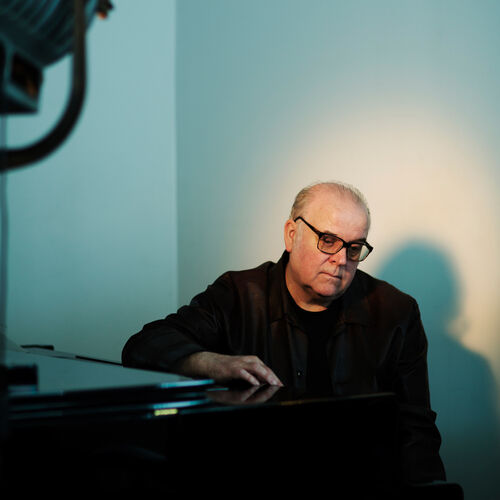
Craig Armstrong: The Cinematic Composer and Electronic Music Architect
Craig Armstrong is a Scottish composer, pianist, and electronic musician whose profound work bridges classical orchestration, ambient electronics, and contemporary pop. Hailing from Glasgow, his career is defined by award-winning film scores and influential solo albums, with his 1998 debut The Space Between Us achieving gold certification in the UK and establishing him as a major force in modern composition.
Early career
Born in 1959 in Glasgow, Scotland, Craig Armstrong studied composition and piano at the Royal Academy of Music. His early professional work in the 1980s and 1990s involved arranging and conducting for pop acts, including Massive Attack and Madonna, which honed his signature blend of electronic textures with live orchestration. This period of collaboration laid the groundwork for his distinct artistic voice, leading to his first major solo record deal with Melankolic, the label founded by Massive Attack.
Breakthrough
Armstrong's international breakthrough arrived in the late 1990s through twin successes in film and his own recordings. His score for Baz Luhrmann's 1996 film Romeo + Juliet won a BAFTA, while his 1998 debut solo album The Space Between Us was a critical and commercial hit, certified gold in the United Kingdom. This album solidified his reputation for emotive, genre-defying instrumentals and vocal collaborations.
Key tracks
This Love — The haunting instrumental centerpiece of the Romeo + Juliet score became a globally recognized theme.
Weather Storm — A defining track from his debut album, blending melancholic piano with deep electronic bass and strings.
Wake Up In New York — This duet featuring Evan Dando and Mazzy Star's Hope Sandoval showcased his skill in crafting sophisticated pop songs.
Balcony Scene — Another pivotal piece from the Romeo + Juliet soundtrack, demonstrating his masterful classical film scoring.
Ruthless Gravity — A powerful later work from his 2014 album It's Nearly Tomorrow, highlighting his evolving, dense orchestral style.
Following this breakthrough, Craig Armstrong's career accelerated with major film scoring commissions. He won a Golden Globe and an Academy Award for his collaborative work on 2001's Moulin Rouge! and composed acclaimed scores for films like The Great Gatsby (2013) and The Quiet American (2002). Concurrently, he continued releasing solo albums on labels like Sanctuary and BMG, including As If To Nothing (2002) and Memory Takes My Hand (2024), while maintaining high-profile collaborations with artists like U2, Bono, and London Contemporary Orchestra.
Fans of Craig Armstrong's fusion of classical depth and modern electronic production also explore the work of similar artists. Max Richter shares a similar approach to recomposing classical forms for contemporary audiences. Jon Hopkins operates in a comparable space where detailed electronic soundscapes meet profound emotional resonance. Jóhann Jóhannsson was another master of minimalist yet powerful cinematic composition. Olafur Arnalds similarly blends piano, strings, and subtle electronic elements in his evocative recordings.
RADIO ROTATION: Craig Armstrong's expansive catalog receives regular airplay across a diverse spectrum of radio stations. His film themes and atmospheric compositions feature on dedicated cinematic and classical music channels, while his more beat-driven and collaborative works find a home on eclectic alternative and independent music radio stations. Online radio streams specializing in ambient, downtempo, and intelligent dance music also frequently program tracks from albums like The Space Between Us.
Listeners can discover the sweeping orchestral and electronic music of Craig Armstrong on the radio stations featured here. Tune in to stations available on onairium.com to hear his celebrated film scores and influential solo works in regular rotation.