Creedance Clearwater Revival
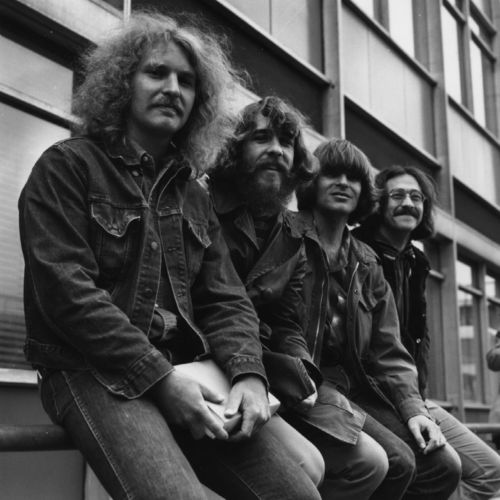
Creedence Clearwater Revival: The Bayou's Rock & Roll Titans
Creedence Clearwater Revival was an American rock band that forged a timeless sound blending swamp rock, roots rock, and potent social commentary. Hailing from El Cerrito, California, the group achieved monumental commercial success, selling over 50 million records worldwide and scoring five consecutive top 10 albums in the United States.
Early career
The band's origins trace back to 1959 when high school friends John Fogerty, Tom Fogerty, Stu Cook, and Doug Clifford began playing together as The Blue Velvets. They signed to Fantasy Records in 1964, releasing several singles as The Golliwogs with limited success before adopting the definitive Creedence Clearwater Revival name in 1967.
Breakthrough
Creedence Clearwater Revival's breakthrough arrived explosively in 1969 with their second album, Bayou Country, and its iconic single "Proud Mary". The album reached number seven on the Billboard 200 and was certified double platinum, establishing the band's signature bayou-inspired rock sound and launching a period of incredible creative productivity.
Key tracks
Proud Mary — This 1969 hit became the band's first top 10 single and remains one of the most covered songs in rock history.
Fortunate Son — A searing anti-war anthem that captured the era's political unrest and became a cultural touchstone.
Bad Moon Rising — This 1969 chart-topper exemplifies their catchy, folk-rock infused style with deceptively dark lyrical undertones.
Have You Ever Seen the Rain — A poignant 1971 ballad reflecting the band's internal tensions while achieving major chart success.
Down on the Corner — A cheerful, storytelling single that showcased the band's ability to craft character-driven roots rock.
Their prolific output continued with three more top 10 albums in 1969 and 1970: Green River, Willy and the Poor Boys, and Cosmo's Factory. Cosmo's Factory was a particular commercial peak, spending nine weeks at number one on the Billboard chart and being certified quadruple platinum. Despite their American sound, the band found massive international appeal, with significant chart success in the United Kingdom and across Europe.
Internal strife, primarily centered around creative control and leadership, led to Tom Fogerty's departure in early 1971. The remaining trio released one final album, Mardi Gras, in 1972 before dissolving officially in October of that year. John Fogerty embarked on a successful solo career, while Cook and Clifford later performed together as Creedence Clearwater Revisited.
Their legacy is cemented by numerous accolades, including induction into the Rock and Roll Hall of Fame in 1993. The music of Creedence Clearwater Revival continues to resonate, with their albums consistently achieving multi-platinum certifications from the RIAA for sales exceeding millions of copies.
Fans of the raw, rootsy rock of Creedence Clearwater Revival often appreciate the heartland storytelling of John Fogerty. His solo work continues the tradition of concise, guitar-driven songcraft. The Southern rock grit of Lynyrd Skynyrd shares a similar blues and country foundation. For the blend of social commentary and rock energy, listeners might explore The Doors. The straightforward, anthemic quality of their music also finds a parallel in Tom Petty and the Heartbreakers' brand of American rock.
The songs of Creedence Clearwater Revival remain a staple on classic rock FM stations and album-oriented rock formats, where their driving rhythms and iconic guitar riffs are in constant rotation. Their timeless hits are also featured on various online rock radio streams and independent music radio stations that celebrate the golden era of rock and roll.
Listeners can discover the powerful catalog of Creedence Clearwater Revival by tuning into the classic rock and heritage radio stations featured on our website. Their essential American rock music is regularly played on multiple channels available on