

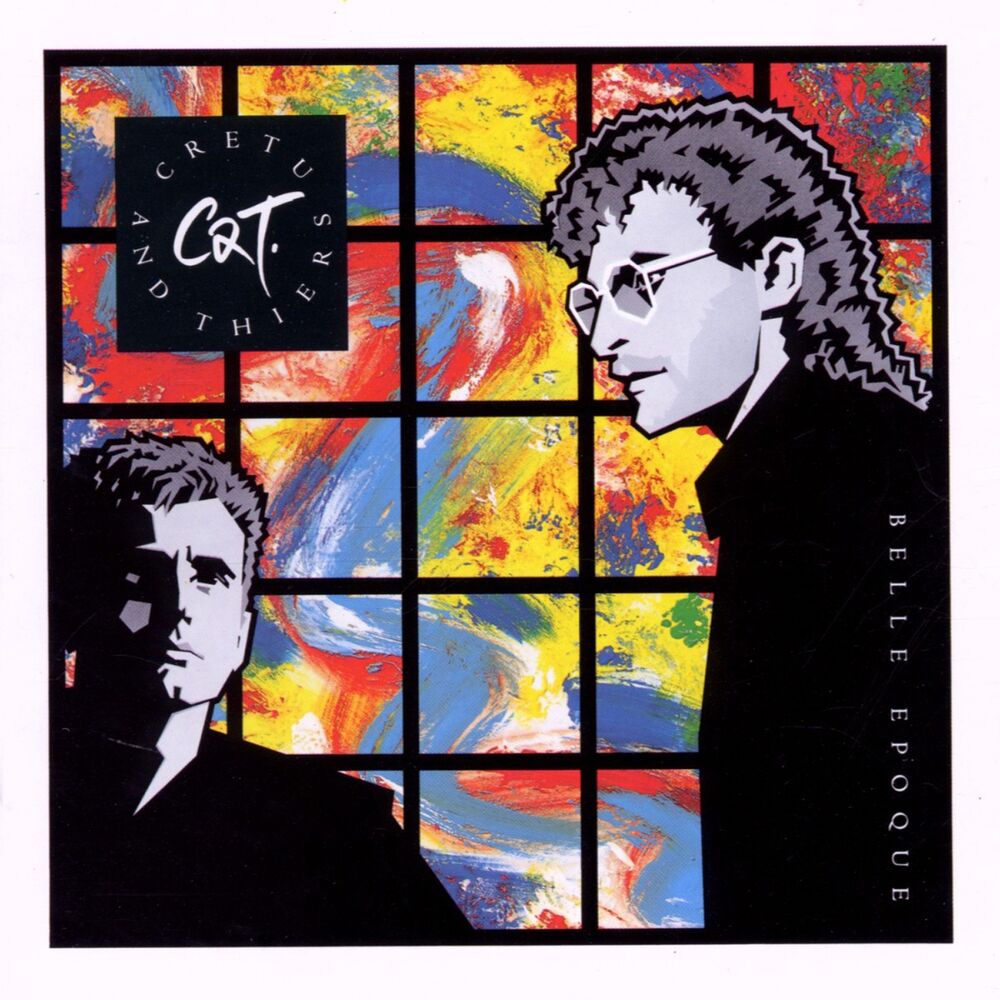
Cretu
Listen Cretu on radio stations:
Cretu: The Electronic Music Architect
Michael Cretu is a German-Romanian musician, songwriter, and producer best known as the mastermind behind the globally successful electronic music project Enigma. Originating from Bucharest, Romania, and building his career in Germany, Cretu achieved monumental success with Enigma's 1990 debut album MCMXC a.D., which sold over 12 million copies worldwide and topped charts across Europe and the United States.
Early career
Born in 1957 in Bucharest, Michael Cretu moved to West Germany in the late 1970s to study music. He began his professional career as a session musician and producer, working with artists like Peter Cornelius and Hubert Kah. His early solo work, including the 1979 album Moon, Light & Flowers, established him in the German music scene and showcased his growing affinity for synthesizers and atmospheric soundscapes.
Throughout the 1980s, Cretu honed his production skills, crafting hits for German pop singer Sandra, whom he later married. His production work on her albums like The Long Play and the hit single "Maria Magdalena" blended pop sensibilities with electronic elements, laying the groundwork for his future, more ambitious project.
Breakthrough
Cretu's breakthrough arrived in 1990 with the launch of Enigma and the release of the album MCMXC a.D. on Virgin Records. The lead single, "Sadeness (Part I)," became an instant global phenomenon, fusing Gregorian chants with a contemporary dance beat and sensual whispers. The single reached number one in over 20 countries, including the UK and Germany, and propelled the album to multi-platinum status internationally.
The album's success was unprecedented for a project of its kind, defining the "new age music" genre for a mainstream audience and establishing Cretu as a visionary studio artist. Enigma's follow-up, 1993's The Cross of Changes, continued this success, selling over eight million copies and featuring the worldwide hit "Return to Innocence."
Key tracks
Sadeness (Part I) — This groundbreaking 1990 single defined Enigma's signature sound and became a worldwide chart-topper, selling millions of copies.
Return to Innocence — The 1993 hit from Enigma's second album sampled a Taiwanese folk song and became another global anthem, receiving heavy rotation on MTV and radio.
Mea Culpa — A key track from the debut album, it further cemented the fusion of spiritual chants and modern electronic rhythms that captivated audiences.
Gravity of Love — Released in 1999, this operatic and dramatic single from the album The Screen Behind the Mirror showcased the evolving complexity of Cretu's productions.
Cretu continued to release albums as Enigma throughout the 1990s and 2000s, including Le Roi Est Mort, Vive Le Roi! (1996) and A Posteriori (2006). While later works did not match the colossal commercial peak of the first two albums, they maintained a dedicated global fanbase and a distinct sonic identity. He has largely worked in seclusion at his A.R.T. Studios in Ibiza, Spain, crafting the intricate layers of sound that define the Enigma project.
Beyond Enigma, Cretu has been involved in other productions and collaborations, but his legacy remains inextricably linked to the enigmatic project he created. His influence on ambient, electronic, and world music fusion is widely acknowledged within the industry.
Fans of Cretu's atmospheric and meticulously produced electronic soundscapes may also appreciate the work of Deep Forest, who similarly blend world music samples with electronic beats. The cinematic scope of Jean-Michel Jarre shares a kinship with Cretu's grand compositional style. For the meditative and spiritual elements, explore Era, a project also known for its fusion of classical and contemporary motifs.
The music of Cretu and his project Enigma maintains a steady presence on various radio formats featured on this website. His iconic tracks are staples on
