Crosby, Stills, and Nash
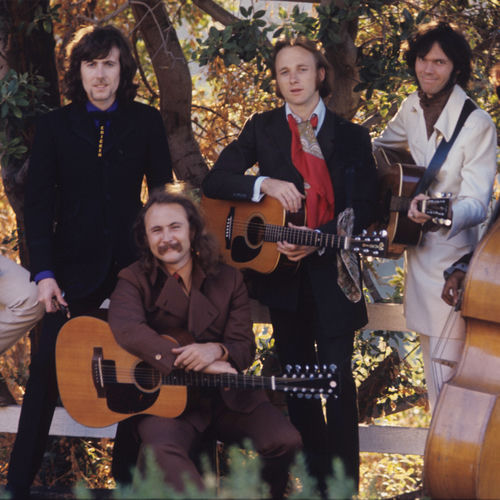
Crosby, Stills, and Nash: Pioneers of Folk Rock Harmony
Crosby, Stills, and Nash are an American folk rock supergroup formed from the ranks of three successful 1960s bands. Their intricate vocal harmonies and introspective songwriting defined a generation, achieving massive commercial success with multi-platinum albums and timeless hits.
Early career
The group crystallized in 1968 in Los Angeles, California, uniting three established talents. David Crosby had been dismissed from The Byrds, Stephen Stills was seeking a new project after Buffalo Springfield disbanded, and Graham Nash departed The Hollies, seeking greater artistic freedom.
Their instant chemistry was famously demonstrated at a casual jam at Joni Mitchell's house. This led to a recording contract with Atlantic Records, where they began work on their debut album with a clear, cohesive vision.
Breakthrough
The 1969 self-titled debut album, Crosby, Stills & Nash, was an immediate smash. It peaked at No. 6 on the Billboard 200 and has since been certified quadruple-platinum by the RIAA.
The album's sophisticated sound, blending acoustic and electric elements with pristine three-part harmony, set a new standard for the genre. It established Crosby, Stills, and Nash as the premier vocal group in rock.
Key tracks
Suite: Judy Blue Eyes — This Stills-penned epic, with its complex structure and breathtaking harmonies, became the album's centerpiece and a live staple.
Marrakesh Express — Nash's upbeat, whimsical song provided a perfect pop counterpoint and became the group's first major Top 40 single.
Long Time Gone — Crosby's urgent, politically charged response to the assassination of Robert F. Kennedy showcased the group's ability to merge commentary with compelling music.
Our House — From the 1970 album Déjà Vu, this Nash-written domestic idyll became one of their most beloved and enduring soft-rock hits.
Teach Your Children — This Nash song, featuring Jerry Garcia on pedal steel guitar, highlighted the group's connection to the country rock scene and became a radio anthem.
For the 1970 tour and the follow-up album Déjà Vu, the trio expanded to a quartet with the addition of Neil Young. The Déjà Vu album was an even greater commercial success, reaching No. 1 and eventually being certified seven-times platinum. The configuration of the group would fluctuate between a trio and a quartet for decades, marked by periods of intense collaboration and well-documented personal friction.
Their legacy was cemented by landmark performances like Woodstock in 1969 and a prolific, if intermittent, recording career that yielded further hits like "Just a Song Before I Go." They were inducted into the Rock and Roll Hall of Fame in 1997.
Fans of the intricate vocal interplay and melodic folk-rock of Crosby, Stills, and Nash often appreciate the work of The Byrds, where David Crosby first developed his harmonic sensibilities. The California rock sound and poetic lyrics of The Eagles show a clear stylistic debt to the supergroup's blueprint. For a contemporary take on rich harmony-driven rock, listeners turn to Fleet Foxes and their layered acoustic arrangements. The introspective songwriting and social consciousness of Jackson Browne also align closely with the ethos of Crosby, Stills, and Nash.
The music of Crosby, Stills, and Nash remains a core component of the playlists on classic rock FM stations and album-oriented rock channels across the United States. Their songs are regularly featured on specialty programs dedicated to the singer-songwriter era and the sound of the late 1960s and 1970s.
You can hear the timeless folk rock harmonies of Crosby, Stills, and Nash on the curated classic rock and heritage album radio stations featured right here on onairium.com. Tune in to discover their essential tracks and the deep musical legacy they created.