
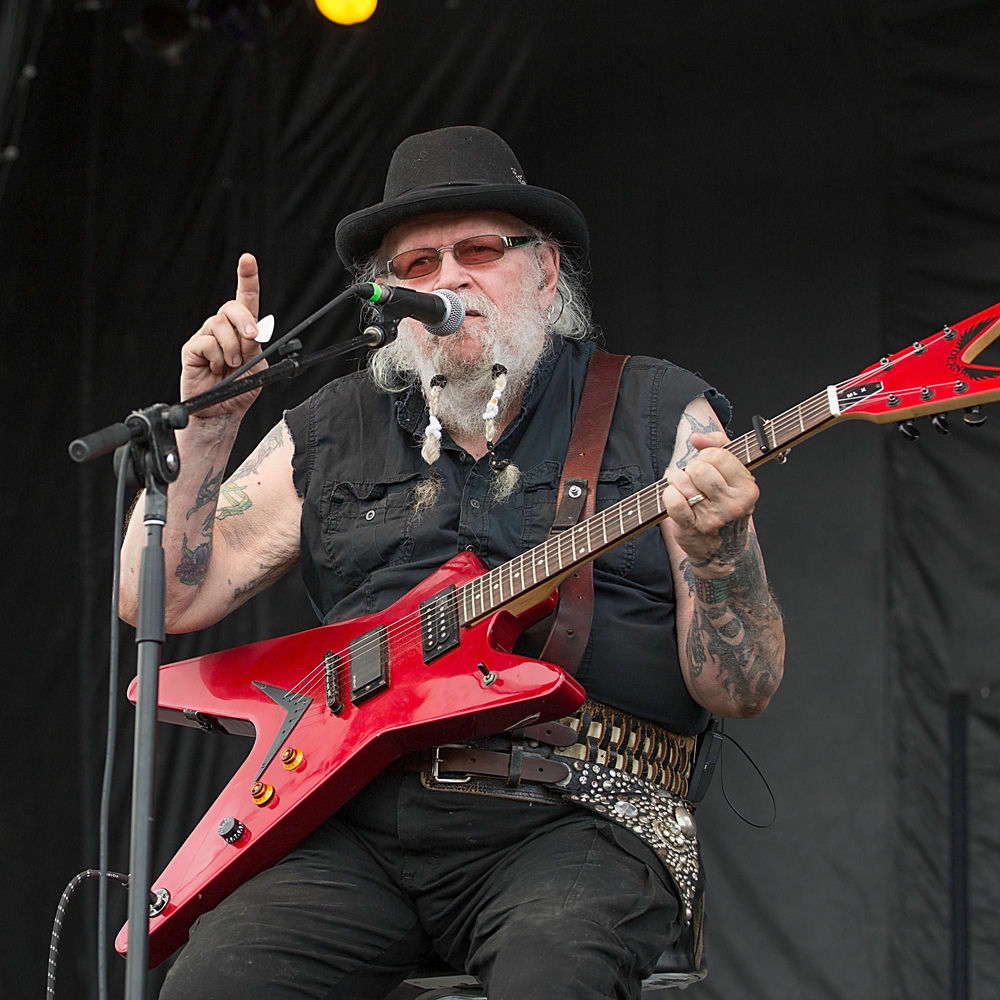
David Allan Coe
Listen on radio stations:

David Allan Coe: The Outlaw Country Contrarian
David Allan Coe is an American singer-songwriter who carved a unique and controversial path through the country music landscape. His career is defined by a potent blend of traditional country storytelling, outlaw rebellion, and a deliberately crafted persona that often blurred the lines between reality and myth.
Early career
David Allan Coe's early life is shrouded in tales he helped propagate, but his professional music career began in the late 1960s after he was reportedly discovered by the singer Jimmy Buffett while performing in a Nashville bar. He initially gained attention as a songwriter, penning tracks for other artists, and released his debut album, Penitentiary Blues, in 1968, establishing his raw, personal style.
Breakthrough
Coe's breakthrough into the mainstream came in the mid-1970s as part of the burgeoning "Outlaw Country" movement alongside artists like Willie Nelson and Waylon Jennings. His 1975 album The Mysterious Rhinestone Cowboy and its 1976 follow-up Longhaired Redneck solidified his reputation, featuring his own compositions alongside songs written for him by others like Steve Goodman.
Key tracks
You Never Even Called Me by My Name - This Steve Goodman-penned song, often called the "perfect country and western song," became Coe's signature hit and a staple of his live shows.
The Ride - A storytelling classic where Coe recounts a ghostly encounter with Hank Williams Sr., showcasing his deep connection to country music lore.
Longhaired Redneck - The title track from his 1976 album became an anthem of defiance that perfectly captured his outlaw image and resonated with a specific segment of the country audience.
Mona Lisa Lost Her Smile - This 1984 release demonstrated Coe's ability to craft a more polished, romantic ballad that achieved significant country radio success.
If That Ain't Country - A later-career track that serves as a gritty, self-referential manifesto celebrating the hard-living themes central to his musical identity.
Throughout the late 1970s and 1980s, David Allan Coe continued to release albums that alternated between rowdy outlaw anthems and tender ballads, maintaining a dedicated fanbase. His recorded output for major labels like Columbia and his own independent releases often courted controversy due to their lyrical content, further cementing his status as a polarizing figure who operated outside the Nashville establishment.
Fans of David Allan Coe's brand of storytelling and rebellious spirit might also appreciate the music of Waylon Jennings, a founding father of the Outlaw Country sound. The raw, personal songwriting of Johnny Paycheck shares a similar confrontational energy. For another artist who blended traditional country with a rock attitude, explore Hank Williams Jr..