Dinah Washington
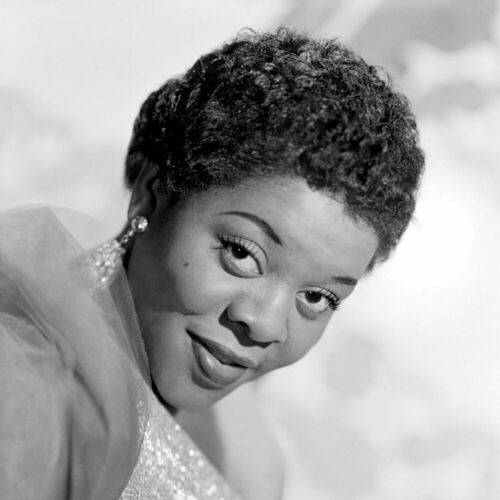
Dinah Washington: The Queen of the Blues and Jazz
Dinah Washington was an American jazz and blues singer whose powerful, gospel-inflected voice and impeccable phrasing made her one of the most influential vocalists of the mid-20th century. Born Ruth Lee Jones in Tuscaloosa, Alabama, she achieved major commercial success with numerous R&B and pop hits, including the 1959 chart-topper "What a Diff'rence a Day Makes".
Early career
Born in 1924, Washington began her musical journey singing gospel in Chicago churches as a teenager. Her transition to secular music was swift, and by 1943 she was discovered by bandleader Lionel Hampton, who gave her the stage name Dinah Washington and featured her as his vocalist.
She signed with Keynote Records and later Mercury Records, where she began a prolific recording relationship. Her early singles, like 1948's "Am I Asking Too Much", quickly established her as a formidable force in the rhythm and blues field.
Breakthrough
Washington's career was marked by consistent success on the R&B charts throughout the 1950s, with songs like "TV Is the Thing This Year" and "Baby Get Lost". Her true pop crossover breakthrough came in 1959 with the album What a Diff'rence a Day Makes! on Mercury. The title track, a lushly arranged transformation of a 1930s jazz standard, won her a Grammy Award for Best Rhythm & Blues Performance.
Key tracks
What a Diff'rence a Day Makes — This Grammy-winning song became her signature pop hit, perfectly blending jazz sensibility with orchestral pop and defining her later career sound.
Unforgettable — Washington's 1959 rendition of the standard showcased her emotional depth and technical mastery, influencing countless singers who followed.
Baby, You've Got What It Takes — A rollicking 1960 duet with Brook Benton, this track topped the Billboard R&B chart and became a major pop hit, demonstrating her versatility.
This Bitter Earth — A profound and haunting performance that highlights her ability to convey deep melancholy and soul, later sampled in numerous modern tracks.
Mad About the Boy — Her sophisticated, witty take on this Noel Coward classic illustrated her unique skill in interpreting material from the Great American Songbook.
Following her pop breakthrough, Washington continued to record prolifically for Mercury and later for Roulette Records. She collaborated with major arrangers like Quincy Jones and Belford Hendricks, and her repertoire effortlessly spanned blues, jazz, pop, and even country tunes. Known for her direct, sometimes confrontational stage presence, her influence extended far beyond the blues genre into the soul music of the 1960s.
Artists like Aretha Franklin, Nancy Wilson, and Esther Phillips have all cited Washington's vocal style and emotional honesty as a key inspiration. Her music remains a cornerstone of the classic jazz and blues canon. You can explore similar vocal giants from the same era on our site, such as Etta James for her raw blues power and emotional delivery, Sarah Vaughan for her virtuosic jazz phrasing and interpretive skill, Billie Holiday for her profound influence on phrasing and emotional storytelling in jazz, and Ray Charles for his genre-blending approach that mirrored her own.
Dinah Washington's timeless recordings are a staple on classic jazz and blues radio stations, featured prominently on dedicated FM channels and online streams that celebrate the golden age of vocal music. Her voice cuts through the decades with clarity and soul, making her a permanent fixture on playlists curated for true aficionados.
Listeners can discover the enduring legacy of Dinah Washington by tuning into the classic jazz, blues, and vocal standards stations available right here on onairium.com, where her music continues to be celebrated and played regularly.