Duke Ellington And His Orchestra
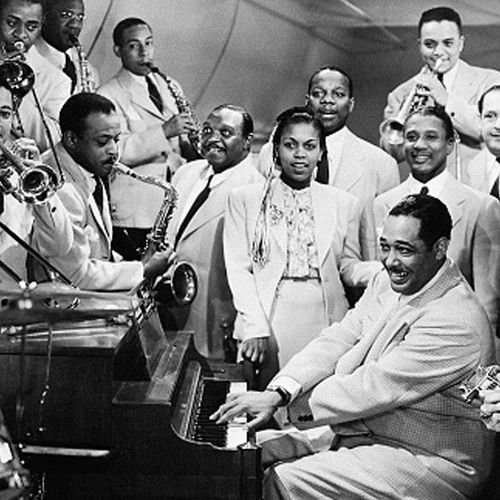
Duke Ellington And His Orchestra: The Pioneers of American Big Band Jazz
Duke Ellington And His Orchestra was the premier American big band, led for over five decades by composer, pianist, and bandleader Edward Kennedy "Duke" Ellington. Hailing from Washington, D.C., the ensemble's legacy is defined by a vast catalog of compositions and recordings that became jazz standards, with timeless albums like Ellington at Newport achieving both critical acclaim and significant commercial success.
Early career
Duke Ellington formed his first group, The Washingtonians, after moving to New York City in 1923. The band's residency at the Cotton Club in Harlem from 1927 to 1931 provided a national radio platform, allowing them to refine their distinctive "Jungle Style" and record early hits for labels like Victor and Brunswick.
Breakthrough
The orchestra's national breakthrough was solidified in the early 1930s with signature songs like Mood Indigo and It Don't Mean a Thing (If It Ain't Got That Swing). Their 1932 recording of It Don't Mean a Thing for the Brunswick label became a defining anthem of the swing era and a perennial jazz classic, cementing Ellington's status as a major composer.
Key tracks
Take the "A" Train — This 1941 theme song, composed by Billy Strayhorn, became the orchestra's most recognizable signature and a landmark of the swing genre.
Mood Indigo — An early masterpiece from 1930, this song showcased Ellington's revolutionary approach to orchestral color and harmony.
Satin Doll — A later hit from 1953, this composition became one of Ellington's most recorded and widely performed works.
Caravan — Co-written with Juan Tizol in 1936, this exotic composition introduced Latin rhythms to the big band lexicon.
Diminuendo and Crescendo in Blue — The performance of this extended work at the 1956 Newport Jazz Festival, featuring a legendary saxophone solo by Paul Gonsalves, sparked a revival in the band's popularity.
The orchestra's prolific output continued for decades, with Ellington composing ambitious extended works like Black, Brown and Beige and collaborating with major artists including Ella Fitzgerald, John Coltrane, and Louis Armstrong. He recorded for major labels such as Columbia, Capitol, and later Reprise, maintaining a relentless international touring schedule until his death in 1974.
For fans of the sophisticated sound of Duke Ellington And His Orchestra, explore similar artists featured on our site. Count Basie led a rival orchestra known for its propulsive, blues-based swing rhythm. Cab Calloway fronted a vibrant big band with a focus on energetic vocals and showmanship. Benny Goodman, the "King of Swing," achieved massive popular success with his clarinet-led ensemble. Louis Armstrong was a foundational soloist whose influence is deeply woven into Ellington's own music.The timeless jazz of Duke Ellington And His Orchestra remains a staple on dedicated jazz FM stations, classic American songbook channels, and online radio streams celebrating musical heritage. Their sophisticated compositions are regularly featured in programming blocks dedicated to the big band and swing eras.
Listeners can discover the enduring genius of Duke Ellington And His Orchestra on the jazz and classic American music radio stations available right here on onairium.com, where his pioneering sound continues to define elegance in music.
