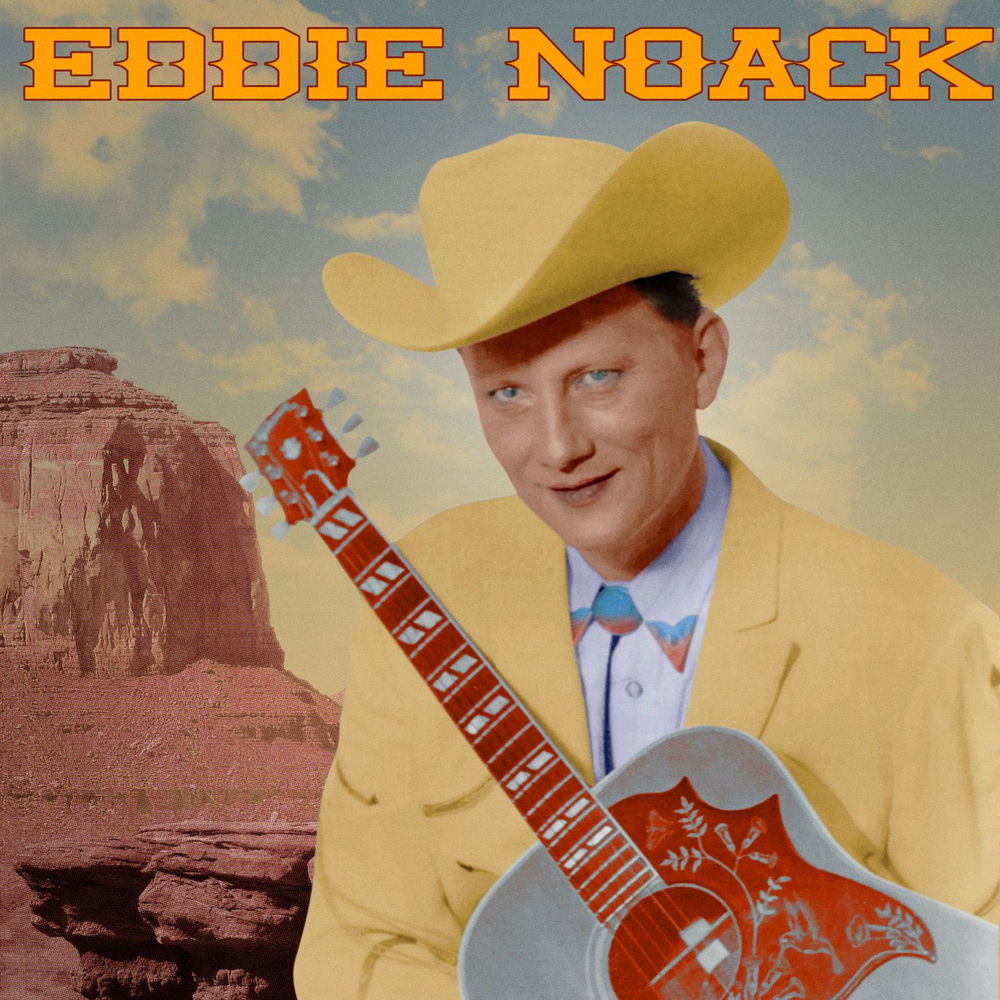
Eddie Noack
 United States
Listen Eddie Noack on radio stations:
Eddie Noack: The Haunting Voice of Country Music's Dark Side
Eddie Noack was an American country singer and songwriter whose career spanned the honky-tonk and rockabilly eras of the 1950s and 1960s. While he achieved modest chart success in his lifetime, his lasting legacy is built on a catalog of deeply poetic and often unsettling story-songs that have earned him a cult following among country music aficionados.
Early career
Born in Houston, Texas in 1930, Eddie Noack began his musical journey in the vibrant post-war Texas scene. He signed with the pioneering Gold Star Records in 1947, releasing his first single, Wine Women And Song, which showcased his smooth baritone and traditional country style. His early work for labels like Four Star and Decca established him as a capable performer within the popular honky-tonk framework of the era.
Breakthrough
Noack's most significant commercial moment came in 1953 with the release of Gentlemen Prefer Blondes on the Starday label. The song, a clever novelty number, became a regional hit and demonstrated his songwriting wit. While it did not break into the national country charts' top tiers, it solidified his reputation and led to further recording opportunities, including a notable stint with Imperial Records in the late 1950s where he cut rockabilly-tinged sides.
Key tracks
Gentlemen Prefer Blondes — This 1953 Starday single was his biggest commercial success and a staple of his live performances for years.
Have Blues, Will Travel — A prime example of his early 1960s work, blending a walking bass line with his melancholic vocal delivery.
Psycho — The 1968 cult classic, a chilling recitation song about a serial killer, became his most infamous and rediscovered track decades later.
Dolores — Another dark narrative masterpiece from his later period, showcasing his unique talent for tragic storytelling.
These Hands — A beautifully somber ballad he wrote, which became a hit for Hank Snow in 1963, proving his songwriting prowess.
In the late 1960s, Eddie Noack's music took a darker, more narrative turn, culminating in his legendary 1968 recording of Psycho for the tiny K-Ark label. This period, often collaborating with producer Pappy Daily, yielded his most critically celebrated work today, though it found little commercial traction at the time. Noack continued writing and performing until his death in 1978, leaving behind a body of work that defies easy categorization within the country genre.
Fans of Eddie Noack's brand of story-driven country often appreciate the works of Johnny Paycheck for his raw honky-tonk delivery. George Jones shares Noack's mastery of conveying deep emotional vulnerability. The dark lyrical themes connect him to later artists like John D Loudermilk, who also penned unconventional story-songs. For the rockabilly side of his catalog, listeners gravitate toward Johnny Horton and his energetic historical narratives.
RADIO ROTATION
Eddie Noack's unique contributions to the country music canon are celebrated on specialized radio formats. His songs, particularly the haunting late-career material, are featured on classic country stations, independent music radio stations, and dedicated Americana and roots music streams that explore the genre's rich and varied history.
The distinctive music of Eddie Noack, from honky-tonk to haunting ballads, can be heard on radio stations featured on our website. Listeners can discover the depth of his catalog through the classic country and independent music radio stations available on onairium.com.
