Eric Coates
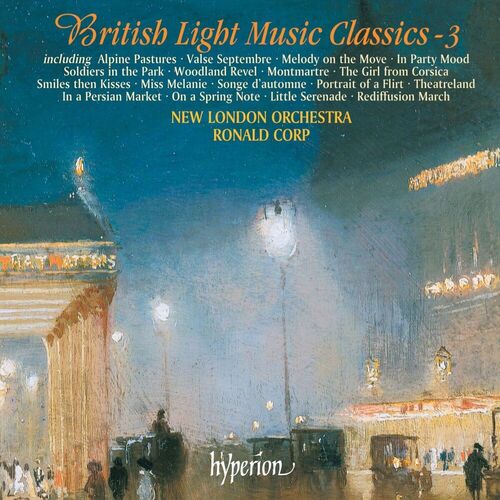
Eric Coates: The Master of British Light Music
Eric Coates was an English composer and viola player who became one of the most successful and beloved figures in the genre of British light music. His memorable, melodic compositions, particularly his marches and suites, achieved immense popularity and became signature tunes for BBC radio programs throughout the mid-20th century.
Early career
Born in Hucknall, Nottinghamshire in 1886, Eric Coates studied at the Royal Academy of Music in London. He began his professional career not as a composer, but as a violist, eventually becoming the principal viola for the Queen's Hall Orchestra under Sir Henry Wood. His first published compositions, including the song cycle "Four Old English Songs" in 1911, showed an early gift for accessible, lyrical writing.
Breakthrough
Coates's breakthrough into widespread public recognition came with his orchestral suite "From the Countryside" in 1915, but it was his 1924 composition "By the Sleepy Lagoon" that cemented his fame. This evocative waltz became a standard and later gained immortality as the theme music for the BBC Radio program "Desert Island Discs." His prolific output was published by major firms like Chappell & Co. and Boosey & Hawkes, selling vast quantities of sheet music.
Key tracks
By the Sleepy Lagoon — This dreamy waltz is his most famous standalone piece, instantly recognizable as the theme to "Desert Island Discs" since 1942.
The Knightsbridge March — From his "London Suite" (1933), this brisk, iconic march became the theme for the BBC radio program "In Town Tonight."
Calling All Workers — Written in 1940, this energetic march was adopted as the theme for BBC Radio's "Music While You Work," boosting morale during wartime Britain.
The Dambusters March — Composed for the 1955 film of the same name, this stirring piece stands as one of the great British martial marches of the era.
Coates continued to compose successful suites and marches throughout the 1940s and 1950s, including the "London Again Suite" and the "Three Elizabeths Suite." His music, characterized by its impeccable orchestration and unforgettable tunes, dominated the airwaves of the BBC. He collaborated with lyricists for songs and worked directly with film producers, though his concert works remained his primary legacy.
Artists like Edward German shared Coates's talent for crafting enduring light orchestral works for the British public. The cinematic sweep of his music finds a parallel in the film scores of Ronald Binge, who also created spacious, melodic orchestral pieces. For listeners who enjoy the precise and joyful English style, the music of Haydn Wood offers a similar appeal with its strong melodic focus.
Eric Coates's music remains a staple on classic FM stations, particularly those specializing in light orchestral and nostalgic repertoire. Online radio streams dedicated to mid-century sounds and independent music radio stations celebrating British composers regularly feature his vibrant marches and suites in their rotations.
The timeless music of Eric Coates can be heard on radio stations featured on our website. Listeners can discover his iconic marches and suites by tuning into the classic and light music stations available on onairium.com.