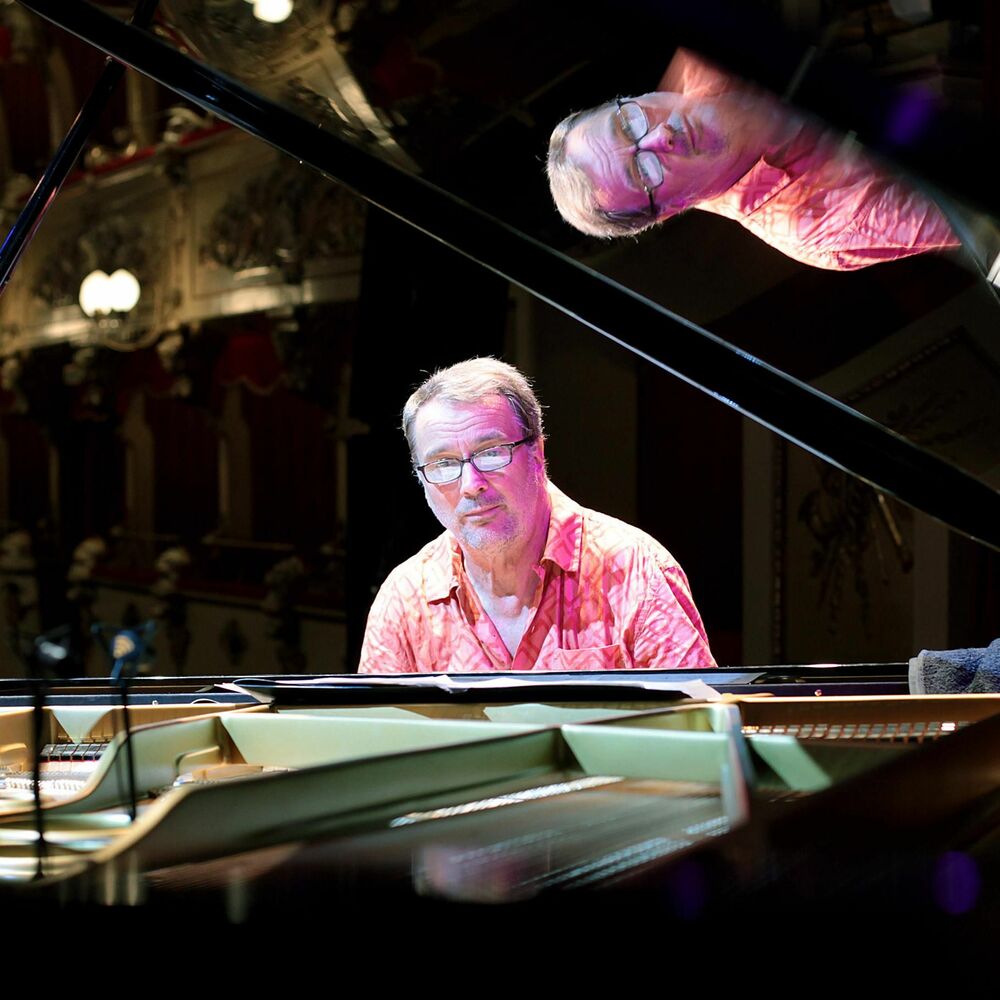


Esbjörn Svensson: The Swedish Jazz Innovator
Esbjörn Svensson was a Swedish pianist and composer who led the groundbreaking jazz trio EST (Esbjörn Svensson Trio). Hailing from Västerås, Sweden, he achieved remarkable commercial success for an instrumental jazz act, with his 2006 album Tuesday Wonderland reaching platinum sales status in several European countries.
Early career
Born in 1964, Esbjörn Svensson began studying classical piano at age six before discovering jazz as a teenager. He formed the Esbjörn Svensson Trio in 1993 with bassist Dan Berglund and drummer Magnus Öström, releasing their debut album When Everyone Has Gone on the Swedish label Dragon Records in 1993.
The trio's early work was rooted in the piano trio tradition, but they quickly began incorporating elements from pop and rock. Their 1997 album Winter in Venice marked the start of their long and fruitful collaboration with producer and sound engineer Åke Linton, a key architect of their signature sound.
Breakthrough
EST's international breakthrough arrived with the 1999 album From Gagarin's Point of View, released on the German label ACT Music. The album's inventive sound and melodic accessibility captured a new, younger audience for jazz across Europe, establishing the trio as a major force.
This success was solidified by the 2002 release Strange Place for Snow, which won the German Jazz Award and a French Grammy. Their 2003 live album Live in Stockholm went gold in Sweden, proving their immense popularity extended far beyond the traditional jazz circuit.
Key tracks
Dodge The Dodo — This track from From Gagarin's Point of View showcased their dynamic range and became a live favorite, introducing their modern approach to a wide audience.
Seven Days of Falling — The title track from their 2003 album is a hauntingly beautiful composition that exemplifies their blend of lyrical melody and atmospheric production.
Tuesday Wonderland — The driving, rhythmic title track from their platinum-selling 2006 album demonstrated their powerful, rock-influenced energy and complex group interplay.
Behind The Yashmak — A sprawling, epic two-part suite from Strange Place for Snow that highlighted their ambitious compositional style and cinematic scope.
Viaticum — The poignant title track from their 2005 album is a masterclass in restrained emotion and subtle harmonic development.
The trio's success continued to grow, culminating in their 2007 album Leucocyte, a record of freely improvised studio experiments that pushed their boundaries further. Tragically, Esbjörn Svensson died in a scuba diving accident in 2008 at the age of 44, cutting short a profoundly influential career.
His legacy endures through EST's recorded catalog, which has sold over 1.5 million albums worldwide. The trio's work redefined the European jazz landscape, proving instrumental music could achieve mainstream chart success and festival headline status.
For listeners exploring the Scandinavian jazz scene that EST helped popularize, similar artists include Jan Garbarek, whose atmospheric saxophone work shares a Nordic aesthetic. The lyrical piano approach can be heard in Bobo Stenson, another key Swedish pianist. The genre-blending spirit continues with BUGGE Wesseltoft, a Norwegian artist fusing jazz with electronic music. Finally, the dynamic trio format is evolved by younger groups like GoGo Penguin, a British act directly inspired by EST's rhythmic drive.
The music of Esbjörn Svensson and EST maintains a strong presence on radio, featured prominently on dedicated jazz FM stations, eclectic public radio programs, and online radio streams specializing in contemporary and European jazz. Their catalog provides essential listening for any modern jazz enthusiast.
You can hear the innovative sounds of Esbjörn Svensson's trio on various radio stations featured on our website. Explore the stations available on onairium.com to discover or revisit the groundbreaking work of this pivotal Swedish jazz artist.