

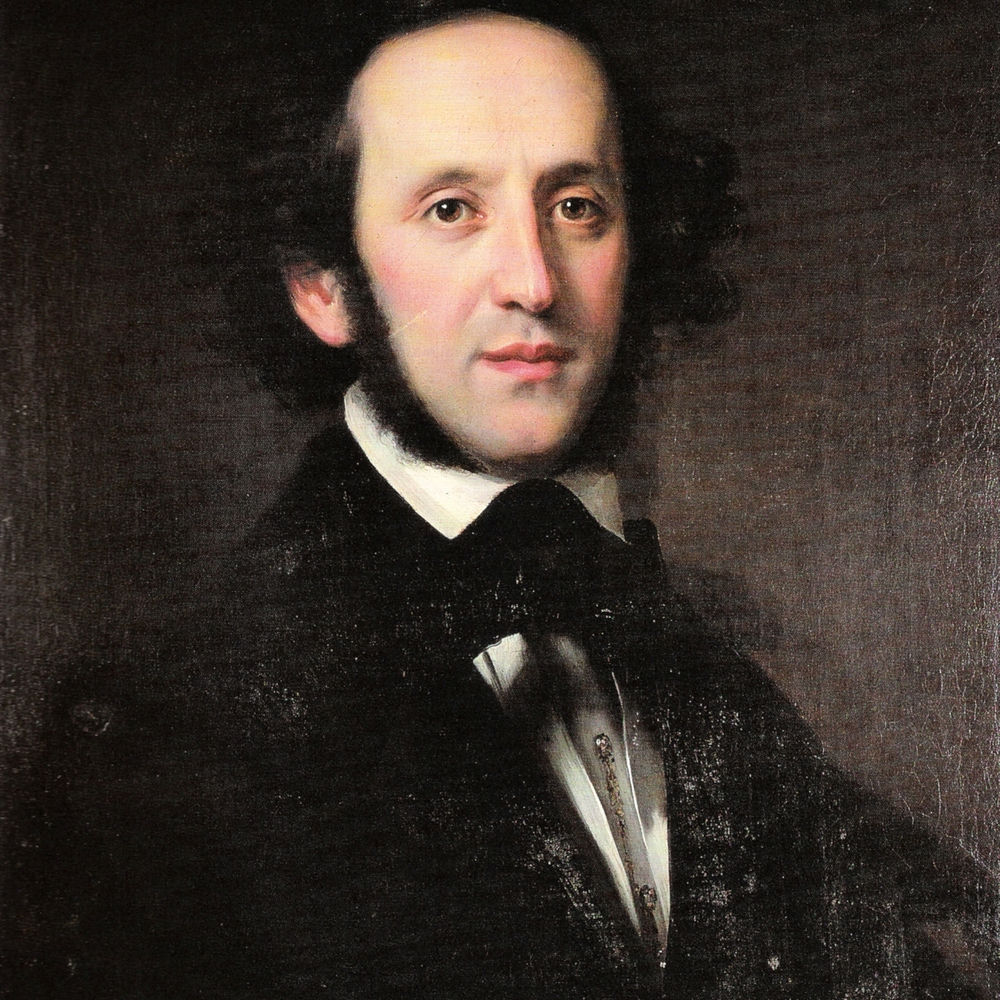
Felix Mendelssohn
Listen Felix Mendelssohn on radio stations:




Felix Mendelssohn: The Prodigious Voice of Romantic Classical Music
Felix Mendelssohn was a German composer, pianist, organist, and conductor of the early Romantic period. Hailing from Hamburg, his enduring legacy is anchored by masterpieces like the Violin Concerto in E minor and the incidental music for A Midsummer Night's Dream, which includes the famous "Wedding March."
Early career
Born in 1809 into a prominent Jewish family that later converted to Christianity, Mendelssohn was a celebrated child prodigy in Berlin. His public career began early, with the astonishing String Octet in E-flat major written at age 16, followed by the concert overture to A Midsummer Night's Dream at 17, works that showcased a fully formed compositional voice.
Breakthrough
Mendelssohn's mature breakthrough came with his pioneering revival of J.S. Bach's St Matthew Passion in 1829, which he conducted at the Sing-Akademie in Berlin to great acclaim. This event, coupled with the success of his Hebrides Overture (Fingal's Cave) in 1832, cemented his reputation across Europe not only as a composer but also as a conductor and cultural force.
Key tracks
Violin Concerto in E minor, Op. 64 - This concerto remains a cornerstone of the violin repertoire, celebrated for its lyrical melody and innovative structure.
A Midsummer Night's Dream Overture, Op. 21 - Composed in his youth, this work established his genius for orchestral color and programmatic storytelling.
Songs Without Words - A collection of short, lyrical piano pieces that became immensely popular, defining a genre of Romantic character pieces.
Elijah, Op. 70 - His major oratorio, a dramatic and deeply felt work that rivaled Handel's popularity in Victorian England.
Symphony No. 4 in A major, "Italian", Op. 90 - Inspired by his travels, this vibrant symphony captures the spirit and atmosphere of Italy.
As a conductor, Mendelssohn held influential positions, including at the Gewandhaus Orchestra in Leipzig, where he championed both contemporary and historical music. His own compositions, such as the Scottish Symphony and the oratorio St. Paul, were met with public and critical success during his lifetime. His work ethic was prodigious, but his early death in 1847 at age 38 cut short a career that profoundly shaped 19th-century musical culture.
Listeners who appreciate the lyrical and structured Romanticism of Felix Mendelssohn often enjoy the dramatic intensity of Hector Berlioz. The elegant clarity of Robert Schumann also shares a kinship with Mendelssohn's style. For those drawn to his orchestral brilliance, the works of Carl Maria von Weber provide a compelling earlier influence, while the later music of Johannes Brahms continues the Germanic tradition of formal mastery he helped uphold.
