Francisco Canaro
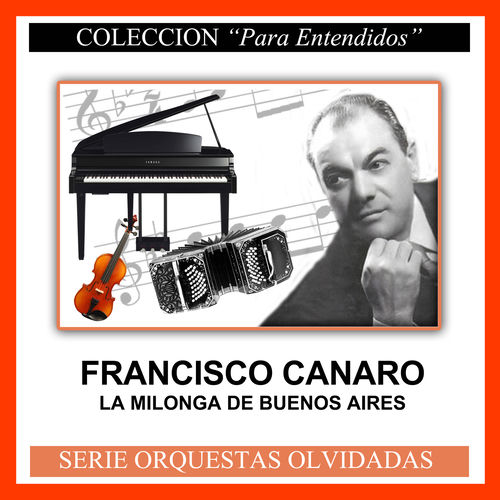
Francisco Canaro: The Pioneering Force of Tango
Francisco Canaro was a Uruguayan-born violinist, composer, and bandleader who became a foundational architect of tango music. His prolific career, spanning over five decades, produced thousands of recordings and established him as one of the genre's most commercially successful and influential figures.
Early career
Born in 1888 in San José de Mayo, Uruguay, Canaro's family moved to Buenos Aires, Argentina, in his youth. He began his musical journey crafting a violin from an oil can and taught himself to play, immersing himself in the vibrant tango scene of the early 1900s. His first major professional break came in 1908 with the composition "Pinta brava," leading to performances in cafes and dance halls.
Breakthrough
Canaro's true breakthrough arrived in the 1920s, a golden age for tango. He formed his famous orchestra, which became a fixture at elite venues and on radio broadcasts. His 1924 recording of "El chamuyo" for the Odeon label was a massive hit, solidifying his fame and leading to unprecedented record sales that would consistently reach gold-level recognition throughout his career.
Key tracks
El chamuyo — This 1924 instrumental track became a signature hit, defining the crisp, rhythmic style of his early orchestra and dominating dance halls.
Sentimiento gaucho — A landmark 1927 recording featuring singer Roberto Maida, it helped popularize the tango-canción (tango song) format.
Se dice de mí — Later popularized by Tita Merello, this Canaro composition became a standard, showcasing his skill as a composer of memorable, witty melodies.
La tablada — A prime example of his later, polished orchestra sound from the 1940s, demonstrating his ability to evolve with the times while maintaining popularity.
Nueve puntos — This vibrant instrumental highlights the precise, driving rhythm that made his orchestra a favorite for dancers for generations.
Canaro's later career was marked by innovation and business acumen. He was a co-founder of the Argentine Society of Composers and Authors (SADAIC) in 1936, fighting for musicians' rights. His orchestra continued to record extensively for labels like Odeon and RCA Victor, adapting to new trends like the tango-ballad style of the 1950s without losing its core identity.
Artists with a similar foundational role in tango include Carlos Gardel, whose voice defined the genre's golden age. Anibal Troilo led another legendary orchestra that bridged traditional and modern tango. Juan D'Arienzo shared Canaro's emphasis on a strong, danceable rhythm that revived tango's popularity. Osvaldo Pugliese brought a more complex, dramatic arrangement style while remaining rooted in the orchestral tradition Canaro helped establish.
Francisco Canaro's vast catalog remains a staple on classic tango radio stations and dedicated online streams. His music is regularly featured in programming blocks celebrating the golden age of Argentine music, ensuring new audiences discover his work.
Listeners can explore the enduring legacy of Francisco Canaro's tango through the radio stations featured on our website. Tune in to onairium.com to hear his iconic recordings on stations dedicated to Latin American classics and the timeless sound of the orquesta típica.