

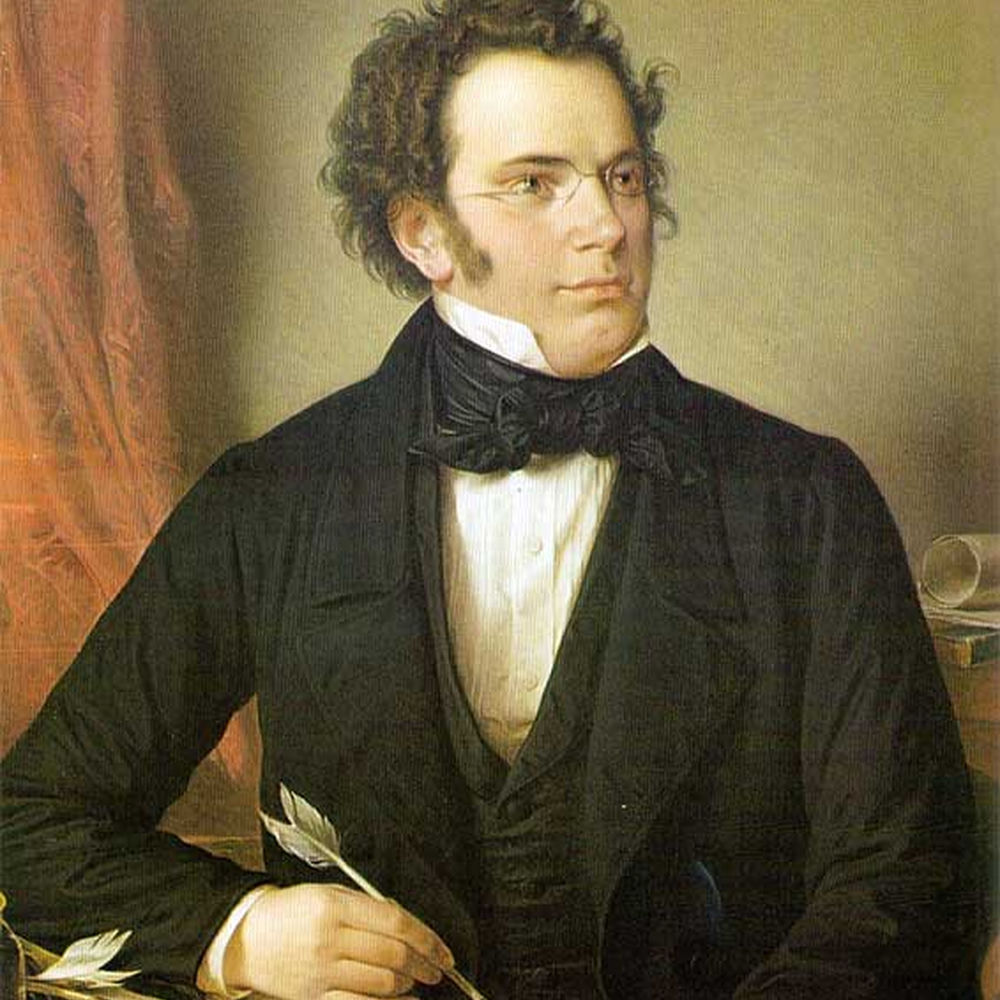
Franz Schubert
Listen Franz Schubert on radio stations:







Franz Schubert: The Prolific Master of Romantic Lieder
Franz Schubert was an Austrian composer of the late Classical and early Romantic eras. Despite a tragically short life, he left behind a vast and influential body of work, particularly celebrated for his art songs, symphonies, and chamber music.
Early Career
Born in 1797 in Vienna, Schubert displayed prodigious musical talent from a young age. He was a choirboy in the Imperial Court Chapel and received thorough training in composition, producing his first significant works while still a teenager.
Breakthrough
While he never achieved widespread public fame during his lifetime, his music circulated and was admired within a close-knit circle of friends and fellow artists in Vienna. His breakthrough to a slightly wider audience came with the 1821 publication of his song Erlkönig, a dramatic setting of Goethe's poem, though major recognition largely arrived posthumously.
Key tracks
Erlkönig - This dramatic lied, composed when he was just 18, remains one of his most famous works and a stunning early example of his gift for musical storytelling.
Ave Maria - Originally titled "Ellens dritter Gesang," this setting of a Walter Scott poem became universally known as a sacred song and one of his most beloved melodies.
Gretchen am Spinnrade - Another early masterpiece setting Goethe, this song perfectly captures psychological drama through its spinning wheel-inspired piano motif.
Die Forelle - This cheerful song later inspired his popular "Trout" Quintet for piano and strings, showcasing his melodic inventiveness.
Winterreise - This later song cycle is a monumental work of profound depth, defining the genre and exploring themes of loneliness and despair.
Schubert's output was astonishingly prolific, including over 600 lieder, nine symphonies (notably the "Unfinished" and the "Great" C major), and a wealth of chamber music like the "Death and the Maiden" quartet. He worked largely independently, without a permanent court position, and his music gained institutional recognition only after his death in 1828 at age 31.
For listeners who appreciate the lyrical and emotional depth of Franz Schubert, the works of Robert Schumann offer a similarly expressive approach to Romantic composition. The art songs of Johannes Brahms continue the German lied tradition Schubert helped define. The dramatic orchestral scope of Gustav Mahler finds its roots in the Romantic sensibility Schubert pioneered.
