
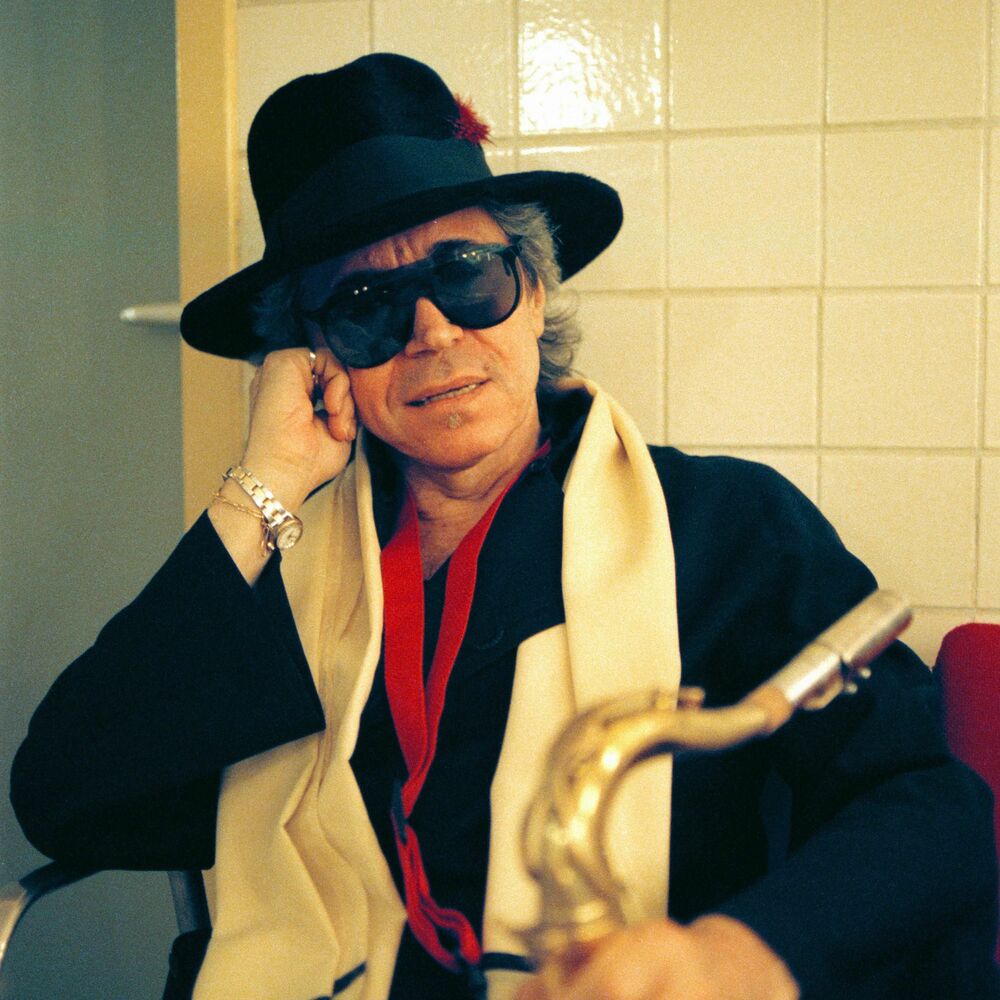

Gato Barbieri: The Raw Power of Latin Jazz
Leandro "Gato" Barbieri was an Argentine tenor saxophonist whose passionate, fiery sound became a defining element of 1970s Latin jazz. Hailing from Rosario, Argentina, his international fame was cemented by his Grammy-winning work on the soundtrack for the 1972 film "Last Tango in Paris," which brought his intense style to a global audience.
Early career
Born in 1932, Barbieri began his career in Buenos Aires playing alto saxophone in the bebop style, influenced heavily by Charlie Parker. His musical path shifted dramatically after hearing the free jazz innovations of John Coltrane and Ornette Coleman in the early 1960s, prompting a move to Europe and a switch to tenor saxophone.
He joined the avant-garde group of trumpeter Don Cherry, a collaboration that lasted from 1965 to 1967 and is documented on albums like "Complete Communion." This period forged his signature style: a blend of free jazz energy with the rhythmic undercurrents of South American music.
Breakthrough
Barbieri's true commercial breakthrough arrived in 1972 with his work for Bernardo Bertolucci's film "Last Tango in Paris." The main theme, which featured his emotive saxophone line, won the Grammy Award for Best Instrumental Composition in 1973.
This success propelled his "Chapter" series of albums on the Impulse! label, beginning with 1973's "Chapter One: Latin America." These records fused jazz with folkloric South American rhythms and melodies, reaching a wide crossover audience and solidifying his place in the jazz fusion landscape.
Key tracks
Last Tango in Paris (Main Theme) — This Grammy-winning instrumental theme introduced Barbieri's visceral sound to millions of moviegoers worldwide.
Europa (Earth's Cry Heaven's Smile) — His 1976 cover of Carlos Santana's ballad became a radio staple and a highlight of his live performances for decades.
Fiesta — A driving, celebratory track from the "Chapter One" album that perfectly encapsulates his blend of jazz improvisation with Latin percussion.
El Parana — This composition showcases his deep connection to Argentine folk music, translating its melancholy and beauty through his saxophone.
Behind the Rain — A later-career smooth jazz hit from his 1982 album of the same name, demonstrating his adaptability to different commercial formats.
Throughout the 1970s, Barbieri recorded prolifically for Impulse! and later A&M Records, with albums like "Caliente!" (1976) featuring vocals by legendary salsa singer Rubén Blades. His sound mellowed somewhat in the 1980s, aligning with the smooth jazz wave, yet he never abandoned the passionate core of his playing.
Barbieri's influence bridges the worlds of fiery free jazz, soulful Latin music, and accessible fusion. For listeners exploring the rich terrain of Latin jazz, similar artists featured on our site include Astor Piazzolla, who revolutionized Argentine tango with jazz and classical elements. Eddie Palmieri offers another perspective with his groundbreaking, percussive approach to Latin jazz piano. Chick Corea frequently explored Latin rhythms within his jazz fusion and acoustic projects. Finally, Paquito D'Rivera carries forward a virtuosic, cross-cultural dialogue between Afro-Cuban music and jazz.
The music of Gato Barbieri remains in steady rotation on specialty jazz radio stations, particularly those focusing on Latin jazz, world music, and classic jazz fusion formats. His recordings from the Impulse! era are perennial favorites on programs dedicated to the rich history of jazz.
You can experience the powerful sound of Gato Barbieri on radio stations featured right here on onairium.com. Tune in to discover his essential tracks and hear how his legacy continues to resonate across jazz and world music airwaves.