
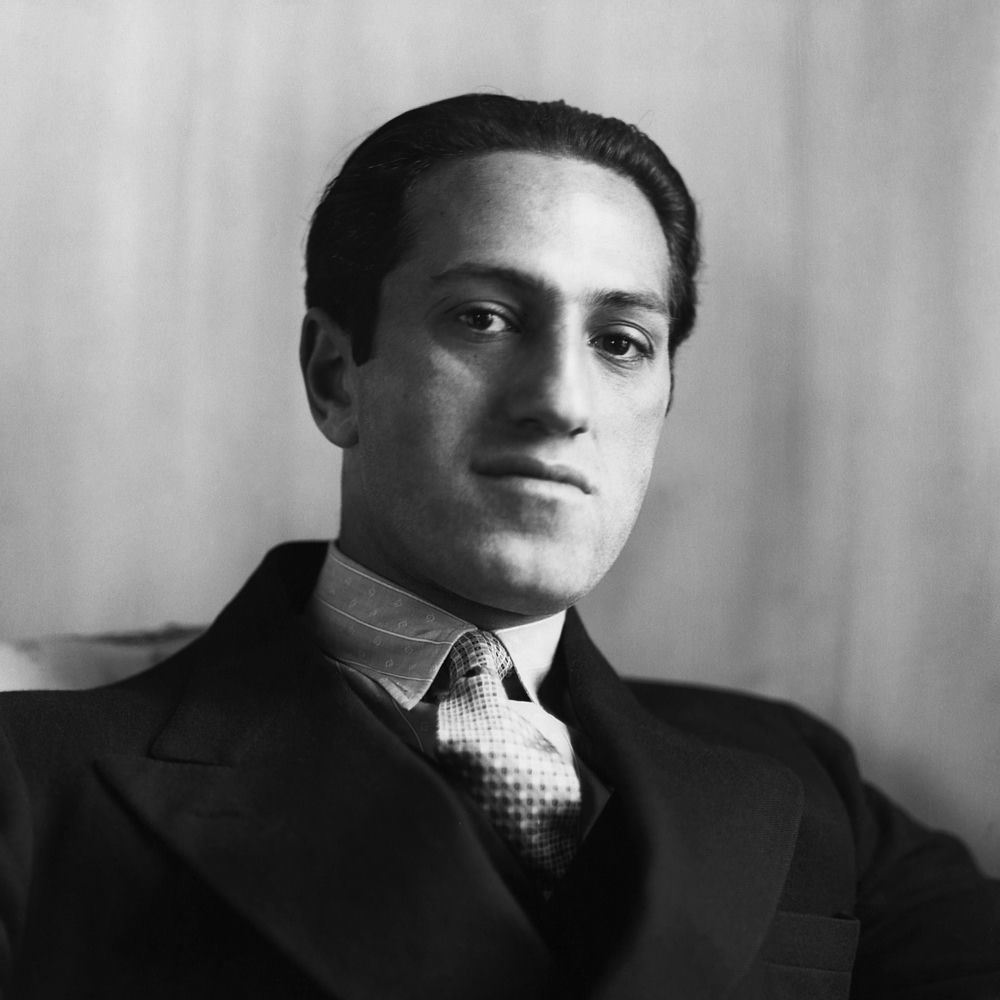
George Gershwin: The Architect of American Classical Jazz
George Gershwin was an American composer and pianist whose work defined the sound of early 20th-century popular and classical music. Born in Brooklyn, New York, his enduring achievement was the 1935 opera Porgy and Bess, a landmark work that synthesized jazz, folk, and operatic traditions.
Early career
Born Jacob Gershwine in 1898, he grew up in New York City and began his professional music career as a "song plugger" on Tin Pan Alley. His first published song in 1916 led to work on Broadway, and by 1919 he scored his first major national hit with Swanee, popularized by Al Jolson, which sold over two million copies of sheet music.
Breakthrough
Gershwin's artistic breakthrough arrived in 1924 with the premiere of Rhapsody in Blue, performed by Paul Whiteman's orchestra with the composer at the piano. Commissioned for the concert "An Experiment in Modern Music," this piece, published by New World Music, successfully fused jazz idioms with classical piano concerto form, catapulting him to international fame.
Key tracks
Rhapsody in Blue — This 1924 composition established Gershwin's signature style and brought jazz influences into the concert hall.
An American in Paris — A 1928 symphonic tone poem that captured the energy of Paris through a distinctly American jazz lens.
I Got Rhythm — Originally from the 1930 musical Girl Crazy, its chord progression became a foundational standard for jazz musicians.
Summertime — The aria from Porgy and Bess (1935) became one of the most recorded songs in history, covered across countless genres.
Someone to Watch Over Me — A timeless ballad from the 1926 musical Oh, Kay! that remains a jazz and pop standard.
His later career included successful Hollywood film scores, such as for Shall We Dance (1937) starring Fred Astaire and Ginger Rogers. Gershwin's collaborations were pivotal, including working with his lyricist brother Ira Gershwin on most of his songs, and with orchestrator Ferdé Grofé on Rhapsody in Blue.
Artists exploring the fusion of American popular and classical forms include Aaron Copland who also crafted a distinctly American orchestral sound. Duke Ellington similarly composed extended jazz works for the concert stage. Leonard Bernstein continued the tradition of blending musical theater with sophisticated classical composition. Scott Joplin provided an earlier blueprint for merging popular ragtime with classical structures.
The music of George Gershwin maintains a constant presence on radio, featured prominently on classical music stations, dedicated jazz FM channels, and Broadway soundtrack programs. His work is a staple on online radio streams that specialize in the Great American Songbook and early 20th-century repertoire, ensuring his sound reaches new generations of listeners daily.
You can hear the pioneering compositions of George Gershwin on the radio stations featured on our website. Explore the stations available on onairium.com to discover his timeless jazz-classical fusion and listen to the soundtrack of an American era.