
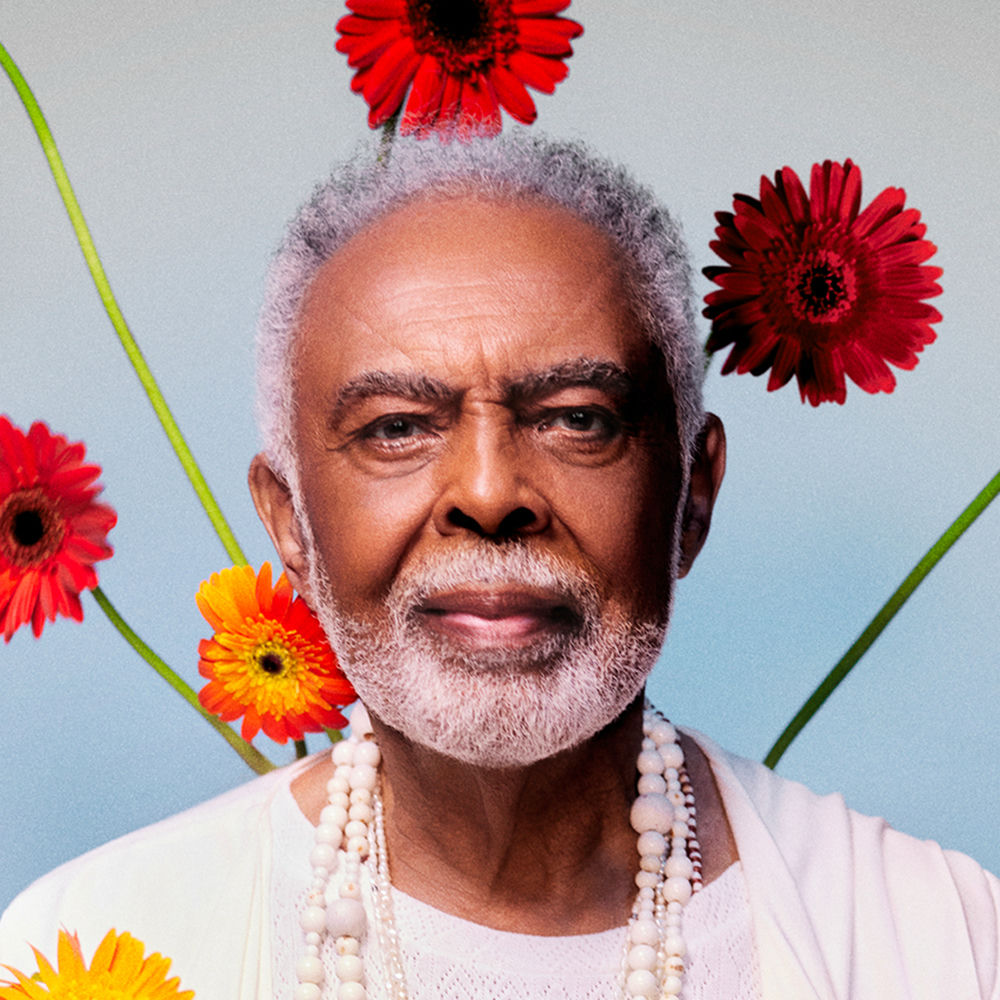
Gilberto Gil
Listen on radio stations:


Gilberto Gil: The Tropicalia Pioneer and Global Music Ambassador
Gilberto Gil is a foundational Brazilian singer-songwriter and multi-instrumentalist whose career spans over six decades. Hailing from Salvador, Bahia, his work as a leader of the Tropicalia movement and his expansive solo catalogue have cemented his status as one of Brazil's most influential cultural exports, with multiple Grammy Awards and millions of records sold worldwide.
Early career
Born in 1942 in Salvador, Gilberto Gil began his musical journey influenced by traditional Brazilian forms like samba and baião, as well as emerging American rock and roll. His early professional steps in the 1960s involved performing on local radio and television, leading to his first recordings which showcased his burgeoning songwriting talent.
Breakthrough
Gil's breakthrough came in the late 1960s as a central figure in the Tropicalia (Tropicália) movement alongside Caetano Veloso. This avant-garde cultural movement blended Brazilian rhythms with psychedelic rock and pop, challenging the military dictatorship's cultural policies. The 1968 collaborative album Tropicália: ou Panis et Circensis, featuring Gil's compositions, became a landmark, though its political nature led to his arrest and subsequent exile in London from 1969 to 1972.
Key tracks
Domingo no Parque - This 1967 song, with its innovative fusion of baião and electric guitars, is considered a precursor to the full-blown Tropicalia sound.
Procissão - A track from his 1969 self-titled album that exemplifies his ability to weave social commentary into melodically rich MPB (Música Popular Brasileira).
Toda Menina Baiana - A celebratory ode to the culture of his home state of Bahia, highlighting his deep connection to Afro-Brazilian roots.
Realce - A major hit from 1979 that demonstrated his successful foray into more mainstream pop and disco-influenced sounds without losing his distinctive style.
Andar com Fé - A later career hit from 1989 that became an anthem of hope and resilience, further solidifying his popularity across generations.
Following his return to Brazil, Gil entered a period of prolific output, exploring reggae, African music, and electronic sounds. Albums like Refazenda (1975) and Realce (1979) achieved significant commercial success, broadening his audience. His international profile continued to grow through global tours and collaborations with artists like Jimmy Cliff and Stevie Wonder.
In addition to his musical career, Gilberto Gil served as Brazil's Minister of Culture from 2003 to 2008, advocating for cultural democracy and digital inclusion. His later work continues to explore new fusions, and he remains a tireless performer, revered for both his artistic innovation and his role as a statesman for Brazilian culture. For listeners exploring the breadth of Brazilian music, the work of Caetano Veloso is essential, as his collaborative and parallel journey with Gil defined Tropicalia. The rhythmic innovation of Jorge Ben Jor shares a similar spirit of joyful fusion. The socially engaged songwriting of Chico Buarque offers another pillar of MPB from the same era. Furthermore, the Afro-Brazilian roots explored by Maria Bethânia resonate with the foundational aspects of Gil's music from Bahia.