Giuseppe Tartini
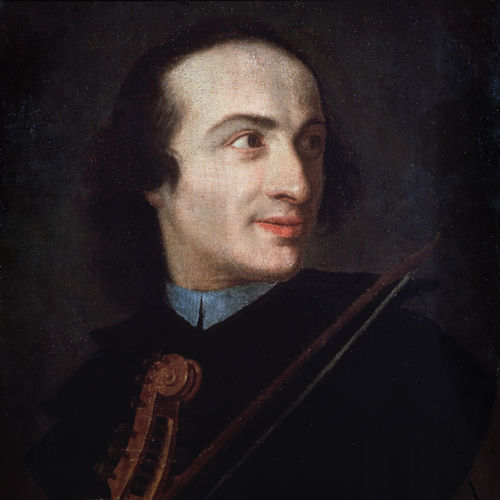
Giuseppe Tartini: The Virtuoso Violinist of the Baroque Era
Giuseppe Tartini was an 18th-century Italian composer and violinist whose technical innovations and expressive compositions left a permanent mark on the history of music. Hailing from Piran, a city then part of the Republic of Venice, his most enduring legacy is the iconic violin sonata known as The Devil's Trill, a work that continues to challenge and inspire performers centuries after its creation.
Early career
Born in 1692, Tartini was originally destined for a career in law and theology before his passion for music took over. His early musical development was largely self-directed, and after a controversial marriage led him to flee to Assisi, he immersed himself in intensive violin practice and the study of music theory, laying the groundwork for his future mastery.
Breakthrough
Tartini's reputation as a preeminent violinist and teacher was solidified during his long tenure as first violinist and maestro di cappella at the Basilica of Saint Anthony in Padua, a position he began in 1721. While 18th-century "chart success" is not applicable, his fame spread across Europe not through recordings, but through the circulation of his published works and the international students who traveled to study at his celebrated school of violin playing.
Key tracks
The Devil's Trill Sonata — This technically demanding G minor sonata is his most famous work, legendary for its intricate trills and the supernatural story of its inspiration.
Violin Concerto in D minor, D. 45 — A staple of the Baroque violin repertoire, showcasing Tartini's gift for lyrical melody within a structured concerto form.
Sonata in G minor, "Didone abbandonata" — A profound programmatic work depicting the despair of the abandoned Queen Dido, illustrating Tartini's focus on musical expression.
His later career was defined by his dual role as a prolific composer and a pioneering pedagogue. Tartini's treatise on ornamentation, Traite des Agrements de la Musique, became an essential text for musicians, while his scientific investigation into the physics of sound led to the discovery of the "third sound" or combination tone, a phenomenon in acoustics.
For listeners captivated by Tartini's Baroque intensity and violin virtuosity, explore the works of his compatriots like Antonio Vivaldi for their rhythmic drive and concertos. Arcangelo Corelli established the foundational violin technique and forms that Tartini later expanded upon. The expressive depth found in Tartini's slow movements can also be heard in the music of Pietro Locatelli, another Italian virtuoso known for his technical caprices.Tartini's compositions remain a core part of the classical canon, featured regularly on dedicated classical music radio stations and online streams specializing in Baroque and early music. His sonatas and concertos are frequently programmed alongside works by Bach and Handel, highlighting his status as a key figure of the period.
The music of Giuseppe Tartini, a master of the Italian Baroque, can be heard on various radio stations featured on our website. Listeners can discover his iconic violin works by tuning into the classical and early music stations available on onairium.com.