

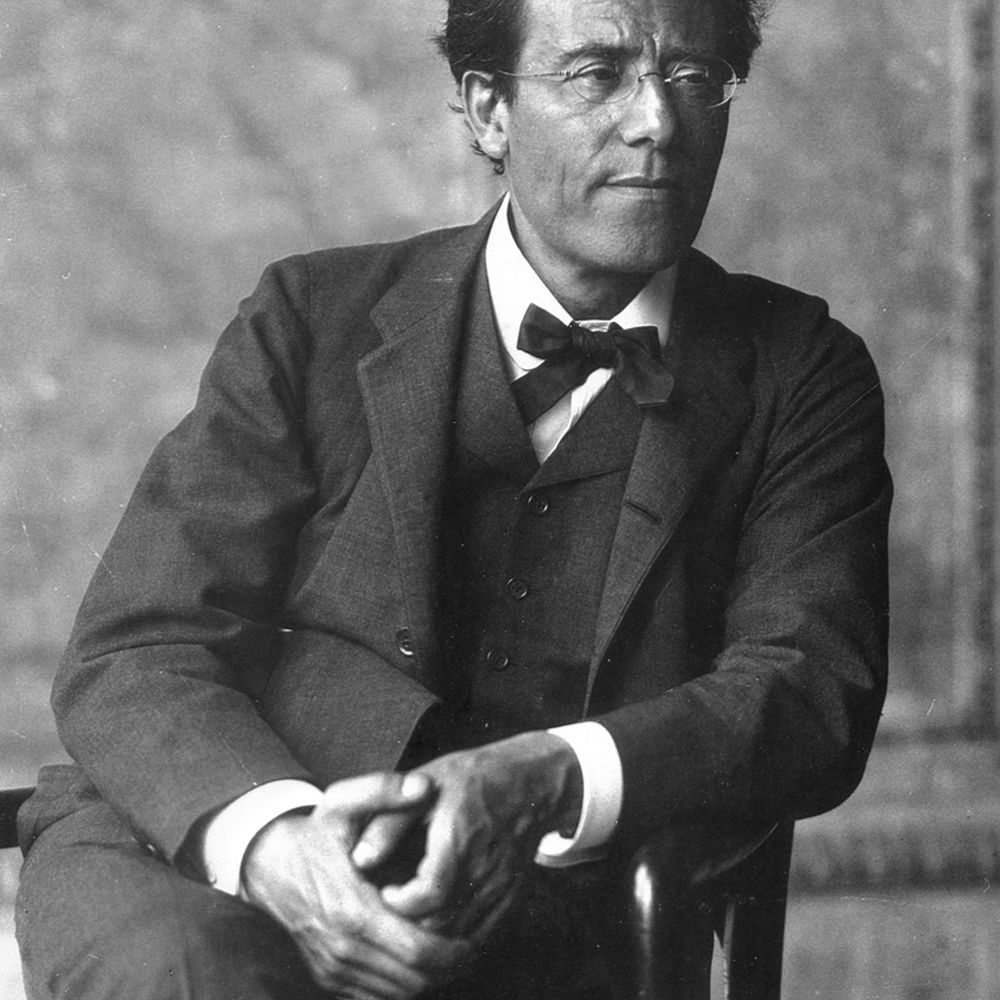


Gustav Mahler: The Titan of Late-Romantic Symphony
Gustav Mahler was an Austrian composer and conductor whose monumental symphonies and song cycles define the twilight of the Romantic era. From his origins in Bohemia, he rose to become one of the most demanding and visionary conductors in Europe, while his compositions achieved posthumous fame, with recordings of works like his Symphony No. 5 achieving gold certifications in the classical market.
Early career
Born in 1860 in Kalischt, Bohemia, Mahler entered the Vienna Conservatory at age fifteen. His early compositional efforts, like the cantata Das klagende Lied, were ambitious but did not bring immediate success, leading him to focus on conducting.
He built his reputation through rigorous appointments at opera houses in Kassel, Prague, Leipzig, and Budapest. His first major published work, the song cycle Lieder eines fahrenden Gesellen, emerged during this period of intense theatrical work.
Breakthrough
Mahler's breakthrough as a composer, separate from his conducting fame, began with his Symphony No. 2 Resurrection in 1895. While public reception was initially divided, the work's colossal scale and philosophical ambition cemented his unique voice.
His appointment as director of the Vienna Court Opera in 1897 marked his peak as a performer. The subsequent publication and performances of his symphonies by Universal Edition created a dedicated, if niche, audience for his complex music during his lifetime.
Key tracks
Symphony No. 5 — Its famous Adagietto movement became widely known after its use in the film Death in Venice, introducing Mahler to a mass audience.
Symphony No. 1 Titan — This debut symphony announced his lifelong fusion of folk melody, nature sounds, and profound existential struggle.
Das Lied von der Erde — A symphony in all but name, this song-symphony blends orchestral and vocal writing at its most refined and melancholic.
Symphony No. 8 Symphony of a Thousand — This work exemplifies Mahler's grandiosity, requiring massive vocal and instrumental forces to realize its cosmic vision.
Ich bin der Welt abhanden gekommen — From the Rückert-Lieder, this song is a pinnacle of his orchestral songwriting, offering a quiet, profound meditation on withdrawal.
Mahler's later years were spent at the Metropolitan Opera and New York Philharmonic, where he premiered his Symphony No. 9. He died in 1911, leaving his Symphony No. 10 unfinished, a work that would later be realized by several musicologists.
His music experienced a true renaissance in the mid-20th century, championed by conductors like Leonard Bernstein. This revival led to complete symphony cycles on labels like Deutsche Grammophon and Decca, many achieving gold status and permanent placement in the classical catalog.
For listeners exploring the bridge between Romanticism and Modernism, similar artists include Anton Bruckner, another Austrian symphonist of epic scale and spiritual quest. Richard Strauss shared Mahler's mastery of the large orchestra and thematic complexity in tone poems and operas. Arnold Schoenberg, though he pioneered atonality, extended the German Romantic tradition that Mahler brought to its climax.
Gustav Mahler's works are staples on dedicated classical FM stations, symphonic broadcast channels, and online radio streams specializing in orchestral repertoire. His music is frequently featured in thematic programming exploring the evolution of the symphony.
You can experience the powerful sound of Gustav Mahler on radio stations featured here. Listeners can discover his vast symphonic world through the curated classical stations available on onairium.com.