Harold Arlen
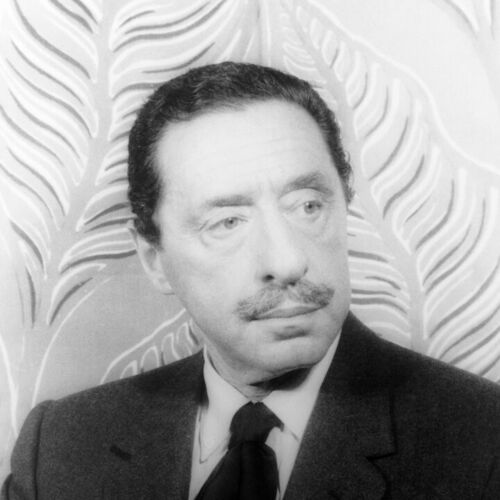
Harold Arlen: The Architect of American Songbook Standards
Harold Arlen was an American composer and songwriter whose sophisticated melodies became cornerstones of the Great American Songbook. Born in Buffalo, New York, his prolific career produced over 500 songs, with his most famous work, "Over the Rainbow," being voted the 20th century's top song by the Recording Industry Association of America and the National Endowment for the Arts.
Early career
Born Hyman Arluck in 1905, his musical journey began as a pianist and vocalist, first with his family's band and later as a singer and arranger for dance bands. His early break came in 1929 when his composition "Get Happy," with lyrics by Ted Koehler, was published, launching a legendary songwriting partnership and his move to New York's Tin Pan Alley.
Breakthrough
Arlen's major breakthrough arrived during his residency at the Cotton Club in Harlem, where from 1930 to 1934 he and Koehler produced a string of hits for the club's revues. This period cemented his reputation, yielding enduring standards like "Stormy Weather," which became a massive hit for Ethel Waters and later for Lena Horne, and "I've Got the World on a String."
Key tracks
Over the Rainbow — This 1939 ballad, written with lyricist E.Y. "Yip" Harburg for The Wizard of Oz, won the Academy Award for Best Original Song and became Judy Garland's signature number.
Stormy Weather — A quintessential blues-tinged standard from the Cotton Club era, this 1933 song showcased Arlen's unique ability to blend jazz and pop sensibilities.
That Old Black Magic — This 1942 hit, with lyrics by Johnny Mercer, became a major chart success for Glenn Miller and remains a jazz and pop standard.
Come Rain or Come Shine — Another classic collaboration with Mercer from the 1946 Broadway musical St. Louis Woman, this song is a staple for vocalists seeking dramatic, emotionally complex material.
Get Happy — Arlen's first published song in 1929 set the tone for his career with its infectious, uplifting gospel and jazz-inflected rhythm.
Arlen's success extended to Hollywood and Broadway, where he composed full scores for films like A Star Is Born (1954) and Broadway shows such as House of Flowers (1954). He maintained fruitful collaborations with top lyricists including Ira Gershwin, Dorothy Fields, and Leo Robin, ensuring a constant output of sophisticated material recorded by the era's biggest stars from Frank Sinatra to Ella Fitzgerald.
While not an album-era artist, his songs have been featured on countless certified gold and platinum records by other performers. His influence is measured by enduring radio play and inclusion in the Grammy Hall of Fame, with "Over the Rainbow" inducted in 1981 and "Stormy Weather" in 2004.
Fans of Harold Arlen's rich melodic craft and jazz-influenced style should also explore the work of Irving Berlin. Berlin was another prolific American songwriter who defined a generation with his timeless tunes. Listen to Johnny Mercer. Mercer was not only Arlen's brilliant lyricist but also a gifted composer in the same sophisticated pop tradition. Discover George Gershwin. Gershwin shared Arlen's genius for blending classical structures with jazz and blues idioms. Check out Jimmy Van Heusen. Van Heusen carried the torch for melodic, jazz-tinged pop songwriting for the Sinatra era and beyond.
Harold Arlen's timeless catalog remains a staple on a wide variety of radio formats, from dedicated classic jazz and American standards stations to public radio music programs and sophisticated pop channels. His songs provide the essential backbone for any programming focused on the golden age of vocal jazz and popular song.
You can hear the classic music of Harold Arlen regularly across the radio stations featured on our website. Explore the stations available on onairium.com to discover where this pillar of the American Song