Harold Melvin Und The Blue Notes
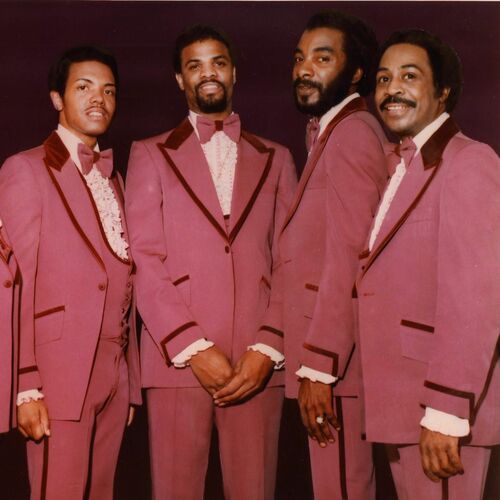
Harold Melvin & The Blue Notes: Architects of Philadelphia Soul
Harold Melvin & The Blue Notes were a foundational vocal group in the lush, orchestral sound of Philadelphia soul. Hailing from Philadelphia, Pennsylvania, the group achieved its greatest commercial success in the early 1970s, producing a string of timeless hits that defined an era and sold millions of records.
Early career
The group's origins trace back to the mid-1950s, formed by Harold Melvin as a doo-wop act called The Charlemagnes. After several name and lineup changes, they settled as Harold Melvin & The Blue Notes by the early 1960s. They recorded for various labels, including Landa and Arctic, scoring a minor hit in 1965 with "Get Out (And Let Me Cry)" but failing to achieve a major breakthrough.
Breakthrough
The group's fortunes changed dramatically in 1970 when Harold Melvin recruited a new lead singer, Teddy Pendergrass, who started as the drummer. Signed to Kenny Gamble and Leon Huff's Philadelphia International Records in 1972, they released the album Harold Melvin & The Blue Notes, which catapulted them to stardom. The single "If You Don't Know Me by Now" became a soul classic, reaching No. 3 on the Billboard Hot 100 and selling over a million copies.
Key tracks
If You Don't Know Me by Now — This 1972 ballad became their signature song, a gold-certified No. 1 R&B hit that showcased Teddy Pendergrass's raw, emotive lead vocals.
The Love I Lost — A 1973 single that perfectly encapsulated the Philly soul sound with its driving disco-soul rhythm and soaring strings, reaching No. 7 on the Hot 100.
Wake Up Everybody — The socially conscious title track from their 1975 album became a soul anthem and a No. 1 R&B hit, featuring powerful vocals from Pendergrass.
Bad Luck — This 1975 track, part of their To Be True album, was a funky, narrative-driven dance floor hit that topped the R&B chart for two weeks.
Don't Leave Me This Way — Originally recorded by the group in 1975, this song became a global disco smash two years later via Thelma Houston's cover version.
The group's peak era continued with successful albums like Black & Blue (1973) and To Be True (1975). Internal tensions led to Teddy Pendergrass's departure for a solo career in 1976, a major blow. Harold Melvin continued with various lineups, recording for ABC and Source labels throughout the late 1970s and 1980s with diminished commercial impact.
For fans of the rich, orchestral sound of classic soul, explore similar artists featured on our radio stations. The dramatic intensity of The O'Jays shares the same Gamble & Huff production genius. The smooth harmonies and social commentary of The Stylistics defined the same Philadelphia era. The powerful lead vocals of Teddy Pendergrass naturally carried forward the Blue Notes' legacy into a successful solo career. The sophisticated soul sound of The Spinners offers a parallel journey through 1970s R&B.
The music of Harold Melvin & The Blue Notes remains a staple on classic soul and R&B radio stations, their lush harmonies and timeless narratives filling the airwaves on dedicated FM channels and online oldies streams.
You can hear the essential Philadelphia soul of Harold Melvin & The Blue Notes on radio stations featured here on onairium.com, where listeners can discover the group's influential catalog through our curated classic R&B stations.