Herbert von Karajan
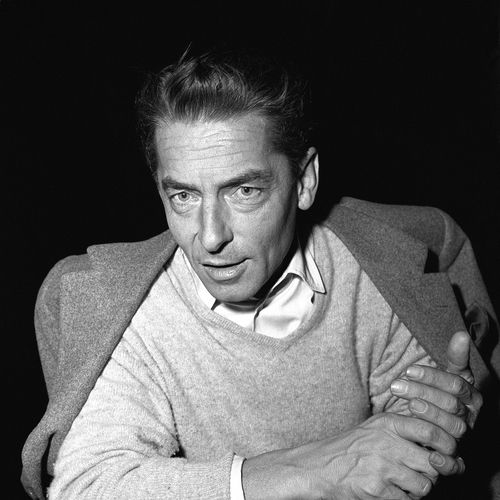
Herbert von Karajan: The Definitive Conductor of Classical Music
Herbert von Karajan was an Austrian conductor whose name became synonymous with orchestral excellence and the global popularization of classical music in the 20th century. From his base in Europe, he achieved monumental commercial success, selling an estimated 200 million records and setting a standard for audio fidelity through his prolific work with the Berlin Philharmonic and major record labels.
Early career
Born in Salzburg in 1908, Karajan began his musical studies at the Mozarteum before making his professional conducting debut in 1929. His early career saw him hold positions at the Ulm and Aachen opera houses, where he honed a precise, powerful technique and began building a reputation for intense, polished performances of the core Germanic repertoire.
Breakthrough
Herbert von Karajan's true breakthrough came in the post-war era, with his appointment as principal conductor of the Berlin Philharmonic in 1954, a position he would hold for 35 years. This role, combined with an exclusive recording contract with Deutsche Grammophon, catapulted him to international stardom, making his interpretations the benchmark for millions of new classical listeners worldwide.
Key tracks
Beethoven: Symphony No. 9 — His multiple recordings, especially the 1963 Berlin Philharmonic version, are legendary, defining this monumental work for a generation.
Strauss: Also sprach Zarathustra — Karajan's 1974 recording is famed for its overwhelming sonic power and became iconic beyond the concert hall.
Tchaikovsky: Symphony No. 6 "Pathétique" — A showcase of his ability to blend Romantic emotion with orchestral discipline, resulting in a best-selling album.
Mozart: Requiem — His interpretation with the Berlin Philharmonic and Vienna Singverein is a staple of the catalog, noted for its dramatic intensity.
Vivaldi: The Four Seasons — While Baroque was not his primary domain, his recording with violinist Anne-Sophie Mutter became a crossover commercial success.
Karajan's later career was defined by his role as a multimedia pioneer, embracing television and new audio formats like CDs to expand classical music's reach. His collaborations extended beyond the orchestra, working with stars like violinist Anne-Sophie Mutter, pianist Alexis Weissenberg, and the legendary mezzo-soprano Christa Ludwig, creating definitive recordings of operas by Wagner, Puccini, and Richard Strauss.
Artists exploring the Austro-German classical tradition with a commanding interpretive vision include Carlos Kleiber — a peer known for his intense, meticulous, and electrifying concert performances. Wilhelm Furtwängler represents the previous generation's more subjective and monumental approach to the same core repertoire. For listeners drawn to Karajan's sonic sheen and technical precision, Simon Rattle offers a modern, energetic perspective, particularly from his tenure with the Berlin Philharmonic.
Herbert von Karajan's vast catalog remains a cornerstone of classical music programming on radio stations worldwide. His recordings are daily features on dedicated classical FM stations, symphonic online radio streams, and public radio networks, ensuring new audiences continue to discover his definitive sound.
The music of Herbert von Karajan, a pillar of the classical genre, can be heard on dedicated radio stations featured on our website. Listeners can explore his monumental recordings and discover the depth of his catalog through the curated classical stations available on onairium.com.