
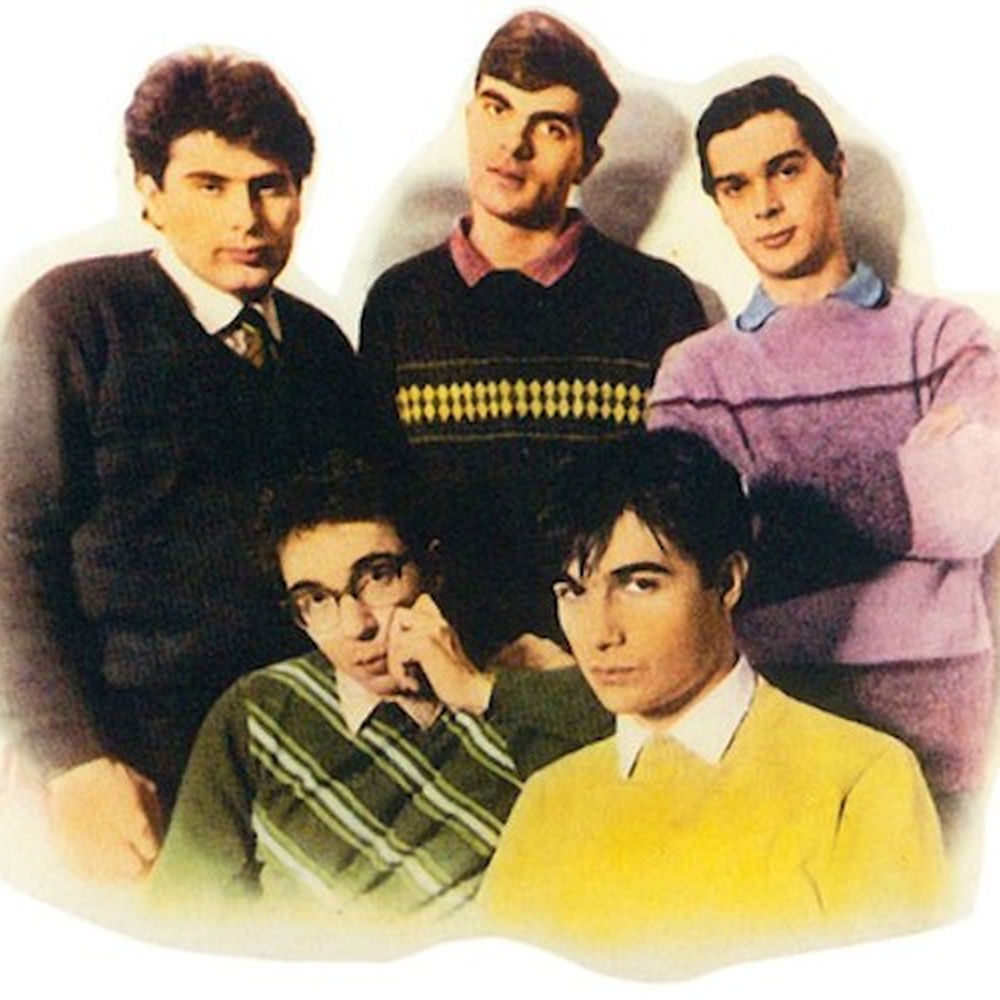
Idoli
Listen Idoli on radio stations:

Idoli: Pioneers of Yugoslav New Wave
Idoli were a seminal Yugoslav new wave and rock band formed in Belgrade, Serbia, in 1979. They are celebrated for their innovative sound and sharp social commentary, with their 1982 album "Odbrana i poslednji dani" widely regarded as one of the most important records in the former Yugoslav rock canon.
Early career
Idoli emerged from the vibrant Belgrade underground scene in the late 1970s. The founding members were Vlada Divljan, Nebojša Krstić, Zdenko Kolar, Boža Jovanović, and Kokan Popović, who quickly gained attention with their debut single "Pomoć, pomoć" / "Retko te viđam sa devojkama" on the independent label Jugoton in 1980.
Breakthrough
The band's major breakthrough came in 1981 with their participation in the groundbreaking compilation album "Paket aranžman", a triple-LP shared with bands Električni Orgazam and Šarlo Akrobata. This release, also on Jugoton, became a cultural phenomenon and defined the sound of Yugoslav new wave, selling exceptionally well and achieving cult status.
Key tracks
Maljčiki — This satirical synth-pop track from "Paket aranžman" became an instant anthem, mocking shallow consumerism and fashion trends of the era.
Retko te viđam sa devojkama — Their debut single showcased their early punk energy and witty, observational lyrics that set them apart from peers.
Šest dana jaha — A key track from their debut album "VIS Idoli", it demonstrated their evolution towards a more polished, radio-friendly rock sound.
Kenozoik — From the landmark album "Odbrana i poslednji dani", this song epitomized their mature, complex art-rock approach with philosophical lyrics.
Rusija — Another standout from their final album, it is a powerful, atmospheric track reflecting the band's ambitious studio craftsmanship.
Their subsequent studio albums, 1981's "VIS Idoli" and the critically acclaimed 1982 double-album "Odbrana i poslednji dani", solidified their legacy. "Odbrana i poslednji dani", produced by the legendary Enco Lesić, was a sophisticated concept work blending rock, pop, and classical influences, and is frequently cited in polls as one of the top Yugoslav rock albums of all time. Despite their short career and disbandment in 1984, Idoli's influence remained profound, with their music continuing to receive airplay and their albums being reissued multiple times. Fans of Idoli's innovative blend of new wave, art-rock, and sharp lyricism should also explore Električni Orgazam, who shared the seminal "Paket aranžman" and a similar punk-inspired energy. Šarlo Akrobata, the third band on that compilation, offered a more angular, funk-inflected post-punk sound. Azra, from Zagreb, paralleled Idoli's intellectual songwriting and new wave roots within the Yugoslav rock scene. Ekatarina Velika, emerging slightly later, continued the tradition of poetic, atmospheric Belgrade rock that Idoli helped pioneer.
Idoli's groundbreaking new wave and rock tracks remain a staple on classic rock FM stations and dedicated alternative rock radio stations focusing on European post-punk. Their songs are frequently featured in specialty programs exploring the history of rock music across the Balkans on various independent music radio stations.
The music of Idoli, the iconic Yugoslav new wave band, can be heard on radio stations featured on our website. Listeners can discover or listen to Idoli through a variety of radio stations available on onairium.com.