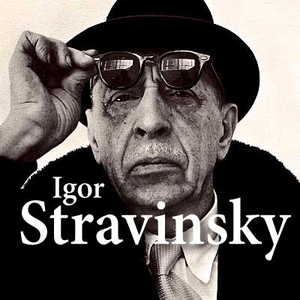
Igor Stravinsky (Composer)
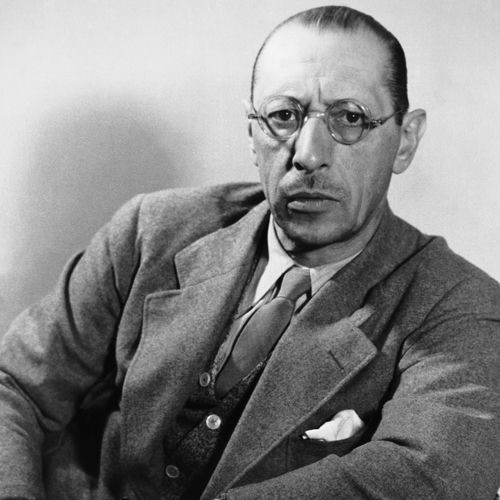
Igor Stravinsky (Composer): The Revolutionary Force of 20th-Century Classical Music
Igor Stravinsky was a Russian-born composer whose radical works fundamentally reshaped the landscape of classical music. His career, spanning over six decades, is defined by a series of stylistic earthquakes that challenged audiences and inspired generations of musicians across every genre.
Early career
Born in 1882 near Saint Petersburg, Russia, Igor Stravinsky initially studied law before committing to music under the tutelage of Nikolai Rimsky-Korsakov. His early compositions caught the attention of impresario Sergei Diaghilev, leading to his first major commission for the Ballets Russes in Paris, a collaboration that would catapult him to international fame.
Breakthrough
Stravinsky's breakthrough arrived explosively with the 1913 Paris premiere of his ballet The Rite of Spring. The work's savage rhythms, dissonant harmonies, and primal subject matter provoked a legendary riot in the audience, cementing his reputation as music's foremost avant-garde provocateur. This scandal, orchestrated for Diaghilev's company, became a defining moment for 20th-century art.
Key tracks
The Rite of Spring — This 1913 ballet score caused a riot at its premiere and remains the ultimate symbol of musical modernism.
The Firebird — His 1910 ballet established his early, brilliantly orchestrated Russian nationalist style.
Petrushka — The 1911 ballet expanded his tonal language with biting harmonies and vivid street-fair imagery.
The Rake's Progress — This 1951 opera marked a culmination of his later neo-classical period.
Symphony of Psalms — Composed in 1930, this work for chorus and orchestra blends austere sacred text with stark, powerful rhythms.
Following World War I, Stravinsky shocked the music world again by pivoting to a restrained, "neo-classical" style, drawing inspiration from 18th-century forms in works like the ballet Pulcinella. He became a global figure, working with major labels like Columbia Records, which documented his own authoritative performances as a conductor. In a final stylistic shift, he adopted serial techniques in the 1950s, influencing the postwar avant-garde.
Artists who share Stravinsky's innovative spirit and impact on classical music include Sergei Prokofiev, a fellow Russian who masterfully blended modernism with melodic invention. Aaron Copland channeled a similar rhythmic vitality and clarity into a definitive American sound. Bela Bartok shared Stravinsky's profound interest in folk music as a source for radical new forms. John Cage followed Stravinsky's path of constant reinvention, pushing the boundaries of what constitutes music itself.Stravinsky's groundbreaking compositions are staples on dedicated classical music radio stations and symphonic broadcast channels. His works from all creative periods are featured in regular rotation, ensuring his complex rhythms and brilliant orchestrations reach new listeners daily.
You can explore the revolutionary sounds of Igor Stravinsky on the classical music stations featured on our website. Tune in via onairium.com to hear his iconic ballets and powerful symphonic works as part of our curated programming.