Jackson C. Frank
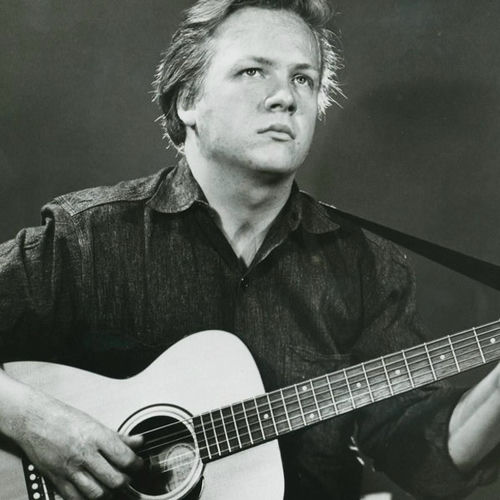
Jackson C. Frank: The Haunting Voice of American Folk
Jackson C. Frank was an American folk singer-songwriter whose brief but profound legacy rests on a single, self-titled album. His 1965 debut, produced by Paul Simon in London, is a cult masterpiece of melancholic, fingerpicked balladry that influenced a generation of British and American folk artists.
Early career
Born in Buffalo, New York, in 1943, Frank's life was tragically shaped by a school fire at age eleven that killed several classmates and left him with severe physical and psychological scars. He received a substantial insurance settlement as a teenager, which later funded his passage to England in 1965. There, he quickly immersed himself in the burgeoning London folk scene, where his intricate guitar work and raw, emotive vocals caught immediate attention.
Breakthrough
Jackson C. Frank's breakthrough was immediate upon his arrival in the UK, culminating in the 1965 recording of his only official album, Jackson C. Frank. The album was recorded in a single afternoon at Levy's Recording Studio in London with Paul Simon as producer. While it saw a US release on Columbia Records' Date label, it achieved no notable chart positions, instead building its reputation slowly as a word-of-mouth classic among folk aficionados.
Key tracks
Blues Run the Game — This opening track became his signature song, a timeless anthem of rootlessness covered by countless artists including Simon & Garfunkel, Nick Drake, and Sandy Denny.
Marlene — A poignant love song that showcases Frank's delicate guitar phrasing and has been cited as a direct influence on the early work of fellow folk innovator Nick Drake.
Dialogue — A stark, autobiographical narrative that directly references the childhood trauma of the fire, cementing his songwriting reputation for unflinching honesty.
My Name Is Carnival — One of his most lyrically enigmatic and melodically sophisticated compositions, later covered by Fairport Convention and Bert Jansch.
Following his debut, Frank's life was plagued by worsening mental health issues, financial hardship, and periods of homelessness, which prevented any sustained musical output. He recorded demos in the 1970s, but a planned second album never materialized. His song Blues Run the Game endured, however, becoming a standard and ensuring his cult status grew long after he retreated from public life.
Fans of Jackson C. Frank's introspective and guitar-driven folk style should explore the work of similar artists. Nick Drake shared Frank's melancholic atmosphere and intricate fingerpicking technique. Sandy Denny performed and recorded his material, carrying his lyrical sensibility into the British folk-rock movement. John Martyn explored a similarly raw, emotionally charged vein of acoustic and experimental folk music. Bert Jansch was a peer in the 1960s London folk circuit whose virtuosic guitar work and somber songs resonate with Frank's own style.
The music of Jackson C. Frank maintains a steady presence on specialty radio formats, particularly on folk revival stations, singer-songwriter channels, and online radio streams dedicated to classic and obscure 1960s recordings. His haunting album is a staple for programmers seeking the deep roots of acoustic folk music.
Listeners can discover the enduring legacy of Jackson C. Frank by tuning into the folk and classic singer-songwriter stations featured on our website. His defining work is regularly in rotation on the curated radio stations available on onairium.com.