Jean-Baptiste Lully
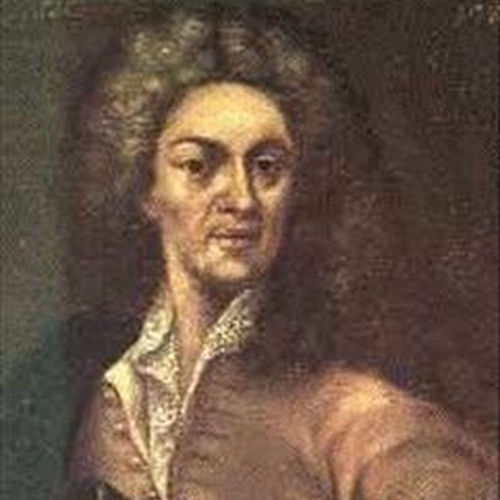
Jean-Baptiste Lully: The Master Architect of French Baroque
Jean-Baptiste Lully was an Italian-born composer who became the absolute musical authority in 17th-century France. His primary achievement was the creation of a distinct French national opera style, dominating the Parisian stage for over two decades under the exclusive patronage of King Louis XIV.
Early career
Born Giovanni Battista Lulli in Florence in 1632, he arrived in France in 1646 as a page. His talent as a violinist, dancer, and composer quickly caught the eye of the young Louis XIV, leading to his appointment as Compositeur de la Musique Instrumentale in 1653. Lully's early work involved composing vibrant instrumental music, known as the French overture, and collaborative comédies-ballets with playwright Molière.
Breakthrough
Lully's true breakthrough came in 1672 when he secured the exclusive royal privilege to produce sung drama in France. This legal monopoly allowed him to establish the Académie Royale de Musique and launch a series of revolutionary operas, known as tragédies en musique. His 1674 opera Alceste solidified the form and was a massive public and critical success, cementing his power.
Key tracks
Le Bourgeois Gentilhomme — This 1670 comédie-ballet with Molière is a landmark of collaborative theatre, perfectly blending music, dance, and comedy.
Alceste — The prologue of this 1674 opera glorifies Louis XIV, while the work itself became the definitive model for French tragic opera.
Armide — Premiering in 1686, this later opera is often considered Lully's dramatic masterpiece, renowned for its profound psychological depth and the famous Passacaille.
Te Deum — This grand sacred motet led to Lully's unusual death in 1687 after he struck his own foot with the long conducting staff, resulting in a fatal infection.
Lully's later career was defined by a nearly annual output of operas like Atys and Phaëton, which were major cultural events. He maintained total control over French musical theatre, overseeing every aspect from composition and libretti to staging and orchestra performance. His collaboration with librettist Philippe Quinault produced most of his major operatic works, creating a powerful and enduring partnership.
For listeners who appreciate the grandeur and structure of Lully's French Baroque style, explore the works of Marc-Antoine Charpentier, a contemporary who infused his sacred and dramatic music with Italianate flair. François Couperin continued the French tradition with exquisite keyboard and chamber works a generation later. The operatic legacy can be traced to Jean-Philippe Rameau, who built upon Lully's foundations in the 18th century with more complex harmonies. For the English equivalent in dramatic vocal music, consider Henry Purcell, whose music shares a similar synthesis of theatrical power and melodic genius.The music of Jean-Baptiste Lully holds a permanent place in the rotation of dedicated classical music and early music radio stations. His orchestral suites and operatic excerpts are featured on specialty programs focusing on Baroque masters and the history of opera, appealing to listeners seeking sophisticated historical repertoire.
You can experience the commanding sound of Jean-Baptiste Lully's French Baroque on radio stations featured here on onairium.com. Tune in to discover the powerful overtures and dramatic arias that defined an era of musical splendor.