Jean Sibelius
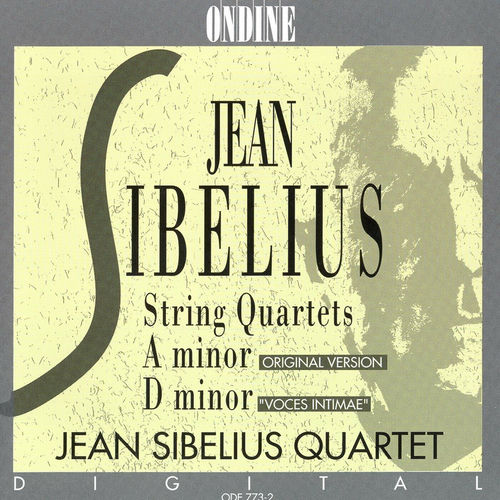
Jean Sibelius: The Definitive Voice of Finnish Classical Music
Jean Sibelius is the national composer of Finland, whose symphonic works defined the sound of a nation. Born in Hämeenlinna in 1865, his most enduring achievement is the symphonic poem Finlandia, a piece that became an unofficial national anthem and solidified his global reputation.
Early career
Despite initial law studies, Sibelius pursued music at the Helsinki Music Institute (now the Sibelius Academy) and later in Berlin and Vienna. His first major orchestral works, including the choral symphony Kullervo in 1892, drew immediate attention in Finland for their epic scale and use of the Kalevala, the Finnish national epic.
Breakthrough
Sibelius's international breakthrough arrived with the 1899 premiere of Finlandia, composed for a covert patriotic pageant. While not an album in the modern sense, the publication and rapid global spread of this tone poem, along with his First Symphony the same year, established him as a leading European composer beyond his native country.
Key tracks
Finlandia, Op. 26 — This stirring tone poem is his most recognizable work, a potent symbol of Finnish national identity.
Valse Triste, Op. 44 — Originally part of incidental music for a play, this short, haunting waltz achieved remarkable worldwide popularity.
Symphony No. 2 in D major, Op. 43 — Often interpreted as a work of national triumph, this symphony remains one of his most frequently performed and recorded.
Violin Concerto in D minor, Op. 47 — A cornerstone of the violin repertoire, renowned for its technical demands and Nordic lyricism.
Tapiola, Op. 112 — His final major work, a tone poem that masterfully evokes the vast, brooding spirit of Finnish forests.
The early 20th century saw Sibelius compose his seven numbered symphonies, each a landmark that moved from romantic nationalism toward a stark, organic style. His output, published primarily by major houses like Breitkopf & Härtel, also includes prolific incidental music, tone poems, and the popular Karelia Suite.
Sibelius's later career was marked by the "Silence of Järvenpää"; after 1926's Tapiola, he published almost nothing for the remaining three decades of his life, despite rumors of an Eighth Symphony. His influence, however, only grew, with his music achieving gold and platinum certification status for recordings by orchestras worldwide throughout the 20th century.
For listeners exploring the sound of Nordic classical music, similar artists include Edvard Grieg who also crafted a national romantic style for Norway. Carl Nielsen developed a distinct symphonic voice as Denmark's leading composer. Einojuhani Rautavaara continued the Finnish tradition of mystical and atmospheric orchestral writing. Kaija Saariaho represents a modern evolution of Finnish composition with her unique spectral and electronic techniques.
The powerful works of Jean Sibelius are staples on classical radio stations worldwide. His symphonies and tone poems feature regularly in the playlists of dedicated classical FM stations, public radio networks, and specialized online streams focusing on orchestral masterworks.
You can experience the majestic soundscapes of Jean Sibelius on radio stations featured here. Discover his music and listen to his defining symphonies through the curated classical stations available on onairium.com.