Jimmy Reed
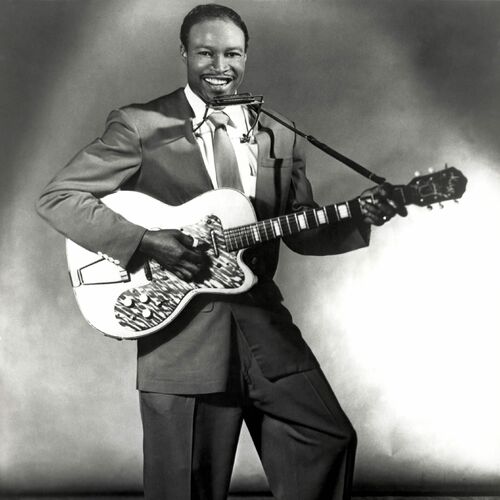
Jimmy Reed: The Unmistakable Voice of Electric Blues
Jimmy Reed was an American blues singer, guitarist, and harmonica player whose relaxed, rhythmic style became a cornerstone of the Chicago blues sound. Hailing from Mississippi, his string of hits in the 1950s and 1960s, including "Big Boss Man" and "Bright Lights, Big City," crossed over to the pop charts and profoundly influenced the rock and roll explosion.
Early career
Born Mathis James Reed in 1925 in Dunleith, Mississippi, he learned the basics of harmonica and guitar from his friend Eddie Taylor. After moving to Chicago in the early 1940s, he began playing in South Side clubs, eventually catching the attention of the newly formed Vee-Jay Records.
His first singles for Vee-Jay in the mid-1950s, like "You Don't Have to Go," showed the signature sound: his easy, slurred vocals, simple guitar lines, and amplified harmonica, all anchored by Taylor's driving rhythm guitar.
Breakthrough
Jimmy Reed's commercial breakthrough came in 1957 with the single "Ain't That Lovin' You Baby," which reached No. 3 on the Billboard R&B chart. This success established his formula and made him Vee-Jay's most consistently successful blues artist, leading to a prolific run of charting singles.
His 1961 album Jimmy Reed at Carnegie Hall, though not actually recorded at the famed venue, became his best-selling LP and solidified his national profile. The album's success demonstrated the wide appeal of his deceptively simple, hypnotic blues.
Key tracks
Big Boss Man — This 1960 hit became his highest-charting pop single and has been covered by countless artists, including Elvis Presley and the Grateful Dead.
Bright Lights, Big City — Released in 1961, this song is one of his most enduring anthems, perfectly capturing the allure and tension of urban life.
Baby What You Want Me to Do — A concert staple, this track's repetitive, driving groove made it a favorite for jam sessions and a key influence on 1960s rock bands.
Ain't That Lovin' You Baby — His first major R&B chart hit in 1957, this song defined the laid-back, shuffling rhythm that would become his trademark.
You Don't Have to Go — His very first chart entry in 1955, this track introduced his signature sound to the national audience.
Throughout the early 1960s, Reed remained a hitmaker for Vee-Jay, with songs like "Shame, Shame, Shame" and "I'm Mr. Luck" maintaining his presence on the charts. His accessible style made his music a staple on jukeboxes beyond the traditional blues market.
Despite his success, Reed struggled with epilepsy and alcoholism, which affected his consistency and live performances. After Vee-Jay Records folded in 1966, he recorded for several other labels, including BluesWay and Exodus, but could not recapture his earlier commercial peak.
Artists like the Rolling Stones, the Yardbirds, and Elvis Presley regularly covered his material, cementing his legacy as a foundational influence on British Invasion and American rock music. His songs have been streamed and downloaded millions of times in the digital era, introducing his blues to new generations.
For fans of Jimmy Reed's electric blues style, explore similar artists like Howlin' Wolf who shared a raw, powerful Chicago sound. The smooth, amplified harmonica work of Little Walter also defined the era's blues. The driving rhythms of Elmore James provide a fiercer take on the electric blues formula. Finally, John Lee Hooker offers another deeply rhythmic and hypnotic approach to the blues.
Jimmy Reed's catalog remains a vital part of the rotation on dedicated blues radio stations and classic rock FM stations that trace the roots of rock and roll.