

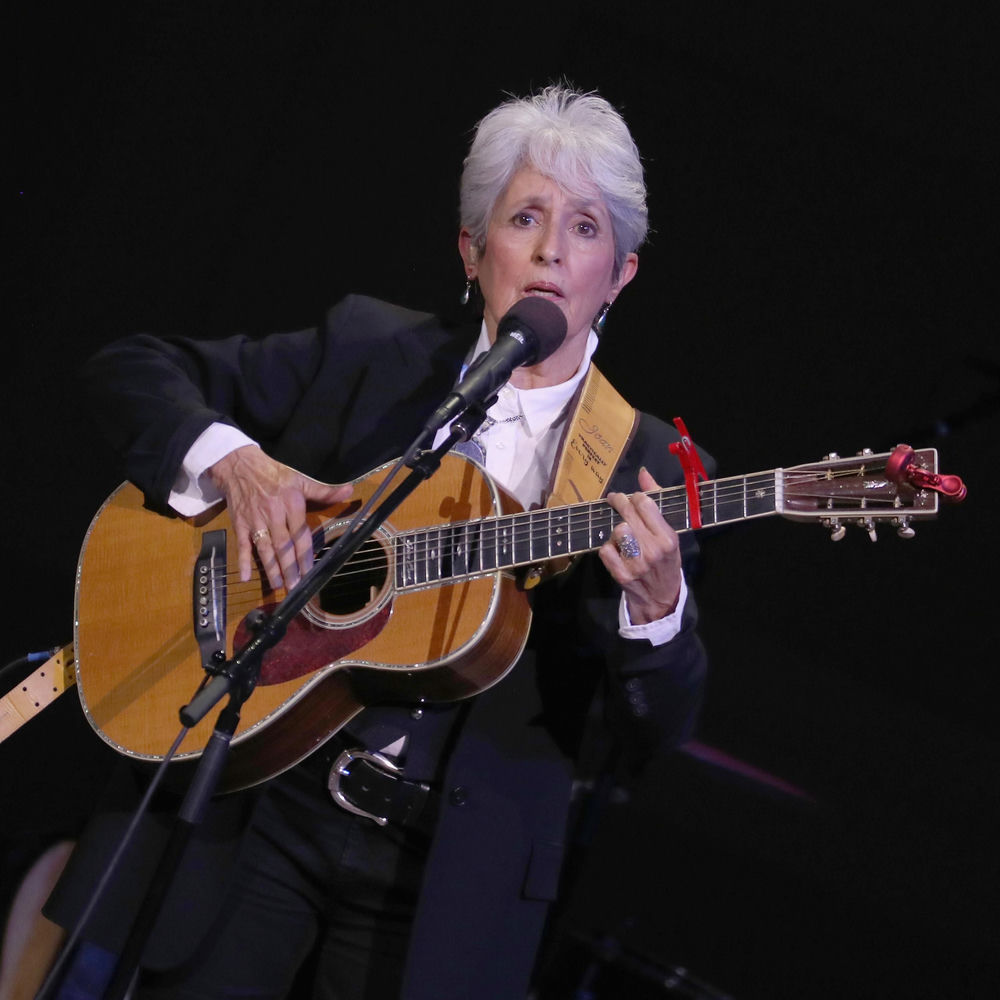
Joan Baez
Listen Joan Baez on radio stations:






Joan Baez: The Voice of Folk Music
Joan Baez is an American folk singer whose crystal-clear soprano and unwavering commitment to social justice defined the sound of the 1960s protest movement. Hailing from Staten Island, New York, her rise from the coffeehouses of Cambridge to international fame was cemented by her iconic performance at the 1969 Woodstock Festival and her self-titled 1960 debut album, which spent over two years on the Billboard charts.
Early career
Born in 1941, Joan Baez's musical journey began in her teenage years after her family moved to the Boston area. She first gained attention in the late 1950s performing in clubs around Cambridge, Massachusetts, and was soon invited to perform at the inaugural Newport Folk Festival in 1959, a pivotal moment that launched her career.
Breakthrough
Her 1960 debut album, "Joan Baez," released on Vanguard Records, was a commercial and critical success, establishing her as a leading figure in the folk revival. The album's popularity, fueled by traditional songs like "Mary Hamilton" and "Silver Dagger," introduced her voice to a national audience and set the stage for her role as a musical activist.
Key tracks
We Shall Overcome - This gospel hymn became the anthem of the Civil Rights Movement, with Baez's powerful renditions at marches and rallies embedding it in American history.
Diamonds & Rust - A poignant, self-penned song from her 1975 album of the same name, it is widely interpreted as a reflection on her complex relationship with Bob Dylan.
The Night They Drove Old Dixie Down - Her 1971 cover of The Band's song became her highest-charting single, reaching number three on the Billboard Hot 100 and earning a gold certification.
Farewell, Angelina - The title track from her 1965 album showcased her early adoption of Bob Dylan's songwriting, signaling a shift from pure traditional folk.
Joe Hill - Her performance of this labor movement ballad at Woodstock exemplified her lifelong fusion of music and political activism.
Throughout the 1960s, Baez's influence grew alongside her activism, including her founding of the Institute for the Study of Nonviolence and her highly publicized protest against the Vietnam War, which led to multiple arrests. Her personal and professional relationship with Bob Dylan was instrumental in bringing his songwriting to a broader folk audience, featuring prominently on her early albums. In later decades, she continued to record and tour, releasing albums on labels like A&M and Portrait, while remaining a consistent voice for human rights, a testament to her enduring legacy in both folk music and social commentary.
