
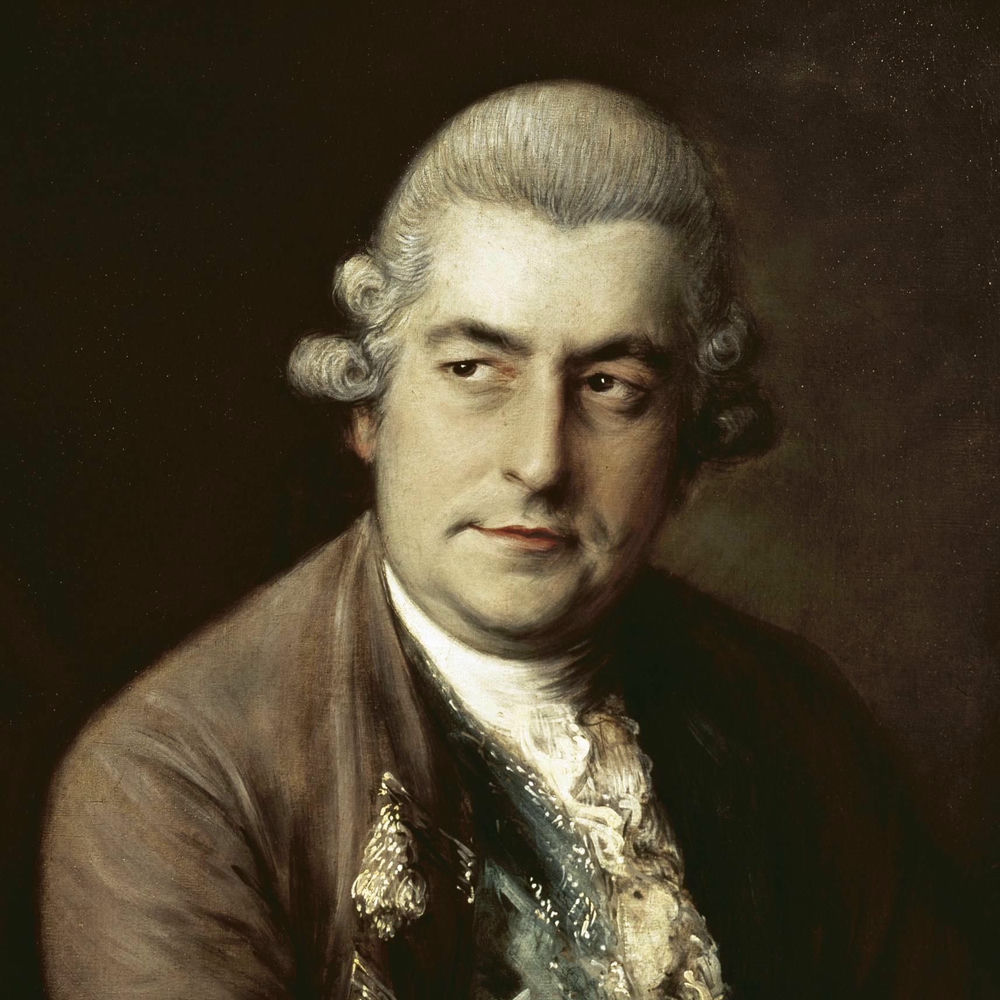
Johann Christian Bach: The London Bach and Classical Pioneer
Johann Christian Bach was a German composer of the Classical era who became a defining musical figure in 18th-century London. His synthesis of German technique with Italian melody created a popular and influential style, with his operas and symphonies achieving widespread acclaim across Europe during his lifetime.
Early career
Born in Leipzig in 1735, Johann Christian Bach was the youngest son of Johann Sebastian Bach. After his father's death, he moved to Berlin to study with his brother Carl Philipp Emanuel before making a pivotal journey to Italy in 1754. There, he converted to Catholicism, studied opera, and secured his first major commission for the Teatro Regio in Turin, establishing his early reputation in the Italian operatic world.
Breakthrough
Johann Christian Bach's career-defining move came in 1762 when he was invited to London to write operas for the King's Theatre. His appointment as music master to Queen Charlotte solidified his position. The success of his opera Orione in 1763, one of the first in England to use clarinets, marked his commercial and critical arrival in the city's competitive music scene.
Key tracks
Orione — This 1763 opera was a major London success, cementing his reputation and introducing the clarinet to English audiences.
La calamità de' cuori — His final opera for London, premiering in 1763, showcased his mature blend of dramatic Italian style with accessible melodies.
Symphony in G minor, Op. 6, No. 6 — This work exemplifies his empfindsamer Stil, or "sensitive style," influencing the young Mozart with its expressive depth.
Keyboard Concerto in E-flat major, Op. 7, No. 5 — A popular work that highlights his galant, melodic approach to the concerto form, widely published and performed.
Following his operatic triumphs, Bach co-founded the famous Bach-Abel concert series in 1765, a premier London subscription concert that presented his latest symphonies and chamber works. His publication deals, particularly with the London firm of Welcker, disseminated his music widely. The young Wolfgang Amadeus Mozart, whom he met in 1764, was profoundly influenced by Bach's style, a debt Mozart acknowledged throughout his life.
While specific chart positions and certifications did not exist in the 18th century, the popularity of his published works, such as the Opus 5 keyboard sonatas and the Opus 10 string quartets, functioned as commercial markers of success. His collaborations with singer and composer Carl Friedrich Abel were central to London's concert life for nearly two decades.
Artists from the same German and Austrian Classical tradition include Carl Philipp Emanuel Bach, his brother whose empfindsamer Stil he adapted. Wolfgang Amadeus Mozart directly absorbed J.C. Bach's lyrical and structural innovations. Joseph Haydn shared his role in defining the emerging Classical symphony and chamber music style.
The music of Johann Christian Bach remains in regular rotation on classical music FM stations and dedicated online classical radio streams. His symphonies and concertos are staples on programs focusing on the Baroque and Classical periods, appreciated for their melodic invention and historical significance.
Listeners can explore the elegant world of Johann Christian Bach through the classical radio stations featured on onairium.com. Tune in to hear how this pivotal composer bridged the Baroque and Classical eras, shaping the sound that would dominate European music for generations.
