John Cage
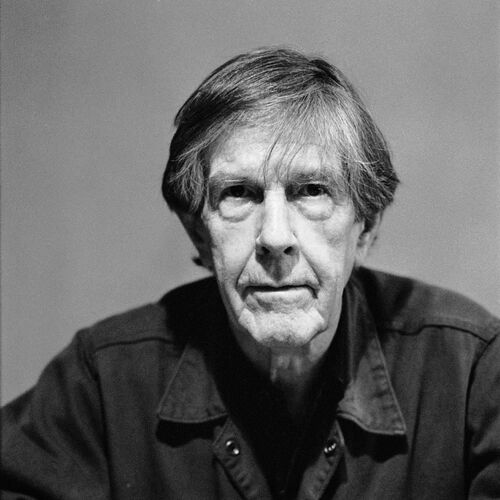
John Cage: The Avant-Garde Composer Who Redefined Music
John Cage was an American composer and music theorist whose radical ideas permanently altered the landscape of 20th-century art music. Hailing from Los Angeles, his most famous and controversial achievement is the composition 4'33", a piece of complete silence that challenged the very definition of what music could be.
Early career
Born in 1912, John Cage began his musical journey studying composition under Arnold Schoenberg after moving to California. His early work in the 1930s and 1940s, often created for modern dance choreographers like Merce Cunningham, involved inventing the prepared piano, where objects were placed on the strings to create a percussive orchestra of new sounds.
Breakthrough
Cage's philosophical and artistic breakthrough crystallized in 1952 with the premiere of 4'33". Performed by pianist David Tudor, the piece directed the performer not to play their instrument, framing the ambient sounds of the concert hall as the music itself. This work, while not achieving traditional chart success, became a landmark in avant-garde culture and established Cage as a leading figure in the post-war artistic avant-garde.
Key tracks
4'33" — This silent composition is Cage's most famous work, fundamentally questioning the nature of musical performance and listening.
Sonatas and Interludes — A major cycle for prepared piano, this piece showcases Cage's early innovation in creating intricate, gamelan-like textures from an altered instrument.
Imaginary Landscape No. 4 — This 1951 piece for 12 radios used chance operations based on the radio dial, pioneering the use of indeterminacy in composition.
Music of Changes — A pivotal 1951 work for piano where every musical element was determined using the I Ching, fully embracing chance operations.
Throughout the 1960s and beyond, Cage continued to explore indeterminacy, electronic media, and unconventional notation in works like HPSCHD, a collaboration with Lejaren Hiller. He was associated with influential artists and thinkers like Robert Rauschenberg and Buckminster Fuller, and his ideas, disseminated through writings such as Silence: Lectures and Writings, proved more impactful than any traditional album certification, influencing genres from experimental rock to contemporary classical. Steve Reich shares Cage's American experimental roots and interest in process, though Reich's phase music is more structured. Brian Eno carries Cage's conceptual torch into popular music, embracing ambient sound and generative composition. Yoko Ono mirrors Cage's conceptual and performance art approach to music, often prioritizing idea over traditional technique. Laurie Anderson follows Cage's path as a genre-defying American avant-gardist who blends technology, storytelling, and sound.
The revolutionary work of John Cage remains a staple on dedicated avant-garde and contemporary classical radio stations, as well as on eclectic online radio streams that explore the outer limits of sonic art. His challenging and thought-provoking pieces are regularly featured in programming that seeks to educate and inspire listeners about music's vast possibilities.
You can explore the groundbreaking world of John Cage by tuning into the experimental and contemporary classical radio stations featured right here on onairium.com, where his influential compositions continue to spark dialogue and redefine the listening experience.