

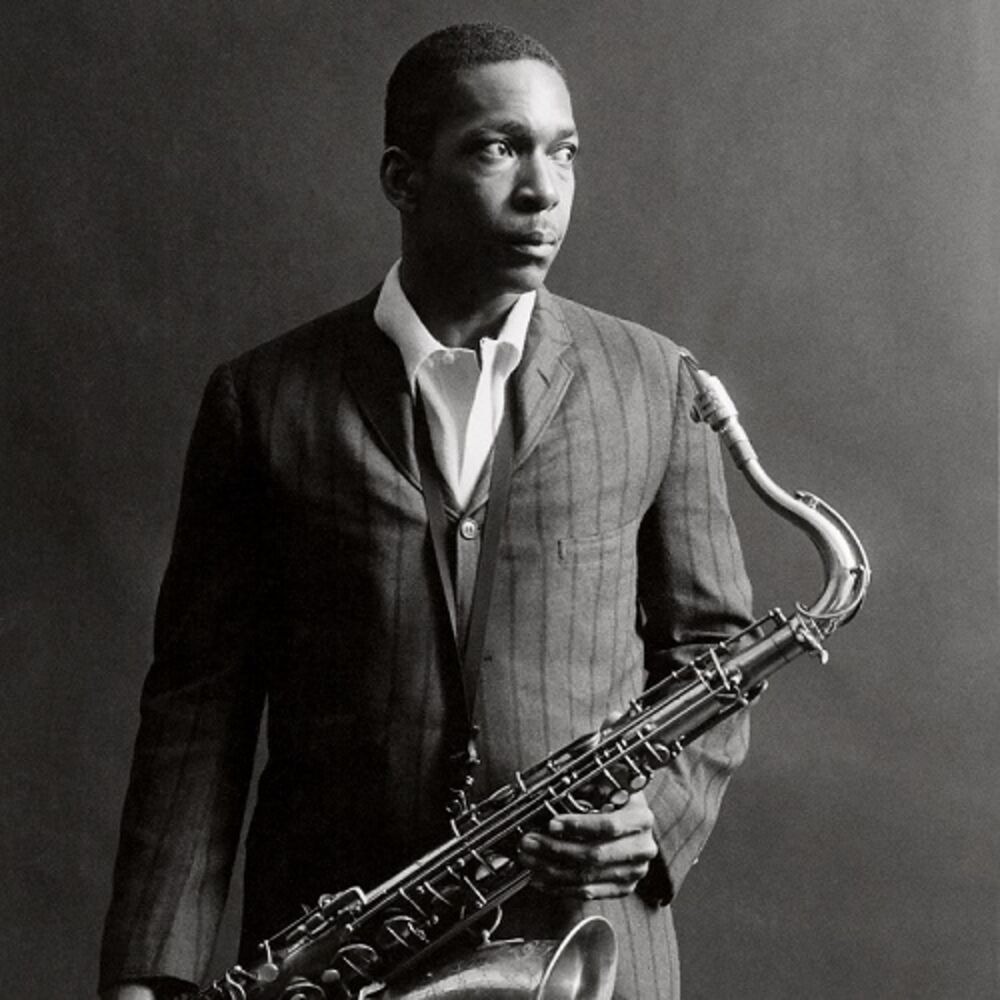
John Coltrane
Listen John Coltrane on radio stations:









John Coltrane: The Architect of Modern Jazz
John Coltrane was an American saxophonist and composer who fundamentally reshaped the landscape of jazz music. His profound influence, marked by a relentless pursuit of musical and spiritual exploration, established him as one of the most important figures in 20th-century music.
Early Career
Born in 1926 in Hamlet, North Carolina, John Coltrane began his professional journey in the late 1940s, playing in navy bands and later with ensembles led by Eddie "Cleanhead" Vinson and Dizzy Gillespie. His first significant exposure came as a member of the Miles Davis Quintet in 1955, where his intense, searching solos on albums like Round About Midnight began to draw serious attention within the jazz world.
Breakthrough
Coltrane's true artistic breakthrough arrived in 1957, a pivotal year that saw him release his debut as a leader, Coltrane, for the Prestige label, and join Thelonious Monk's quartet. This period of intense growth culminated in 1959 with his monumental contribution to Miles Davis's Kind of Blue and his own masterpiece, Giant Steps, the latter introducing his revolutionary "sheets of sound" technique and complex chord progression patterns that challenged musicians for generations.
Key Tracks
Giant Steps - This title track from his 1960 album became a benchmark for technical mastery and harmonic innovation in jazz improvisation.
My Favorite Things - His 1961 reinterpretation of the Rodgers and Hammerstein show tune popularized the soprano saxophone in jazz and became a signature piece.
A Love Supreme - The central suite from his spiritually-focused 1965 album is a four-part devotional work that stands as a pinnacle of conceptual depth in jazz.
Naima - A beautiful ballad written for his first wife, featured on Giant Steps, showcasing his capacity for lyrical, heartfelt composition.
Impressions - A defining modal jazz vehicle, often based on the chords of "So What," that became a staple for extended, exploratory live performances with his classic quartet.
In 1960, John Coltrane formed his definitive "classic quartet" with pianist McCoy Tyner, bassist Jimmy Garrison, and drummer Elvin Jones. This group, through albums like Live at the Village Vanguard, Crescent, and the spiritually ascendant A Love Supreme, pushed modal jazz to its limits, balancing sublime melody with ferocious, cathartic intensity. Coltrane's later work, such as Ascension, ventured into free jazz, further expanding the vocabulary of the genre until his death in 1967.
Listeners who appreciate the innovative spirit of John Coltrane often explore the work of Miles Davis, his former bandleader and a fellow pioneer of multiple jazz eras. The compositional depth of Thelonious Monk, in whose quartet Coltrane refined his craft, is another essential touchstone. For the exploratory energy of his later period, the work of Pharoah Sanders, who collaborated with Coltrane, provides a direct lineage. The spiritual and modal pursuits of Alice Coltrane, his wife and musical partner, continue a similar philosophical journey.
The music of John Coltrane remains a cornerstone of programming for jazz radio stations and dedicated online music streams, where his evolutionary journey from hard bop to spiritual free jazz is chronicled and celebrated. His recordings are essential listening, frequently featured in rotations that trace the history of innovative American music.
The enduring legacy of John Coltrane can be experienced through the radio stations featured on our website, where his groundbreaking albums and timeless performances continue to inspire new listeners.
