Klaus Schulze
 Germany
Listen Klaus Schulze on radio stations:
Klaus Schulze: The Cosmic Pioneer of Electronic Music
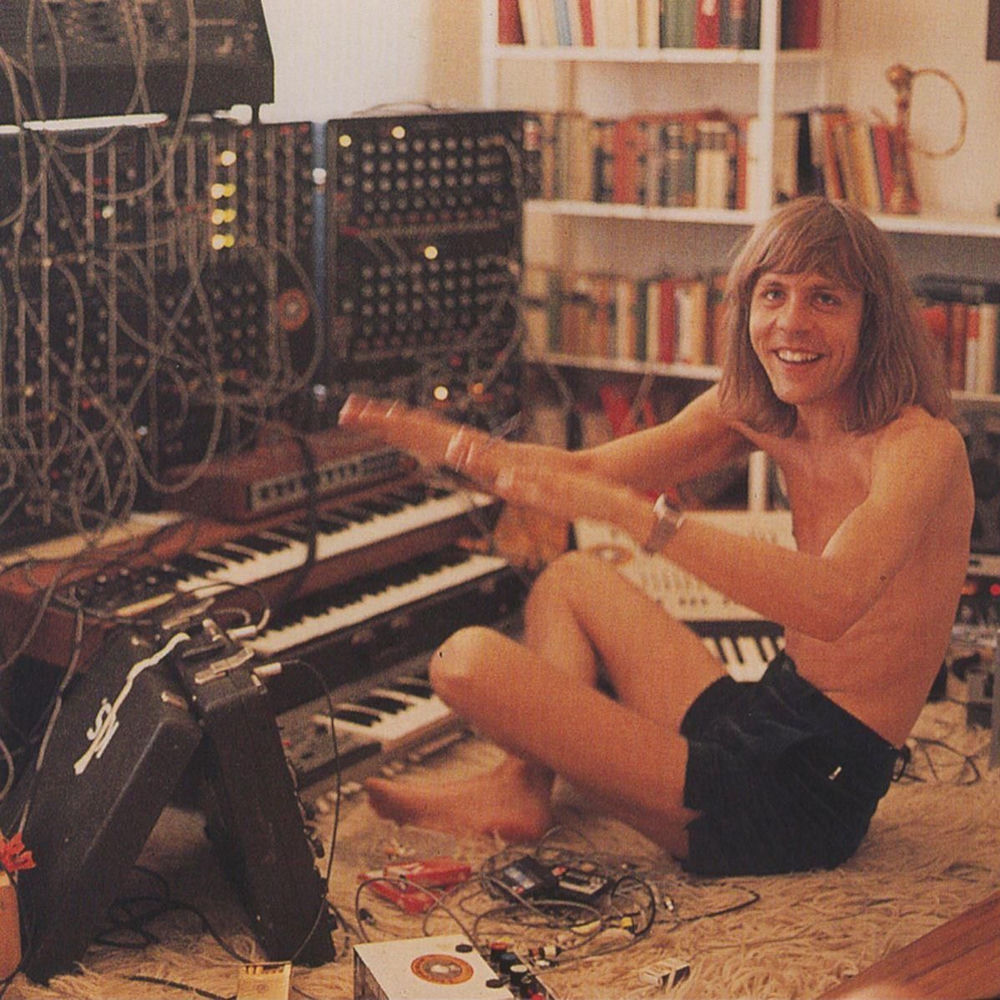
Klaus Schulze was a visionary German composer and multi-instrumentalist who fundamentally shaped the genre of electronic music. From his base in Berlin, he built a monumental catalog of over 50 albums, becoming one of the most prolific and influential figures in the global ambient and Berlin School scenes.
Early career
Born in Berlin in 1947, Schulze began his musical journey as a drummer, briefly playing with the psychedelic band Tangerine Dream in 1969. He soon left to co-found the group Ash Ra Tempel, contributing to their self-titled 1971 debut, before embarking on a definitive solo career. His first solo album, "Irrlicht" (1972), was a radical, orchestral-influenced electronic work created without a synthesizer, establishing his independent artistic voice.
Breakthrough
Schulze's commercial and critical breakthrough arrived with the 1975 album "Timewind," his first release on the French label Island Records. The album, consisting of two epic side-long compositions, won the Grand Prix du Disque award and spent several weeks on the Billboard Classical chart in the United States. This success cemented his international reputation and began a long, fruitful relationship with the innovative Brain and Virgin labels in Europe.
Key tracks
Timewind — This 30-minute title track from his breakthrough album is a masterclass in slowly evolving sequencer patterns and atmospheric synthesizer layers.
Floating — Featured on 1980's "Dig It," this track showcases Schulze's skill at blending melodic sequencer lines with driving electronic rhythms and guitar work.
Bayreuth Return — An epic from the 1977 album "Mirage," it exemplifies his ability to create vast, immersive sonic landscapes that defined the Berlin School sound.
Velvet Voyage — From the acclaimed 1979 double album "Dune," this piece highlights his talent for thematic, cinematic electronic compositions.
Throughout the 1980s and beyond, Schulze embraced digital technology, releasing influential works like "Trancefer" (1981) and collaborating with artists such as German singer Andreas Grosser and electronic musician Pete Namlook. He remained remarkably active into the 21st century, releasing multi-disc sets like "Kontinuum" (2007) and the vast "Shadowlands" (2013) before his passing in 2022.
For listeners exploring the expansive world of German electronic music, similar artists include Tangerine Dream, whose early work shares Schulze's pioneering sequencer-driven approach. The atmospheric textures of Popol Vuh also resonate with his ambient side, while the rhythmic electronic explorations of Kraftwerk provide a more minimalist counterpoint. Fans should also discover Michael Rother for his melodic and hypnotic guitar-based instrumentals.
The pioneering electronic music of Klaus Schulze maintains a steady presence on dedicated radio formats. His epic compositions are featured on specialty electronic music programs, ambient radio streams, and stations focusing on progressive and experimental rock genres, introducing his work to new generations of listeners.
You can explore the vast sonic universe of Klaus Schulze right here. His iconic and influential catalog of electronic music is regularly featured on the curated radio stations available for listening on onairium.com, where his legacy continues to play on.